
Nearly 5,000 former players sued the National Football League in 2011 for covering up head injuries associated with the sport. The next year, the New Orleans Saints were busted for “Bountygate” — offering bonuses to their players for injuring opponents. Young standouts like Austin Collie, Johnny Knox, and Ryan Shazier were forced into premature retirement from jarring head and spinal injuries. In 2017, Aaron Hernandez became the poster boy for football-related head trauma, as a post-suicide autopsy revealed what fans had long suspected: The NFL-star-turned-convicted-murder had been suffering from the effects of chronic traumatic encephalopathy for years.
It’s an easy era to remember. Football became a microcosm of all contact sports. Every level of competition began ruthlessly revitalizing efforts for player safety. Rules changed, equipment changed, executives changed, and still parents yanked their kids out of contact sports, my parents among them, much to my dismay.
But after a down decade for contact sports, it seems the tide of safetyism no longer holds sway. NFL fans like myself are fed up with the game being over-penalized. Rugby is the fastest growing collegiate sport in the country, recently overtaking another contact sport, lacrosse. Mixed martial arts, particularly the Ultimate Fighting Championship, are seeing an unprecedented boom in popularity.
The revitalization of these activities is an encouraging sign. We should be excited, not alarmed, at the rising popularity of contact sports.
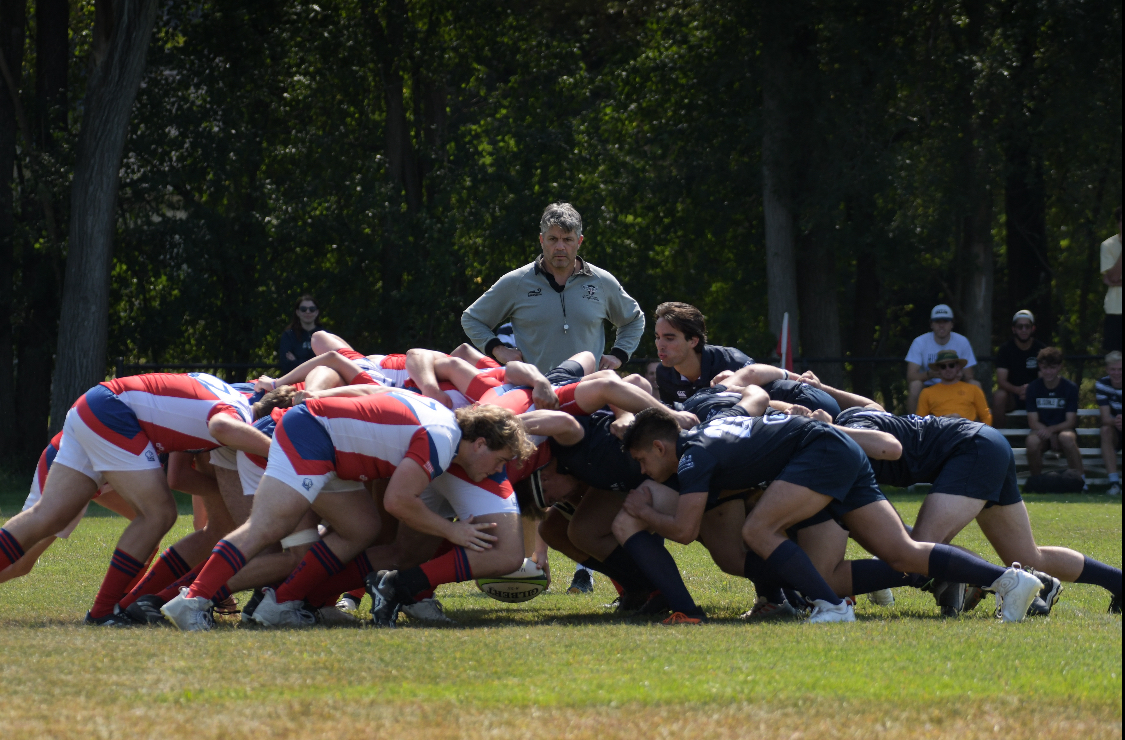
In the first place, the sports evolved to accommodate safety concerns. All levels of contact sports, professional to peewee, are now hyper-aware of the head injury issue. Even discounting the myriad of changes football has made, rugby alone can demonstrate the scope of change. The scrum — that 16-man monstrosity synonymous with the sport — now requires the two teams to bind to one another before engaging, eliminating centuries of head, neck, and shoulder injuries caused by the old scrum. It’s illegal to tackle a player by pure force. Instead, the ball carrier must be wrapped with the arms. Tackles above the chest are illegal, as are any tackles deemed “unnecessarily dangerous” during gameplay. Players can even be ejected for dropping an opponent on their head or neck.
Contact sports still offer a controlled, calculated outlet for aggression. The rage and will required to play them still demands critical thinking and problem solving to subject and channel them toward success. The entire game is a test of each player’s ability to understand their own and their opponents’ limits. As evidence of this, look no further than football and the offensive line, which among the sport’s position groups has the simplest job requiring the most raw strength, and yet routinely boasts the smartest players on the field — as NFL quarterbacks often insist and the NFL Combine Quiz consistently proves.
Most importantly, contact sports still forge unreplicatable uniformity and discipline. Sports in general offer an easily available physical and mental gauntlet in the collective pursuit of a common objective. But contact sports are unique: They teach individuals not merely to sacrifice and endure pain for the good of their team, but to endure an opponent inflicting that pain upon them. The competitive humility is so intense that players even consider it a personal offense when the blow intended for them falls to someone else. In hockey, fights will break out as a matter of principle if the goalie takes a hit meant for another player. The same phenomenon exists, to a lesser extent, with football’s quarterback and rugby’s scrum half.
My parents pulled me out of football in 2012, but I was able to convince them to let me play my senior year of high school. I got to experience an offensive line’s one-of-a-kind bond as an undersized right guard starting for the worst high school football team in Nebraska. The lessons I learned there in humility and teamwork carried on to the Hillsdale Club Rugby team, where I got to experience the literal bond of the scrum as a starting lock for the Midwest Champions of National Collegiate Rugby. In the end, it was a spine injury from summer employment, not the ordinary tolls of football or rugby, that ended my contact sports career.
Contact sports will never, at any level, be nearly as safe as their non-contact counterparts — not even the NFL will pretend otherwise. But today, the risks associated with them are far less grave than in previous times, and they remain the greatest and most accessible teacher of grit and selflessness. The fact that more and more young people desire that kind of sport is worth celebrating.
Lewis Thune is a junior studying politics.
