
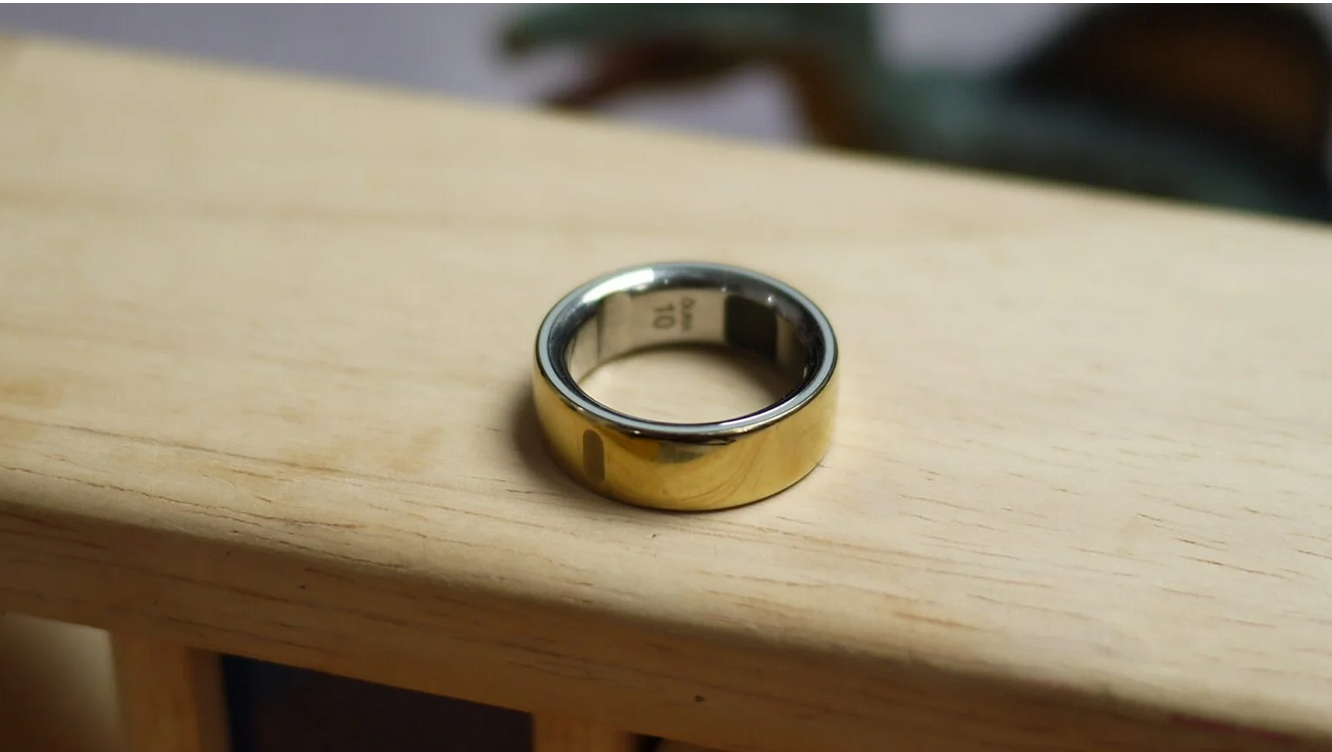
An Oura Ring provides sleep, stress, and exercise data to users. Courtesy | Trusted Reviews
The Oura Ring is the latest technological advancement in fitness and health tracking, which allows wearers insights into stress, sleep, and activity, and Hillsdale students are no strangers to the new health and wellness device.
Senior Maggie Carriker, a wearer of the Oura Ring, said the stress tracking feature was the biggest draw for her, compared to other wearable technology.
“I get migraines that are stress-related. If I can see how my stress is affected daily and what is prompting the stress, that’s super helpful,” Carriker said. “It is very validating for some things that I feel, but don’t know what’s going on, and the app will break it down in words and give graphs on what’s happening.”
According to its website, Oura has sold more than 2.5 million rings worldwide since its launch in 2015. The company boasts that its technology is highly accurate in heart rate, heart rate variability, and temperature tracking to give the wearer the best possible data about themselves.
The Oura Ring measures the wearer’s heart rate, heart rate variability, motion, and body temperature to read daily stress accurately, according to its website. It also boasts that the longer the ring is worn, the more accurate the data becomes, from knowing baselines for stress to general levels of activity.
Senior Kendall McCormick, a member of the Hillsdale women’s basketball team, said the sleep data is most important to her.
“It tells how long you spend in each specific cycle each night and then gives you an overall sleep score, which then plays into your ‘readiness’ score for the day,” McCormick said. “I can see how I am recovering, and it has taught me ways to help my body heal so I can be better prepared for workouts and competitions to come.”
Because it can directly measure skin temperature, Oura can sense when the wearer’s body temperature drops before sleep and rises when they wake up. The website boasts that despite having a sleep tracking accuracy of 79% compared to clinical sleep studies of 83%, consistent use of the Oura Ring provides more nights of sleep and data from that than a clinical study.
Justin Fawley, director of operations for cross country and track and field, said Oura has the best health-tracking information for himself and his wife.
“My wife and I both have one, and we can share data back and forth, which is really helpful,” Fawley said. “We use it a lot of times for division of labor, like if she didn’t sleep super well the past night, then tonight, if our toddlers wake up or anything, it’ll be my responsibility.”
Unlike other fitness trackers, Oura does not have a display screen. Instead, it sends data to the app to view after workouts are completed. The ring itself is a wide band with sensors on the interior.
McCormick said the band was initially a bit thick for her preferences, but she got used to it quickly.
Carriker and Fawley both said that removing the ring for lifting weights is a step other health trackers do not require. This additional task, however, does not lessen their admiration for the technology.
Oura is also compatible with many other apps, including Cronometer, which tracks nutrition and dieting; Natural Cycles, a menstruation cycle tracker for women; and Headspace, which provides meditation and stress-relieving resources. In syndication with these apps, Oura’s data can influence what the other apps recommend for your lifestyle and give more accurate information.
“I liked that it’s compatible with so many apps that I might want in the future,” Carriker said.
Carriker said Oura was a wise purchase as someone who loves being in tune with their body.
“I swam and danced extensively growing up, so learning about my body and being really in tune with my body has always been super important to me,” Carriker said.
As a student-athlete, McCormick said wanted more insight into how her body was recovering after workouts and the day-to-day strain of school. Oura was her solution.
“I have always been into tracking all of my fitness and sleep on my Apple Watch but I wanted to get more insight on how my body was recovering after workouts,” McCormick said. “The Oura does a really good job of tracking sleep cycles and monitoring body temperature and heart rate so you can tell how well your body is recovering.”
Fawley suggests researching before purchasing an Oura, especially as a student.
“I’m pretty sensitive to wearables because they generate a lot of data,” Fawley said. “Communication is central to good training, but some things may not need to be communicated, and having too much data can be a little invasive.”
Fawley cautions students to know themselves and understand that some of their body’s data may not need to be known to be the most successful.
“I think a big thing about wearables, in general, is that if you can use them to help guide you where you are, then they’re a huge benefit, but if they provide additional stress to your life, then they’re not worth it,” Fawley said.