
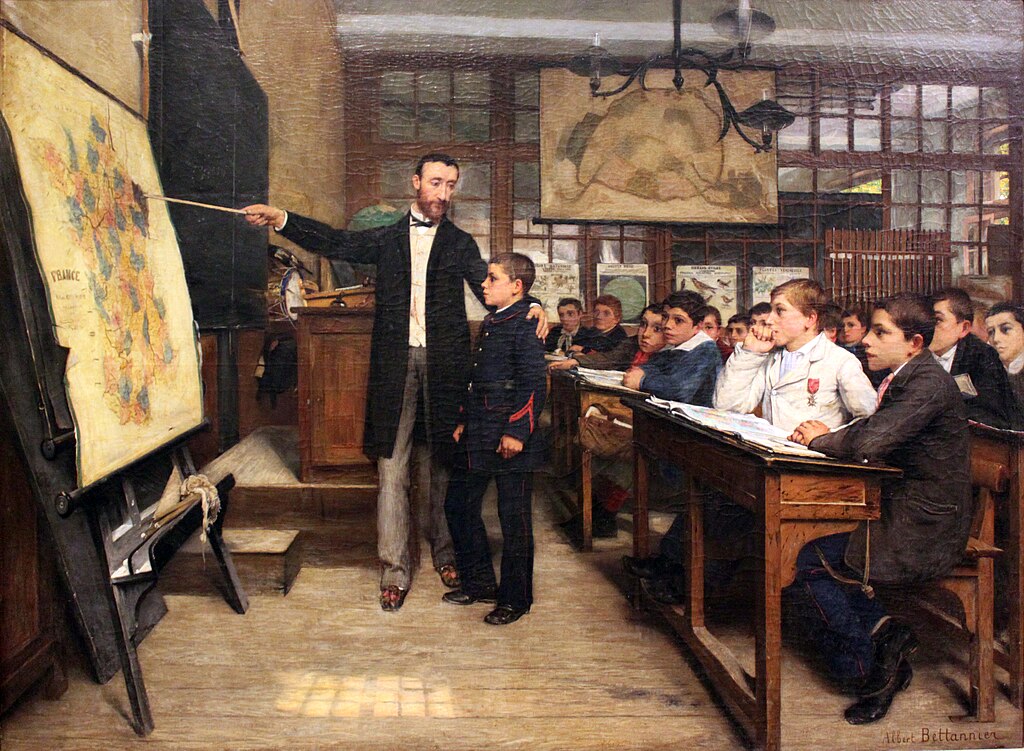
“I can’t believe I still do this,” I think, continuing to push on my lower stomach with both hands as the ticking clock of my study hall classroom echoes in my head. If I exceed the bureaucratic grace period of two minutes for a bathroom break, I’ll be ridiculed in front of the whole class.
Except for the fact I’m not 14 anymore.
I have to remind myself of this in my 20s, even when struck by fear responses to mundane activities — reminders of the years I spent at my charter school.
Though I graduated from Big Bad Public School, I grew up at a rigorous charter school. It was one of the best in the state, won countless accolades for star test scores and faculty, and was the most miserable place I’ve ever experienced.
As Hillsdale continues forward with its K-12 Initiative and young graduates proceed to work at all of these budding establishments, it is important to remember that charter schools aren’t perfect just because they are charter schools. They, too, are vulnerable to poor leadership and its inevitable failures.
I’m the first to admit that I attended an abnormally unjust and faulty school. Administrators and faculty failed me in the most basic ways of safety and sanity, all under the guise of “virtue.” The Good Life was taught to us by men who led rotten ones, and we were penalized if we voiced concern of any kind.
It was the opposite of virtuous. For years, students, social workers, and teachers called into question mandatory reporting practices regarding mental health, abuse, sexual assault, and neglect inside and outside of the school. Certain instructors and their alleged misconduct were open secrets, all contributing to what felt like a very predatory campus culture as a student.
Administrative parties took advantage of the militaristic control the school posed over students, using fear-mongering to force kids into submission. It made more students sick than scared straight.
I transferred to the public school after my sophomore year, a decision that worried many. Public school: the place where kids did drugs and had sex, didn’t know Latin, and learned to hate America.
But the most shocking adjustment when I transferred was that my peers seemed generally happy. It was a crude contrast to the students at my charter school who hung their heads on the walks between classes and hid in bathrooms to avoid our principal.
My new peers smiled. They joked around with each other before calculus class. They played music in the hallways and participated in spirit week. They wore school colors on football game nights. They had a meditation club run by concerned faculty. Despite all the qualms of normal high school, my peers seemed happier. Less scared, at least.
At the charter school I grew up in, I was taught to look down on these public schools, even pity the poor kids whose parents didn’t care about them. I was taught that what I was enduring was not only good, true, and beautiful — but better than everyone else in the ZIP code.
This elitism stemmed from a deep-seated knowledge that I was not only missing out on normal experiences, but that active parts of my youth were being exploited. Yes, I knew Latin, was better read at 15 than most of the adults in my life, and was three years ahead in math. But every morning I would cry when my mom drove me to school. I’d have panic attacks in the bathroom between classes. I was unsure if I’d live to see my graduation.
Just because the institution you align yourself with shares your values does not make it flawless. In fact, that faux sense of security makes it even more vulnerable to injustice. It takes strong, ethical leadership to safeguard the beliefs claimed to be the organization’s foundation.
As the country moves forward with this new era of charter schools and building an educational infrastructure rooted in the classics, and if it truly believes the goal is molding souls in these pursuits, it is necessary to be overly cautious of the schools we build and the people who run them.
I did not have this. My path to exploring the Good Life was set up by a charter school, but it was derailed by it as well. Though I’ve fought my way back to many truths I was once recklessly taught, unwinding the nebulous perversions associated with those beliefs continues to pose challenges.
I still have to remind myself no one will humiliate me if my bathroom break exceeds 120 seconds.
Ally Hall is a senior studying Rhetoric and Media.
