
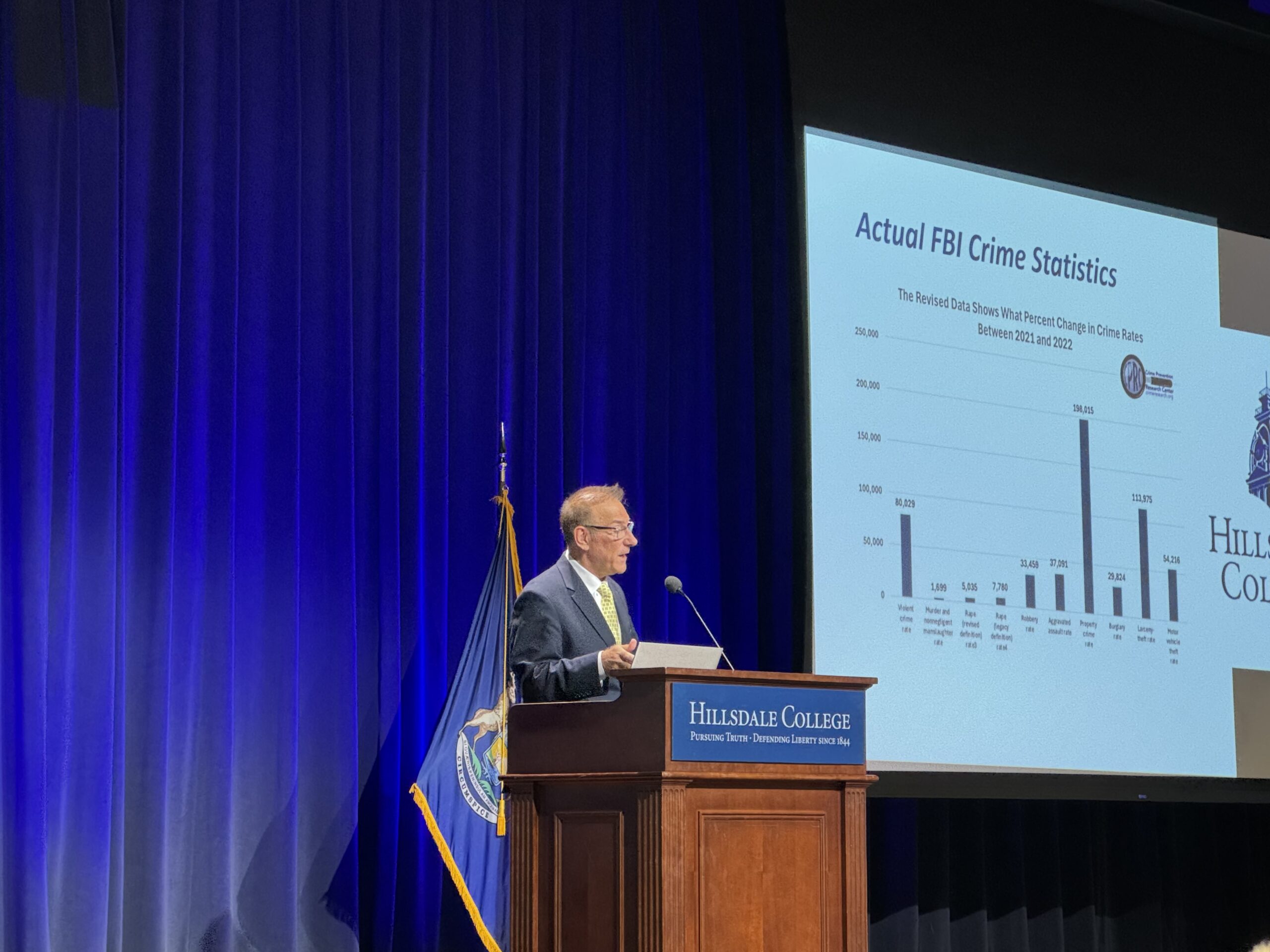
Larry O’Connor analyzed four examples of biased media in Plaster Auditorium Oct. 22. Courtesy | Adriana Azarian
Platforms like YouTube and podcasts outrank left-leaning TV news and expose users to conservative views, said Larry O’Connor, conservative radio host and Eugene C. Pulliam Distinguished Visiting Fellow in Journalism.
A host on WMAL radio in Washington, D.C., O’Connor spoke on “The Media and the 2024 Election” Tuesday night in Plaster Auditorium.
“This is the greatest time to be living if you crave news and information because we all have a supercomputer in our pockets,” O’Connor said. “We’re on the precipice right now of streaming video content where you can get whatever television shows you want on your phone, tablet, computer, and now smart television without the gatekeepers you used to have.”
O’Connor said access to information online on platforms like YouTube and social media replaces the need for once trusted news sources such as CBS, ABC, and The Washington Post.
“We have consumers seeking out news and information — they’re finding YouTube, this medium of video streaming direct to your device, you’re watching maybe what you used to watch, but suddenly you’re getting introduced to other content, and before you know it, Megyn Kelly is beating NBC and CBS news combined on YouTube,” he said.
O’Connor showed multiple video clips from left-leaning news sources, including what he called the media’s coverup of Joe Biden’s cognitive decline, media’s biased coverage of Donald Trump’s campaign, and “60 Minutes” recent edited interview with Vice President Kamala Harris.
“This is about ‘We the People,’ this is why we need a free and uninhibited, unabridged, independent press, because we are about to vote, and we deserve to know, and ‘60 Minutes’ and CBS News are deliberately keeping you from knowing,” O’Connor said. “Now I don’t know what kind of business that is, but I don’t think that’s the news business.”
O’Connor presented trends of Democrat, Republican, and Independent trust in mass media from a Gallup graph of 1972-2024. The graph indicated an overall decline in all three groups since 2018, with only 12% of Republicans and 54% of Democrats saying they trust the media in 2024.
Freshman Karis Lim said she thinks it’s sad the mainstream media has become untrustworthy.
“I think television and newspapers was a really cool era and now that it’s up to individuals — it’s sad that change had to happen, but I think it’s good we have that responsibility,” Lim said.
O’Connor displayed the top five podcasts with the most listeners, the first two being true crime, “The Joe Rogan Experience” third, followed by The New York Times’ news podcast “The Daily,” and the fifth being “The Tucker Carlson Show.”
According to O’Connor, two of the three most popular news and opinions podcasts being right-of-center is “a sea change, and those shows wouldn’t exist if corporate media had their way.” He said content creators like Rogan and Carlson can “bypass those gatekeepers” to deliver information outside of the mainstream media’s constraints.
O’Connor said he has grown his show in Washington, D.C., despite the area’s left-leaning political atmosphere.
“A lot of people think that we’re all siloed now, and that we’re just listening to an echo chamber and people in the media telling us what we want to hear. I don’t think that’s the case, I really don’t,” O’Connor said. “On my show, we lead with news and facts, then we deliver our analysis, and then we do something you’ll never see Anderson Cooper do: I give out my phone number, and if you disagree with me, call in and let’s talk about it. That’s the power of talk radio.”
General Manager at WRFH 101.7 FM Scot Bertram said the timing and topic of O’Connor’s speech was on point.
“Larry was the perfect guy to talk about those types of themes, considering his history coming from outside the media industry without any formal training whatsoever and entering through the dawn of the blogosphere and seeing how some of the power transferred from legacy media to citizen journalists,” Bertram said. “His points about the shift in video providers and distribution and the power of podcasting and its shift in this 2024 election cycle is accurate and something we hear at the radio station and the journalism program at Hillsdale.”
Lecture attendee Rick McCloy said he thinks older people, more than younger generations, are still accustomed to watching the news on TV.
“It’s easy to sit down in front of their TV and watch the news, it’s just what they do and what they’ve always done,” McCloy said.
O’Connor said media consumers have the power to choose where they get their news.
“If you want the news, if you want the information, you can seek it out,” O’Connor said. “You can get it, and the way the trends are going, that’s exactly what we’re doing.”