
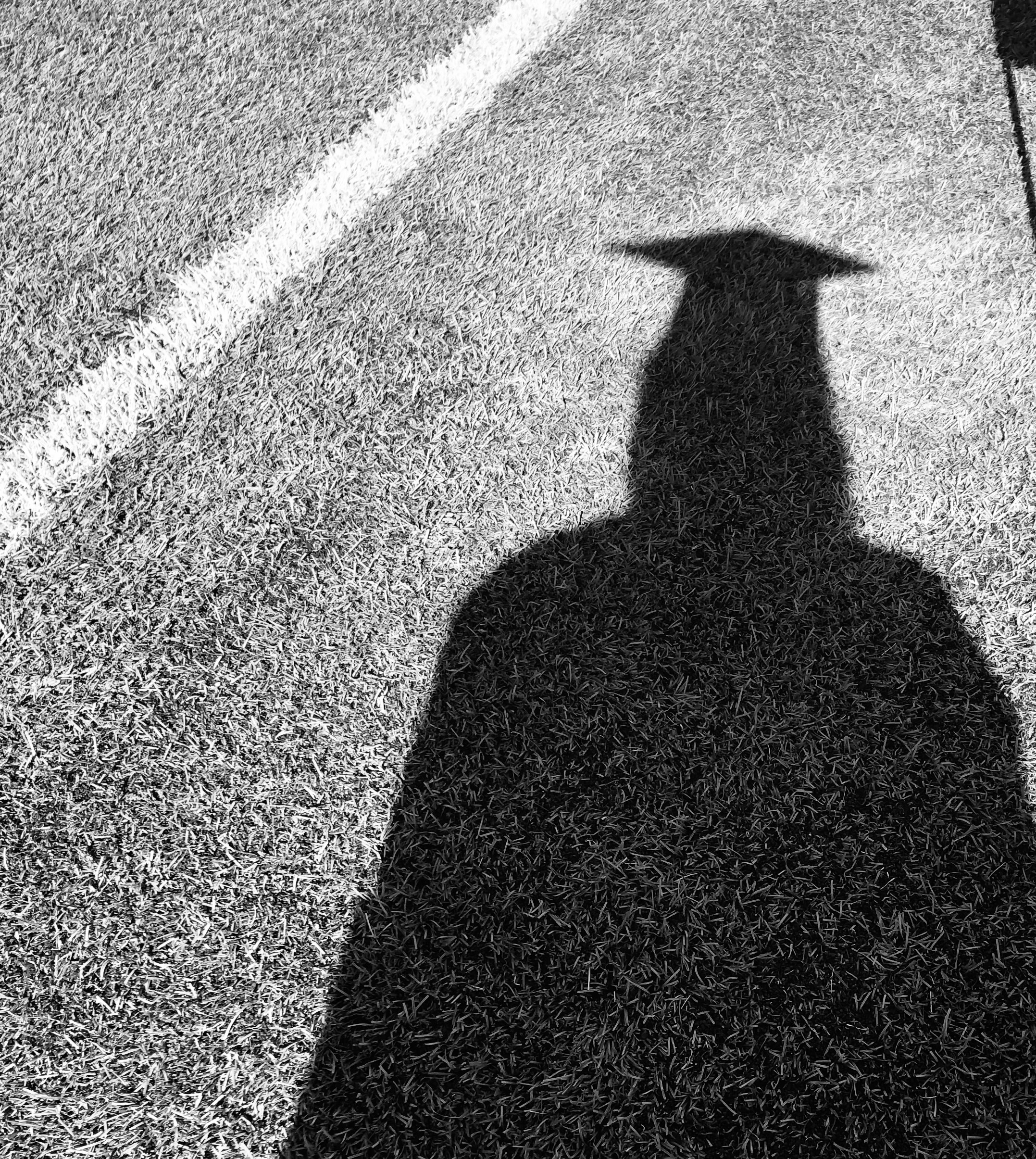
The only thing more haunting than my masked 2020 high school graduation was the number of kids whose folding chairs were empty that May afternoon, lost to freak accidents and suicide. My graduation was more a celebration of survival than a rite of passage.
“Sometimes in life, only poetry will do,” my English teacher used to say after the deaths were announced over the morning intercom.
The tragic fates of my peers wore him down just as much as us, yet we still looked to him for an answer. In response to children dropping dead like Raid-sprayed flies, could we really only offer rhymes?
Despite my teenage cynicism, nothing soothed my pain more than the poems he offered at the start of class. Poetry, he said, was a guide — a muse able to articulate feelings fully felt and known but never described. It was as if poetry was just as confusing and troubling a force as the very tragedies we were facing.
Since then I’ve made it a habit to read a poem a day, a practice which has colored my life in a way no other ritual has.
My starting place was Mary Oliver’s famous anthology “Devotions,” a poignant collection of musings on the natural world, a divine creator, and tenderness for oneself and others. Oliver’s poetry is short, making the daily habit easy to pick up.
“Tell me, what is it you plan to do / with your one wild and precious life?”
This line hung both in my head and on a small card posted near my bathroom mirror. Before I knew it, I began focusing on details of daily life I had never paid attention to before — morning light (when the Michigan clouds allow it), the intricate colors of the foliage on my walk to class, and the most profound of all: the elegance of the average goose.
Collections by Edna St. Vincent Millay and D. H. Lawrence guided me through much of my first semester winter blues, showing how one could identify with the cold and kindle warmth in spite of it. Contemporary collections by Richard Siken and Ocean Vuong helped me parse the unspoken grammar of modern love as I struggled through a breakup.
“Tell me it was for the hunger / & nothing less. For hunger is to give / the body what it knows / it cannot keep. That this amber light / whittled down by another war / is all that pins my hand to your chest,” Vuong writes.
College Chaplain Rev. Adam Rick opened every theology class with a psalm, and a collection by Czesław Miłosz completed my Continental Literature course with professor Cameron Moore. Nearly every student prefaced their praise of the poems with some iteration of “I don’t like poetry, but I liked this”: a sure sign of collective realization that maybe poetry wasn’t some highfalutin torture device contrived by academics. Maybe it had the force to affect people more deeply than novels, plays, and essays in its concision and ethereal nature.
For years, I’ve carried my English teacher’s words like a rock in my shoe — a reality I still don’t want to accept but one that rubs my heel raw. Now when things fall apart, I first lunge for the poetry shelf. Every collection presents an opportunity for an awakening to both minute details and massive themes in life.
Poetry won’t save kids from dying, at least not the ones at my high school. There are tangible ways to help young people in distress, but there will always be a moment in which we lack the words to share with others when the darkest hours strike. And in those moments, let poetry be the guide.
Ally Hall is a senior studying rhetoric and media.