
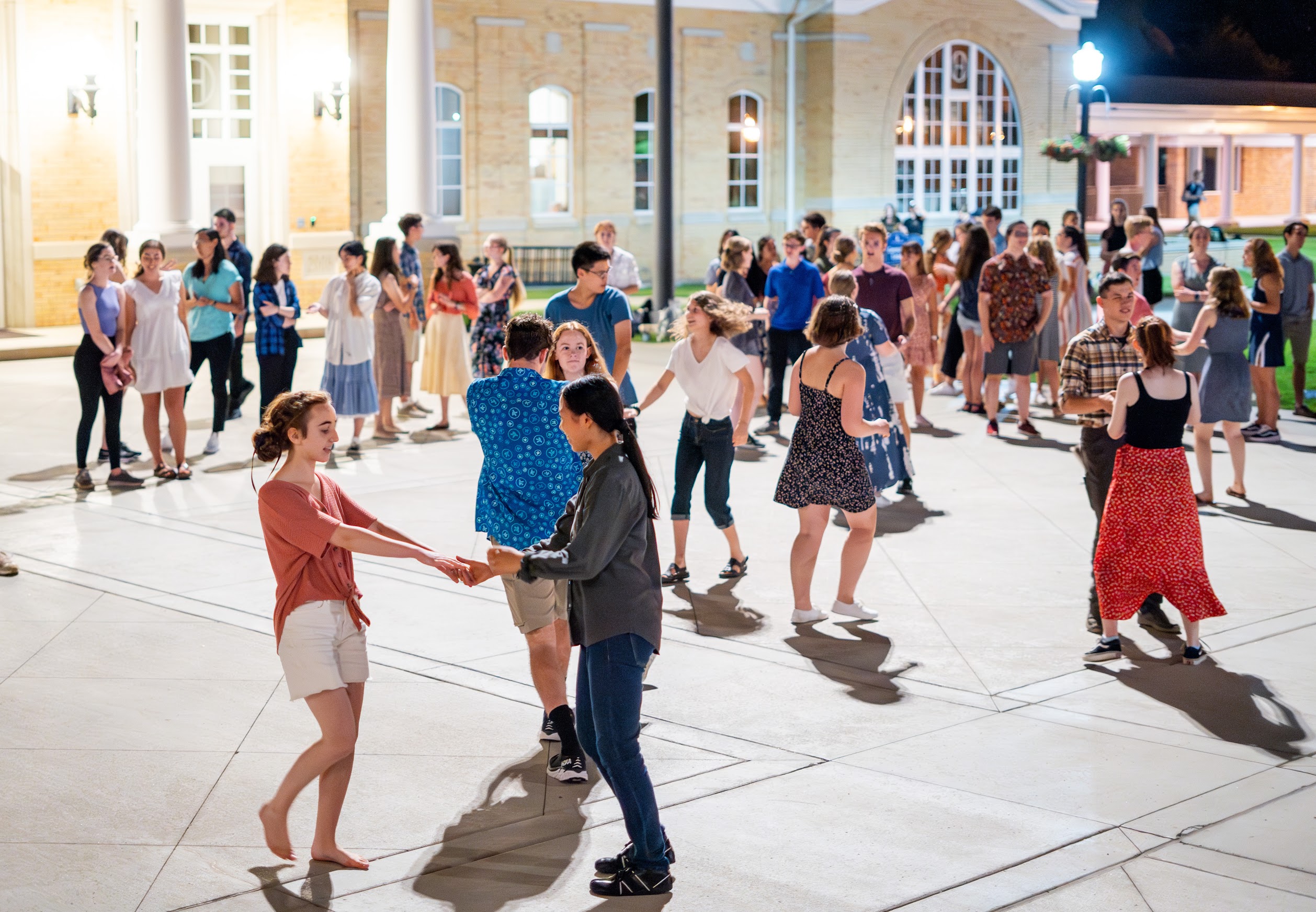
Call me a fundie, but everybody should learn how to swing dance.
Partner dancing is slowly fading from the American dance scene. What once occupied the pastime of thousands of American youths has transformed into party line dances, solo freestyling, and the latest TikTok craze. Not that backing-up to “Cha-Cha Slide” or learning the steps to “Texas Hold ‘Em” are bad, but partner dancing should return to the list of must-know dances.
Swing dancing is the perfect style to bring such dancing back. Its simple steps, intuitive turns, and basic dips make it quick and easy to learn. Give it an hour, and you can be triple-stepping across the dance floor with your partner.
Not only is it simple to learn, but the style is very forgiving. Unlike more formal ballroom dances, swing has an easy-going, lighthearted style. It is the jazz of dance and, as the famous jazz musician Miles Davis said, “Once is a mistake, twice is jazz.” A mistimed step, awkward handhold, or misread cue go unnoticed as the jazzy quirks that make swing what it is.
The flexibility that hides mistakes also invites creativity. The lead can create hundreds of combos by mixing and stacking inside spins, frat boy turns, and the pretzel. The various dips, tricks, and turns provide fodder for improvisation, risk taking, and pattern building. There’s always something new to discover, something fun to learn — no strict routine or formal training required.
Moreover, the slightest variation of steps makes most pop and country songs swingable. Although traditionally danced to Big Band Jazz, the numerous styles within the swing world — Lindy Hop, West Coast, East Coast, Hustle, Boogie, Two-step, and country swing — make swing applicable to most popular songs. From Michael Jackson to Morgan Wallen to Taylor Swift, swing can dance to them all.
Swing’s versatility extends beyond musical genres. Weddings, proms, and jazz concerts still provide dance floors for swing dancers to show off their moves. Knowing the basics goes a long way to impress friends and family, not to mention your sweetheart.
Speaking of weddings and sweethearts, many students mistake swing for a dating program. The guy dances with the girl, they fall in love, and next thing you know they’re married juniors and she’s dropping out of school to raise their newborn.
Swing tradition dictates that a man leads a woman through the dance but dancing with a girl doesn’t make her your wife. Rather, swing provides a structure that encourages courteous interaction, casual conversation, and lighthearted fun with the opposite sex.
Beyond wholesome social interactions, swing also teaches valuable communication skills that modern solo dancing lacks.
On the dance floor, the lead is responsible for directing the follow. His hand gestures, visual cues, and words must clearly communicate to his follow the moves he wants to execute. Not only does this require him to be clear and decisive, but it forces him to adapt his communication style to his follow.
Every follow has her own quirks and flaws. Some grip hands too tight. Some need a firm hand to prevent back-leading. Some are too rigid to move fluidly. Learning how to adjust to his follow’s dancing personality teaches the lead flexibility, empathy, and clear communication.
In return, the follow is responsible for following the lead’s direction. This requires sensitivity and attentiveness to his physical and verbal cues. She must adapt herself to the patterns and leading style of her partner. Whether he is a strong lead that loves to dip or a gentle guide that favors spins, she must move to the tone that he sets. Being a follow fosters compatibility, responsiveness, and adaptability.
The lead-follow relationship is a game of call and response, of give and take. The two must work together and use their strengths of adaptability and communication to create something beautiful.
The skills of partner dancing translate into everyday life. Group projects, business partnerships, and marriage dynamics all mirror the lead-follow relationship and require clear communication, empathy, adaptability, and responsiveness. The dance floor is a fun, simple way to practice those valuable skills.
Anna Leman is a senior studying politics.