
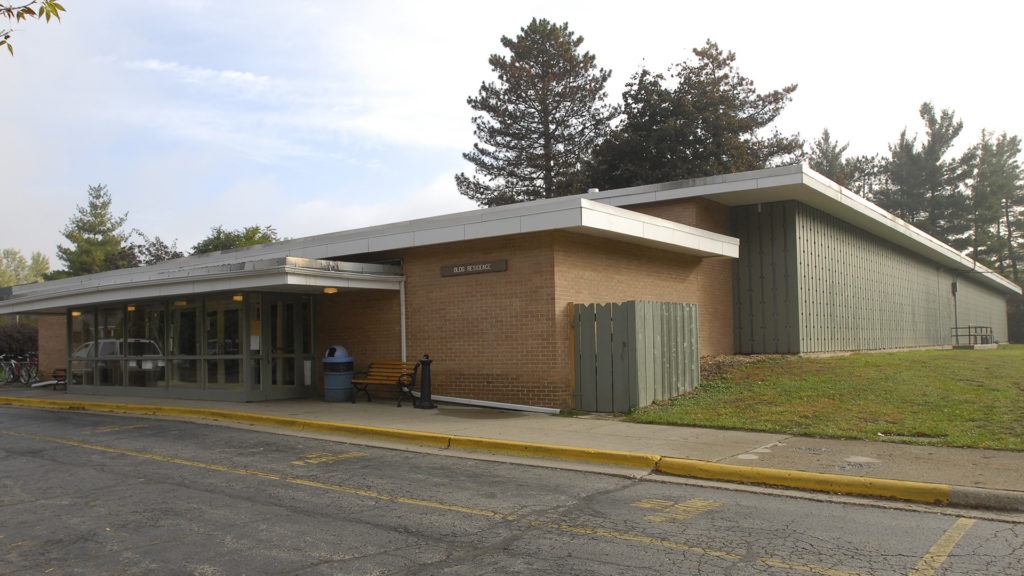
As one of the 80% of Hillsdale students who are from outside Michigan, I’m grateful that Hillsdale has let me store my belongings on campus in the past. I understand the lack of space in dorms (I lived in Olds Residence, after all), but the administration should have tried compromising with students before nixing storage.
Unlike many other colleges, Hillsdale has previously assisted students by letting them store their belongings on campus over the summer, according to the deans. With the sudden change to the storage policy, many will scramble to figure out how they will move home in the spring. For future decisions, incrementally changing the policy and clearly explaining the problem will help students adjust.
According to the deans, the previous storage policy was becoming unsustainable. The dorms didn’t have enough storage to accommodate students traveling long distances, and the housekeeping staff struggled to clean rooms stuffed with boxes.
“We should have done this a long time ago,” said Dean of Men Aaron Petersen.
The new policy lets students store one TV and one mini fridge in the dorm storage rooms. The administration suggested renting a storage unit and Petersen said the deans hoped students would split the cost.
Although there are storage facilities near Hillsdale College, they cause logistical problems for students.
Lake Wilson Storage is the closest storage facility to Hillsdale College. The cheapest units at its Monroe Street location, near the Handmade sandwich shop, are $55 per month, while the most expensive cost $75. Splitting the expense three or four ways makes the price more manageable (at $15–$25 per month), but sharing a unit could be impractical.
According to its website, Lake Wilson requires renters to provide their own locks. Unless students duplicate keys (which will be a hassle during the end of the school year), they’ll have to coordinate move-in schedules to access their unit. Given the number of students who move in early — such as resident assistants, orientation guides, athletes, and Collegiate Scholars — it’s likely the unit won’t be emptied at one time.
If students don’t have cars, they will have to find a friend to help ferry their belongings to Monroe Street, assuming it has available units. The next closest facility, Lake Storage Company, is 2.5 miles away. With the influx of students needing units, it’s probable that some will have to travel outside Hillsdale to find something available, which adds stress to those without vehicles.
Drastically changing the policy at the start of the school year makes it unnecessarily difficult for students to manage their belongings. Telling students about the problem in August doesn’t magically reduce the belongings they’ll take home in May. Students who packed for summer storage months ago tried to maximize the belongings they left behind, a strategy which makes them unprepared for the new policy.
Students who have gotten used to leaving bins on campus will be forced to rent a locker or throw items away. It’s unlikely students will find enough space in their cars to bring their bins home — especially since most drive sedans instead of SUVs. Students who fly face the same problem.
The new policy also ignores students who move themselves in. Some of my friends drive themselves to and from school and don’t have space in their cars for all their belongings. Others carpool and might not be able to drive their bins home. Some bring parents and siblings to help them move in, but that’s not possible for everyone, especially families with lots of children. Forcing families to balance children with moving chaos or find childcare ignores the sacrifices they’ve already made for their students.
For some, packing lighter might be a solution. But students have to bring summer, fall, and winter wardrobes for Michigan weather. Even if they cut back on clothes, students still bring textbooks, furniture, instruments, and small appliances. “Packing light” shouldn’t mean making dorm life unbearable.
If the administration wants to keep students in dorms instead of giving more permissions to live off campus, it should be prepared to face the consequences instead of off-loading them on students.
According to Petersen, students abused the old storage policy. That may be true, but communication about the old policy was never clear.
In my previous two years at Hillsdale, storage rules varied from dorm to dorm. Olds let women who lived more than six hours away store two 30-gallon bins and said nothing about TVs or mini fridges. Most women stored a fridge anyway. Benzing Residence let women who lived over eight hours away store two bins of unspecified size and a mini fridge.
The lack of consistent rules created confusion, and students will now benefit from a blanket standard. But rather than effectively nixing the policy, the administration should have tried a compromise first.
A compromise policy could have informed students that storage space was running low and that the administration was reevaluating it. Limiting storage to one bin and one mini fridge would prepare students to pack less or look into other options. If after the new policy storage space was still a problem, the administration could limit all students to a fridge and a TV.
Justification for the distance students are required to live from campus could also placate students. Vehicle space doesn’t multiply if a student lives 7.5 hours away instead of eight. If the numbers show that restricting the distance to eight hours will help with space, students should be told instead of wondering why eight is suddenly the magic number.
In the end, students are responsible for what they bring to campus. We’ll either share a unit or find a way to move everything home. Next time, letting students in on the process will make everyone happier and the transition smoother
Catherine Maxwell is a junior studying history.