
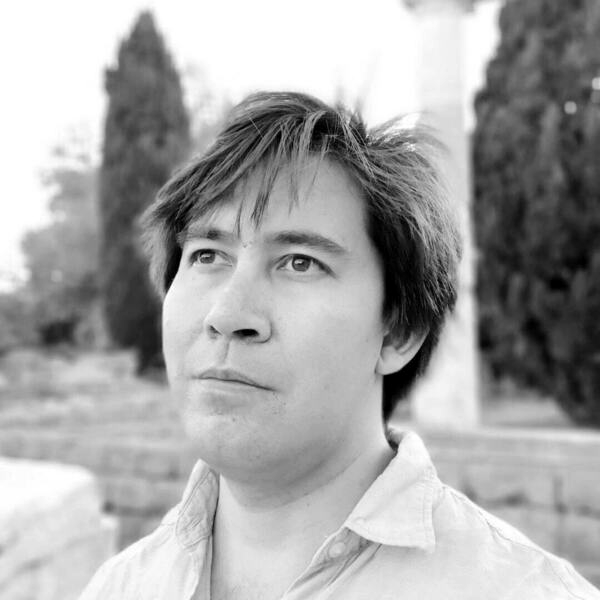
When a half-Thai, half-British classicist-turned-medical doctor spent time in an impoverished African country, he noticed the West’s impact on this minute African country’s culture.
Alexander Chula, currently a medical doctor working at a London hospital, served for a time in the African nation of Malawi as both a Classics teacher and medical doctor. He recently published a book, “Goodbye Dr. Banda,” documenting his experiences of living in Malawi.
Chula visited campus March 21 to give a public lecture about his book. This was part of Chula’s U.S. book tour which covers several Midwestern schools including the University of Indiana, Notre Dame, and the University of Chicago, according to Chairman and Associate Professor of History Korey Maas.
Chula’s book has been well-received in conservative circles in England, Maas said.
“It’s a unique book,” Maas said. “It’s part travelog, part memoir, part social commentary, but also an implicit commentary on colonization.”
After first studying Classics at Worcester College, Oxford, Chula considered going right to medical school but he instead began working in Malawi as a Classics teacher.
“I was thinking about medical school, when I saw an advert for a teacher of Latin and Greek in Malawi,” Chula said.
He applied for the job and got it. Upon arriving in Malawi, Chula said he was surprised by the cultural differences between Malawi and the West, especially when it came to money.
“Malawi is the 10th poorest country in the world. It’s a very dysfunctional place,” Chula said. “The survival of anyone, anything, or any institution is questionable from one year to the next.”
Chula said he was amazed to discover a school that was teaching the Western Classics in an impoverished country.
“It started with curiosity because I was there teaching Latin and Greek, but it seems so wildly unlikely that there should be anyone teaching Latin and Greek in a place like that,” Chula said.
Hastings Kazmu Banda, a Malawian dictator, founded the school Chula taught at. During his time in office, Banda established the Classics school, which provided an education that starkly contrasted with the country’s environment.
“Banda thought Malawi’s greatest problem was that no one knew Latin or Greek,” Chula said.
“The world outside the school is rural Malawi, which is a world of extreme material hardship,” Chula said. “And on the other side, you’ve got students learning Latin and Greek, reading Homer and Virgil, so you can’t help but be confronted by what on earth has brought about this bizarre situation.”
The two worlds within Malawi — the one within the village and the other within the school — were drastically different from one another, Chula said. This prompted him to begin thinking about Western influence in these two places.
“When I sort of compare the culture of village Malawi — these very poor people with the sort of high culture that was presented to them by Western missionaries through the best of their education programs — what I’m pointing to in the village is this sense that you get, which is all the more powerful because it’s materially so poor,” Chula said.
Banda, along with Christian missionaries such as David Livingstone, introduced Malawians to Western ideas of classical education throughout the 19th and 20th centuries.
“Even, and especially, in extreme hardship, you get this powerful sense that man does not live by bread alone,” Chula said.
Chula taught for several years in Malawi before returning to England to attend medical school. He later returned to Malawi as a medical doctor specializing in infectious diseases.
“It was after I left Malawi that I started thinking about the experiences I had there, and I started writing,” he said. “I wrote an article initially for the New Criterion, and the article was very well received.”
Chula wrote a series of articles before deciding to write a book about his experiences in the country.
“It was quite a compulsive thing,” Chula said. “If I had found that someone else was writing that book, I’d have been delighted that I didn’t have to write it myself. But I saw that no one else was going to write it, so I felt that Malawi contained a story that was so little known and yet so relevant and so important for people in the West to hear about.”
Chula’s talk at Hillsdale centered around discussion of colonialism and the spread of missionary work which allowed for the school to take root in Malawi.
“The missionaries who brought these ideas to Malawi were people who promoted higher things over that which is material,” Chula said.
These days, Malawians view westerners as materialistic people, and according to Chula, they have a difficult time separating the idea of materialism from a definitive aspect of Western culture.
Sophomores Gianna Dugan and Ashley Poole attended Chula’s speech and said they appreciated Chula’s discussion of literature and the impacts of missionary work and colonialism.
“I really appreciated how he discussed the effects of reading the Classics like Plato’s ‘Republic’ and how it forms the idea of a national literature in Malawi,” Poole said.
Dugan said she thought the discussion of missionary work in Malawi was compelling, especially how it spread the ideas of Western culture.
“It’s fascinating to me to think about how the Western culture or Western heritage is affecting such an isolated group that wasn’t a part of that at the time,” Dugan said. “I think we need to be more aware of the broader impact of Western thinking.”
Ultimately, Chula said he hopes audiences gain a greater appreciation for Western culture and its impact on specifically Malawian culture.
“The thing that I suppose I’m trying to draw out in the book is not maybe a difference, but actually a point of similarity,” Chula said.
