
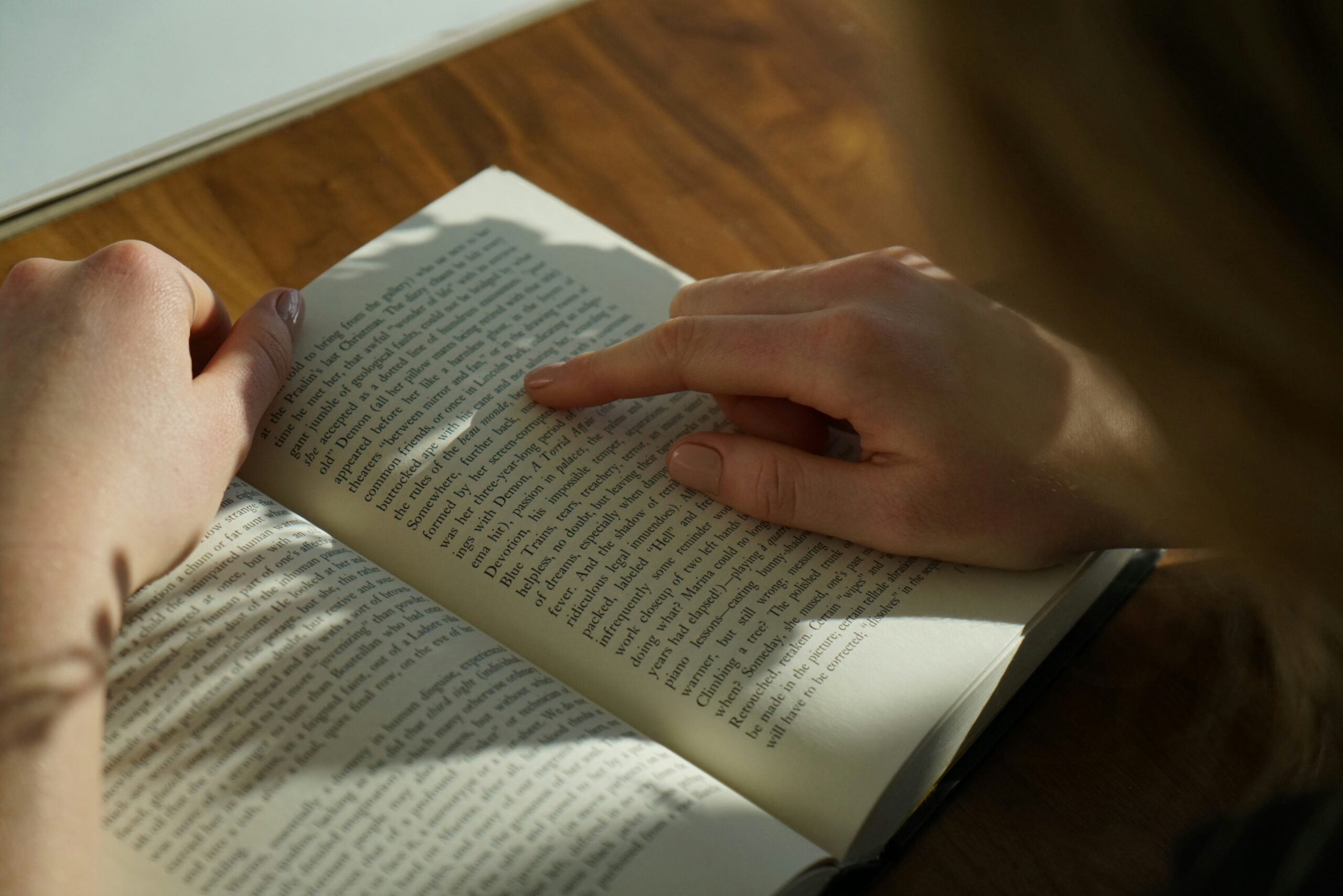
It is a truth universally acknowledged that a college student in possession of spare time over summer must be in want of a book.
Those who enjoy settling down with a good volume of poetry would be well-advised to check out A.E. Stallings, a poet and a classical scholar, writes often for Poetry and the Times Literary Supplement. I was particularly enthralled by “Like” (a Pulitzer Prize finalist) and “Hapax.”
As long as I’m on the topic of devilishly witty, classically-inspired poems, Alexander Pope’s “The Dunciad” is a hilarious parody epic in iambic pentameter which begins, “Books and the man I sing, the first who brings / The Smithfield muses to the ears of kings.” If you couldn’t get enough of Aeneas in Great Books but you want a more recent epic for your next beach read, this could be the pick for you.
Life isn’t all poetry and flowers, however — check out Dorothy Sayers’ Lord Peter Wimsey novels if you’d prefer to ponder death, murder, and crimes. Die-hard Sayers fans are divided over whether anything can top “Gaudy Night,” but my personal favorites are “Murder Must Advertise” and “Unnatural Death.” While not quite as classic as the Lord Peter stories, Daniel Taylor’s “Woe to the Scribes and Pharisees” is also an intriguing mystery and a keen commentary on Christianity, particularly evangelical denominations.
The principle that the book is always better than the movie continues to hold true in the case of Herbert Frank’s “Dune.” A slightly less-well-known series, however, is Cixin Liu’s “The Three-Body Problem” trilogy. Originally written in Chinese, Liu’s award-winning novels are both literarily enjoyable and scientifically thought-provoking. And if reading is too much work for a sci-fi novel, Netflix recently premiered a TV show based on the trilogy.
Speaking of difficult reads, Alessandro Manzoni’s “I Promessi Sposi” – or “The Betrothed,” as it’s known in English – is one of the most highly influential works of Italian literature and an extremely edifying story. It is quite long (let the reader be warned), but is also a rewarding read. Personally, I’m looking forward to investigating Michael F. Moore’s 2022 translation this summer, though I found Bruce Penman’s 1972 translation quite readable as well.
In terms of readability, David Foster Wallace can be anything but straightforward — nonetheless, his grammar is impeccable and his prose is among the best English…ever, really. I’d recommend starting with his tennis essays: a collection such as “String Theory” is a good jumping-off point.
I really must recommend P.G. Wodehouse’s “Jeeves and Wooster” series. Jeeves and Wooster are inimitable, incorrigible, and ingenious — and they pair nicely with the Sayers mysteries mentioned above. On a completely unrelated note, “Maurice and Thérèse: The Story of a Love” (edited by Patrick Ahern) is a collection of the letters of Maurice Belliere and Saint Thérèse of Lisieux which is, quite simply, one of the most beautiful books I’ve had the pleasure to read in the last year.
Finally, Adrian Goldsworthy’s biography “Caesar: Life of a Colossus” provides an engaging and well-written look at one of antiquity’s most recognizable figures which will prove useful to anyone interested in Rome, Caesar, or the latter years of the Roman Republic.
Summer’s the time for vacations – travel to Italy with Manzoni, Arrakis with Frank, or England with Sayers. (You could even pay a visit to Pemberley Estate while you’re there.) Regardless of what you read, however, may this summer be the season when your fancy lightly turns to thoughts of books. Happy reading!
