
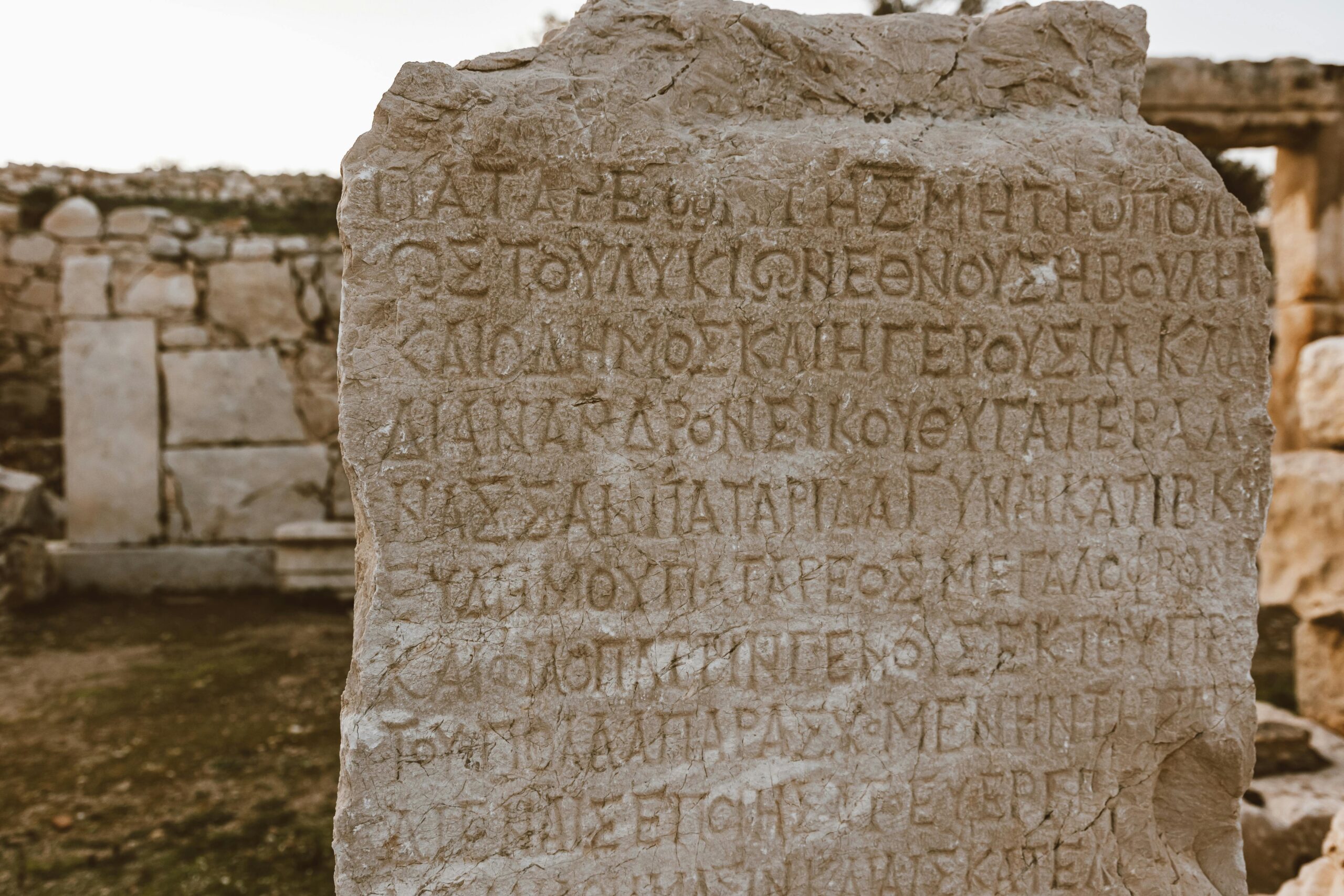
Six students placed in writing and translating competitions at the national classics competition in Pennsylvania last week.
Eta Sigma Phi is a national academic honors program for classics students. The annual convention for the honorary, held in Carlisle, Pennsylvania, celebrates the study of classics with student presentations, contests, and events including the Maurine Dallas Watkins Sight Translation Contests.
Professor of Classics Joseph Garnjobst said during his many years in the classics department, he can’t remember a time when Hillsdale students won this many awards.
“You never have that expectation because you don’t know the exam and you also don’t know how many other schools are going to compete,” Garnjobst said. “The point of these exams is not really to win. It’s like a rock festival where you’re there to celebrate something, and we’re there to celebrate classics.”
In advanced Greek junior Jonah Murray tied for first, winning the Lawrence Crowson Prize. Freshman Zachary Chen received an honorable mention in advanced Greek, placed second in advanced Latin, and first in advanced Latin prose composition. Junior Jonathan Rolfe placed first in Koine Greek and advanced Latin. Sophomore Brian Curtin placed second in Koine Greek, freshman Viola Townsend placed third in intermediate Latin, and sophomore Isabella Krob placed third in advanced Latin prose composition.
This year, Hillsdale College also had two national officers for the honorary, Rolfe and sophomore Alexandria Laird.
“As a national officer for Eta Sigma Phi, my main duty has been to go to the annual conference of the Society for Classical Studies in January,” Rolfe said. “The national officers man the Eta Sigma Phi table, promoting the honorary to students and professors. This is really a perk of the job more than a responsibility.”
Rolfe said he has always loved the study of languages and how the knowledge of ancient languages allows for a deeper understanding of the language and literature itself.
“There are of course many worthy ancillary goals: producing translations, reading untranslated texts, learning about history, etc,” Rolfe said. “But if the only point of language learning was to have access to more texts, then this would be a slow and laborious way to undo the happy sin of Babel.”
Rolfe said he encourages other students to study classics.
“Even a little bit of dedicated study of Latin and Greek can bear a lot of fruit,” Rolfe said.“There’s almost no field that has such potential to open up other branches of knowledge, particularly in the humanities.”
Garnjobst said he views the convention as a celebration of the scholarship that all the students are doing, rather than a game of us versus them.
“Classics as a field is in danger in a lot of places,” Garnjobst said. “This convention is a way of saying it ain’t dead yet.”
Chairman of Classics Carl Young said the college has been fortunate to have many talented students who are classics majors.
“We demand a lot from our students,” Young said. “We have very high expectations especially regarding language proficiency. We expect a lot, but we’re also prepared to give a lot in return. Our advanced courses tend to be small, and our faculty are generally willing to invest as much time in our students as the students are willing to give in return. So, I think our students know that we, the classics faculty, want them to succeed and we’re there to help them do so.”
