
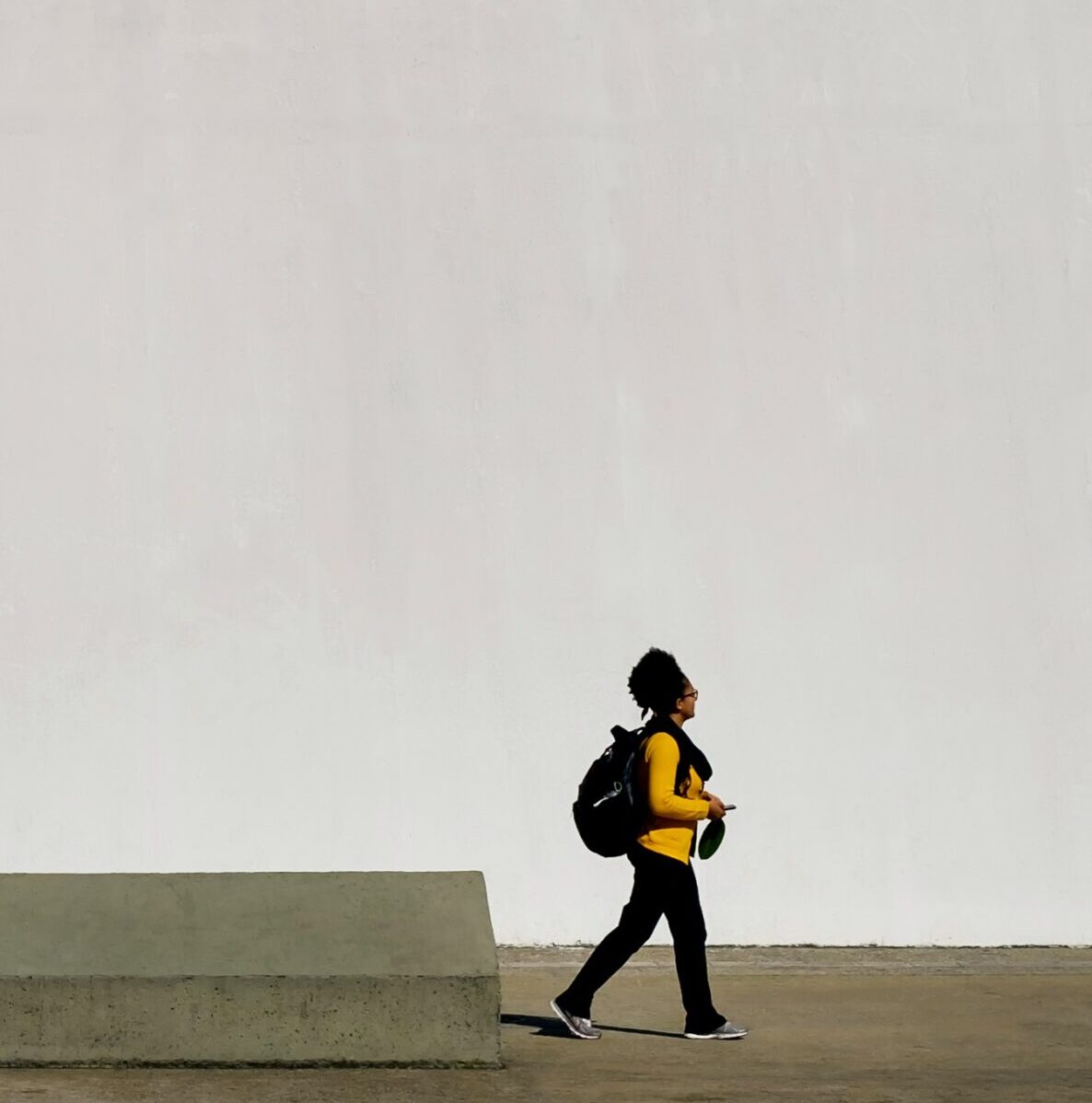
The reasons to walk to class go beyond saving money on gas, enjoying campus’ beauty, saving the environment, or even getting extra exercise.
Walking is better than driving because it can be an antidote to the twin maladies of utilitarianism and pragmatism. That is to say, you ought to walk to your classes rather than driving because it will provide you with an opportunity to engage with — and ultimately embrace — your own limits.
The issue with typical arguments for walking to class is that if the weather is cold or you’re running late, altruistic thoughts about helping the trees and getting your exercise are going to fall quite flat.
So instead, I’d like to argue that walking is a good thing in its own right and is worth being enjoyed even under adverse conditions.
To be fair, I never thought much about walking until I got to college. It is true that I’ve always enjoyed hiking, but when I was younger, I considered hiking to be mostly a means of enjoying nature that happened to involve walking.
It is true that one of the great things about taking a walk is the fact that it frees you up to enjoy the world around you in a way in which driving simply doesn’t allow. If you walk to class instead of drive, I can guarantee you that you will get to know the walk to your class building quite well. But even if your surroundings as you walk to class are less than idyllic, the very act of walking can still be enjoyable for you.
A good walk involves the whole person — it forces you to use your body, to set a pace and keep it, and to work to get to your destination. Walking isn’t merely physical, though. By its nature, walking is quiet and lends itself well to reflection, prayer, or conversation.
Today, we are constantly assailed by the hectic busyness of everyday life. We have emails to send, papers to write, texts to read, and social media to pore over. As T.S. Eliot put it, we are “distracted from distraction by distraction.”
Concerned with our affairs of consequence, we have no time for the useless, the sub-optimal, or the unnecessary. If you don’t have a car, of course you have to walk, but if you do happen to possess a car on campus, the decision of whether to walk somewhere becomes a cost-benefit analysis weighing the pros of getting somewhere quickly and the cons of having to park and pay for gas.
Rather than being a necessary evil or a nice exercise, walking is a chance to throw yourself completely into a journey, to fully engage in the strain, the difficulty, and the beauty of physically getting yourself to your destination. To walk is to wander, and it is only by wandering that one is led to wonder.
So please stop and think about your walk the next time you go to class. If you drive, consider hoofing it over to Lane or Strosacker. I can’t guarantee that you’ll get to class on time or that you’ll enjoy the time you “wasted” on your walk. But I can tell you that you’ll get an opportunity — a gift — the chance to slow down, reflect, and relish the burden of your human limitations.
