
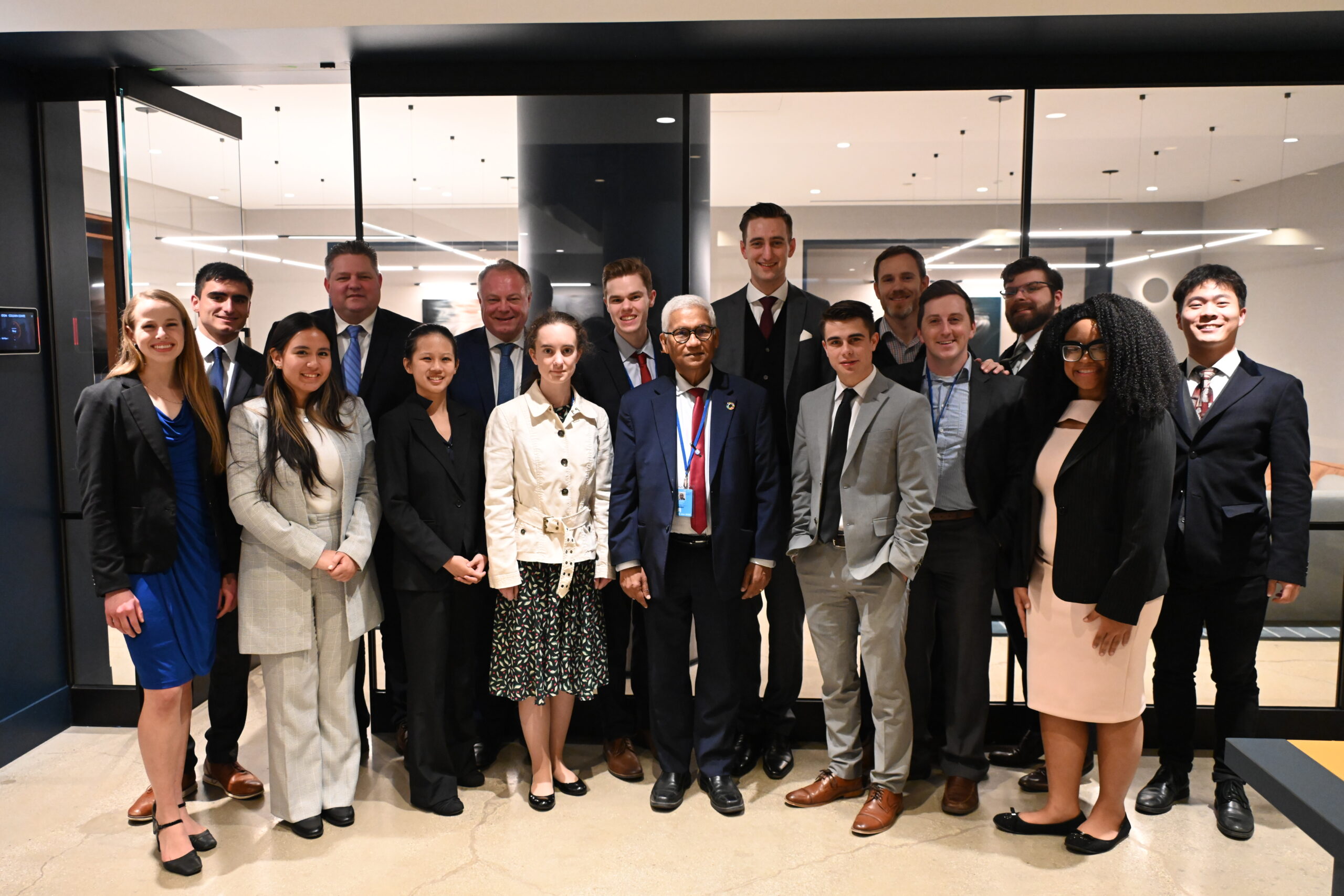
While some students sailed in the British Virgin Islands for spring break, other students traveled further north to the United Nations headquarters in New York City.
A group of 12 students attended the Christian Council International’s United Nations Fellowship which included the 68th annual Commission on the Status of Women and a conference on the Status of Women and Family.
Junior Mark den Hollander said he has served as a U.S. representative for CCI for two years and saw a need for more
conservative voices when he went to the conference for the first time last year.
“I basically made it my mission and started recruiting students and talking to people,” Den Hollander said. “They learned a lot. It wasn’t always easy because you’re doing hard work, sitting in the middle of a whole bunch of people who have very different opinions from you. That can be very challenging mentally.”
Ph.D. student Theodore Madrid said the trip consisted of observing a lot of the inner workings of the UN, attending meetings, and going into delegations.
“A lot of time was set aside for meeting with delegates or heads of different nongovernmental organizations and talking to them about their work and the sorts of things going on at the UN,” Madrid said.
Sophomore Charlie Cheng said he learned how the UN functions and how NGOs like CCI can influence some of the UN’s agendas.
“Some other NGOs hosted lectures to inform about other problems that people are facing in the UN because it’s very liberal and left leaning,” Cheng said. “A lot of the values that the UN is indoctrinating into third world countries are very devastating.”
Some conservatives fail to recognize the significance of the UN as a global influence, according to Cheng.
“Western nations, dominantly the European Union and the U.S., are pushing a very liberal concept called ‘comprehensive sexuality education’ in third world countries,” Cheng said. “It aims to sexualize children. But the words are painted in a way that it doesn’t seem that way.”
The comprehensive sexuality education “gives young people accurate, age-appropriate information about sexuality and their sexual and reproductive health, which is critical for their health and survival,” according to the World Health Organization.
Madrid said that after reading the fine print of resources the UN is sending to third world countries, he realized the material is more graphic than advertised.
“The UN couched, especially the treaties, to some extent, in language that sounds a little bit more benign—like it’s just an
ordinary introduction to human sexuality for young people. But it’s way worse than that,” Madrid said. “It’s very obscene, very graphic, and begins at the very youngest ages.”
Cheng said a lot of third world countries sign the resolution agreement without knowing what they’re supporting, and nations who oppose the resolution face loss of funding threats.
“I think we should pay more attention to the UN and possibly influence it ourselves to promote rights and values that we consider are right,” Cheng said.
Freshman Alex Mooney said he didn’t realize how much influence the UN has on third world countries.
“Even though the UN doesn’t technically make laws, it still has massive influence in a lot of other ways, especially culturally,” Mooney said.
Freshman Bradley Haley said the trip was a great experience to learn about international politics.
“The trip gave me new insights into what’s actually going on on the global level with issues that I care about on the domestic level,” Haley said.
In addition to third world and international political influence, the UN and other progressive organizations have strong media platforms, especially on issues like the transgender movement, Den Hollander said.
“One of the main objectives at the UN right now is really trying to promote comprehensive sexuality education in every sphere of life for Western society,” Den Hollander said. “They’re trying to essentially replace every aspect of what we know in life.”
Haley said through its comprehensive sexuality education, the UN is exporting to the rest of the world a secular ideology and religion, unlike any values treasured at Hillsdale.
“It was interesting to see how what we’re kind of exporting to the rest of the world is an ideology and religion and it’s not the Christian religion or free market principles or anything that you know, we here at Hillsdale treasure,” Haley said.
Mooney said he was thankful for the opportunity to meet people from different cultures and hear their different perspectives without a language barrier since everyone at the UN spoke English.
“I met people from Africa, all over Asia, and South America. It was fantastic to meet all these people,” Mooney said.
Den Hollander encouraged conservatives to stay informed about the world around them.
“I think that in order for us to stay up to date with what’s going on in the world, we have to stay ahead of what all of their talking points are,” Den Hollander said.
