
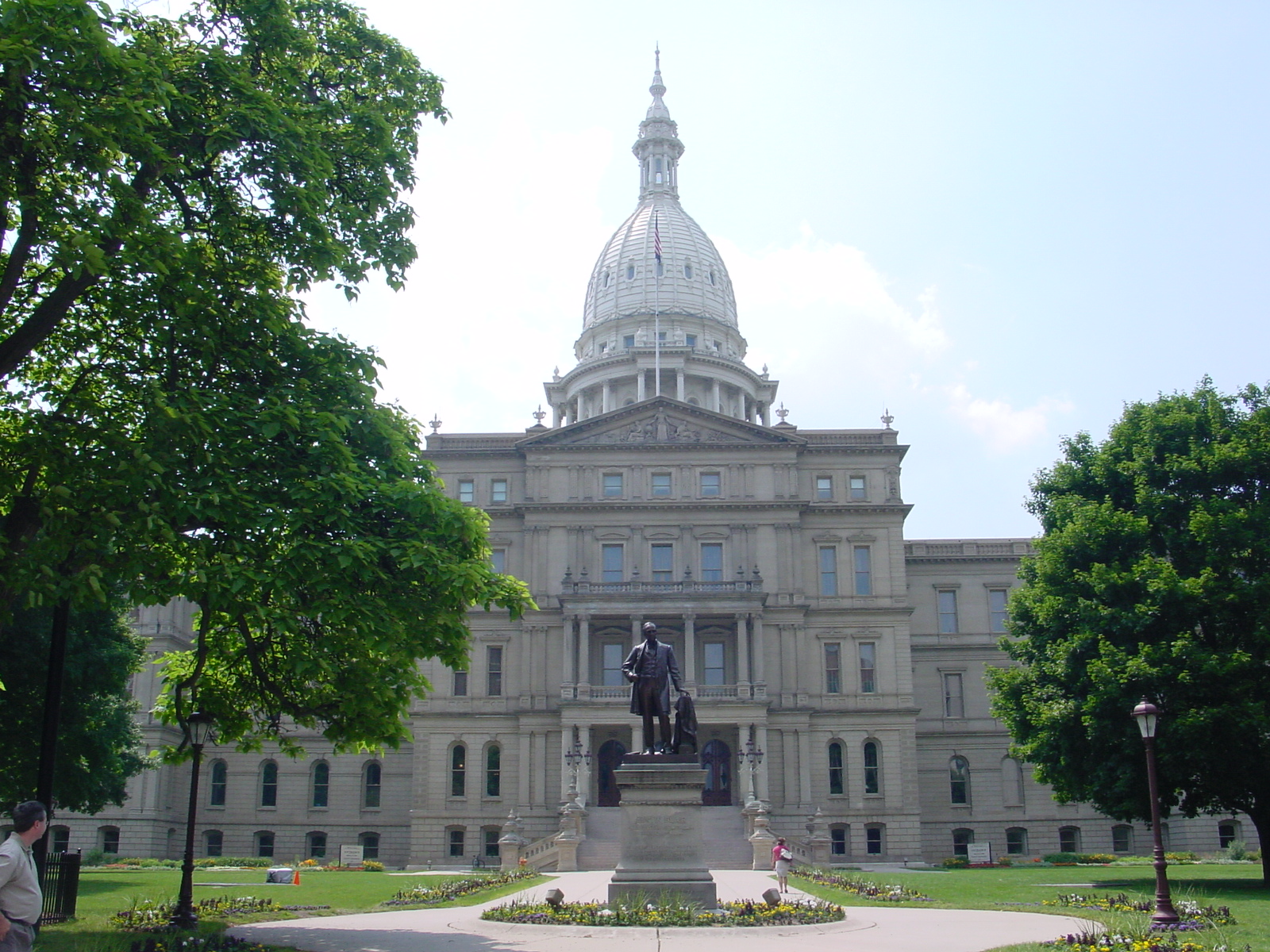
Michigan considers creating homeschool student registry. Courtesy | Flickr
Many of Hillsdale’s homeschool families say they fear that a registry of homeschooled children proposed by the Michigan Department of Education will lead to more attempts by the state government to restrict the educational freedom of families and schools.
“Michigan families have exercised this right unimpeded by the government to the end of many brilliant, well-educated young people,” State Rep. Andrew Fink ’06, R-Hillsdale, told The Collegian. “Home education is a valuable resource, and it is my belief that the recent effort to have the state intervene in it is misguided and imprudent.”
In January, Michigan Superintendent of Public Instruction Michael Rice asked the legislature to create a bill that would require every student, including private and homeschool students, to be tracked annually by a government database.
State Rep. Matt Koleszar, D-Plymouth, said on X (formerly known as Twitter) in December that Michigan is one of only 11 states that doesn’t count or register homeschooled children. He claimed abusive parents take advantage of that to avoid being caught.
“It’s time to support all Michigan students and change that,” he said. “Michigan cannot allow this loophole to continue.”
Fink said he opposes efforts to register homeschool students because Michigan law guarantees the protection of the parent-child relationship. He addressed the allegations involving a set of abusive homeschooling parents who fostered up to 30 children, which Koleszar used to justify the homeschool registry.
“The victims in this case were children already included in the state’s foster registration,” Fink said. “No one has yet answered my question as to how a homeschool registration would have effectively prevented abuse when another state-operated registration did not. It is a poor and cynical excuse for the government meddling with the thousands of families who have found home education works best for them.”
Elizabeth Schlueter has homeschooled all nine of her children for more than 10 years. She said she is thankful Michigan law respects the rights of parents.
“Currently, Michigan state law is very friendly to homeschoolers, and puts the burden of proof on the state to prove that the child is not being educated at home,” she said. “Parents are not required by law to gain permission from the state in order to homeschool.”
The homeschool registry may be an attempt to circumvent the will of the people as expressed in Michigan law, Schlueter said. As the primary educators of their children, she said parents should be able to choose their child’s schooling method.
“The real issue here is that the teachers’ unions do not like choices in education,” Schlueter said. “Choices for parents mean that public schools will have to improve in order to compete and keep students. Registering homeschoolers is one step toward putting pressure on unwilling parents to bow to sub-par educational choices.”
Assistant Professor of Education David Deiner said he is concerned about the potential bill because parents should have the ultimate authority over and responsibility for their children’s education. Deiner and his wife have homeschooled their four children.
“The government is not ultimately responsible for education, and it is dangerous when the government starts to intrude on or control the right that parents have to educate their children as they see fit,” he said.
The majority of homeschool parents deeply care about their children’s education, Diener said.
“There is in fact a significant amount of data showing homeschoolers to be way ahead of students in government-run schools by all sorts of academic, social, and emotional measures,” Deiner said. “So, the political rhetoric in favor of the government’s regulating homeschoolers seems obviously problematic, given that homeschoolers are doing a much better job of educating children than the government is.”
Bob Snyder, pastor of Countryside Church and homeschool dad to his six children, said he homeschools because of the bond it builds between parents and children and the opportunity to teach his children the Bible.
“In God’s organization of society, he set up sphere sovereignty for three institutions—the family, the government, and the church,” Snyder said. “Each sphere has limited authority under God and each sphere should respect the God-given jurisdiction of the other two spheres.”
Wendy Coykendall ’10 was homeschooled by her missionary parents in Ethiopia and now homeschools four of her five children in Hillsdale. She said she would not have a problem with the government knowing that her children are homeschooled, but she would like to know what further information she would be asked to provide.
“There are certain things I don’t care if the government knows,” she said. “I don’t care if the government knows that I educate my children at home. I don’t care if the government knows what type of education they’re receiving. Anything more than that, I would want to consider carefully if I want them to have that information.”
