
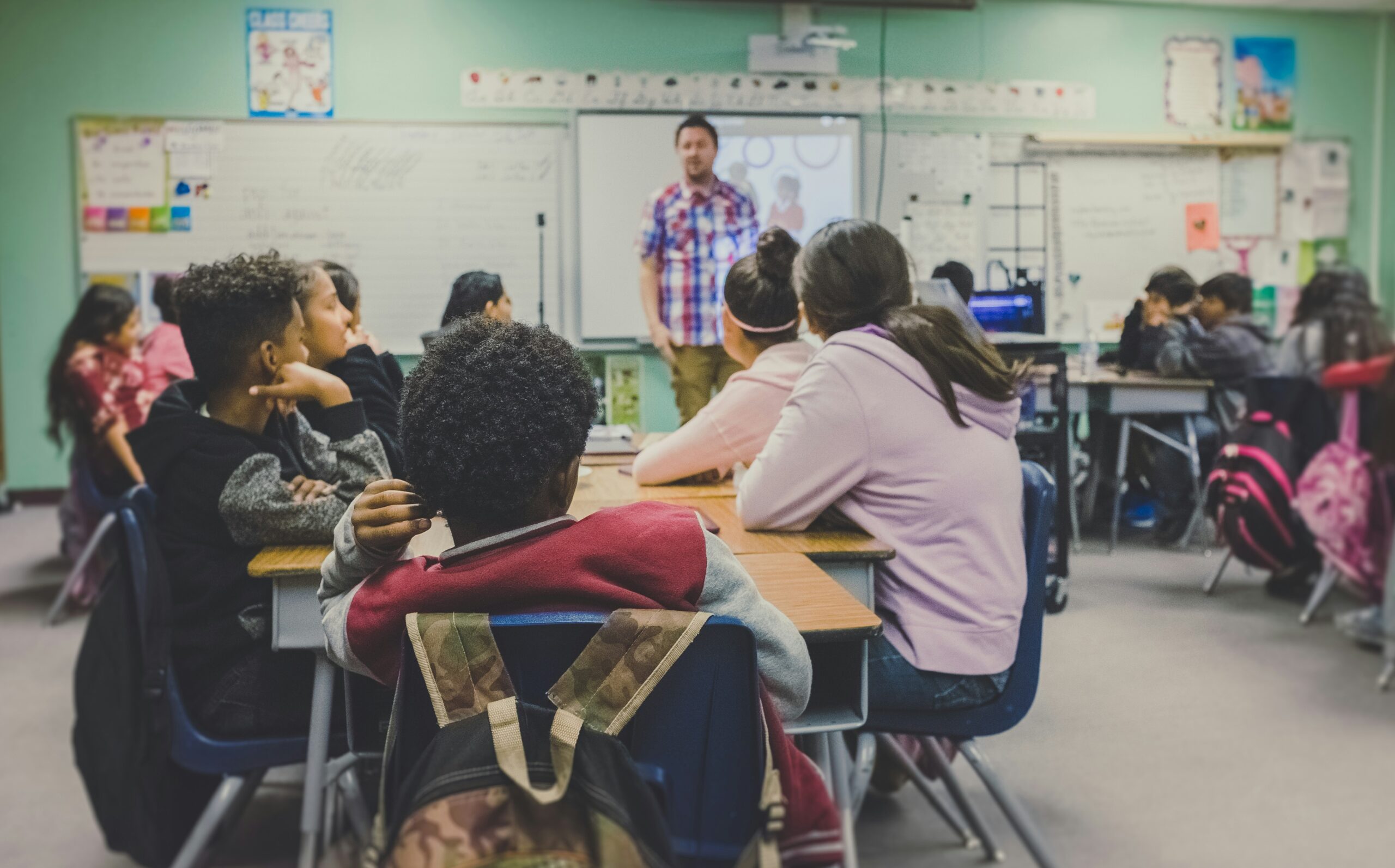
I went to a public school for my entire K-12 education, and I was the type of kid who told my parents every crazy thing my teachers and classmates did.
From girls getting pregnant freshman year to a new teacher who told students he was polyamorous and nonbinary, there never was a shortage of content. My parents made public school work for me, using what I told them as opportunities for conversations about our family’s values.
By the time I graduated, my school district was filled with LGBT flags, students taking hormones, and even some furries running around the hallways. I left the public school system just in time, but now I’m sympathetic to conservative students like me in public schools who have to be in that environment everyday.
With failing public education, vouchers should be available to parents and students. That way, public schools comfortable slacking off while they roll in government money can get the slap in the face they need to do better when they start losing students to better schools.
Vouchers introduce competition between schools and turn education into a free market. People can vote with their feet. Parents can take their students and tax money to the educational institution of their choice. The effects of vouchers would take time, but they would affect positive change in American education.
Currently, public schools are slacking at their jobs despite the massive amount of money pouring into public education. According to the Education Data Initiative, federal, state, and local U.S. governments supplied K-12 public education with $810 billion or $16,390 per student in the 2021 fiscal year.
Meanwhile, literacy and mathematics proficiency rates have dropped to all-time lows and suffer compared to other countries. According to the New York Times, only 26% of eighth graders and 36% of fourth graders were proficient or above grade level in mathematics in 2022. In reading, 31% of eighth graders and 33% of fourth graders were proficient.
According to EducationWeek, by June 2023, 14 states passed bills creating school choice programs or broadening ones already in place, and 42 more states introduced the same bills.
The Heritage Foundation reported an increase in universal school choice programs. Universal school choice allows every student in a state to use a voucher or an education savings account rather than just special needs or low-income students.
The National School Boards Association website says, “School vouchers are education tax dollars that are diverted from public schools to help subsidize the tuition of private religious schools.” Naturally, the NSBA said it encourages Congress to deny voucher proponents’ wishes to set up a federal voucher program.
Groups like Raise Your Hand Texas say vouchers harm low-income, minority students because they take money away from the public schools where those students go.
Nevertheless, in an interview with PBS Frontline, Paul Peterson, a professor of government at Harvard University, said vouchers benefited African-Americans in Dayton and Washington, D.C.
“For African-Americans, one year into the program, they were doing particularly well in math, compared to the students remaining in public schools,” Peterson said. “And there were some reading gains, particularly in Dayton.”
Vouchers improve the American public schools system because schools are forced to improve the quality of education, facilities, and opportunities for students or else they lose money when families take their tax dollars elsewhere.
Every student in America should not have to sit in classrooms listening to government propaganda spewing from their teachers’ mouths. If anyone enjoys a satisfying story of good beating bad, the battle for vouchers might be the perfect one to follow in real life.
