
He was the kind of guy who called himself a reader but never got beyond the title page. For two hours, we sipped coffee and talked about books, music, and our jobs. We found common ground within the first 15 minutes, but there was no spark in sight. The conception of the event had neutered the excitement of it.
I made it through two hours of a coffee date, the kind of meetup you agree to with a stranger when you’re trying to vet his character. Is he just an average Joe? Or does this Joe have some bodies in his basement? On the drive home, I decided to delete Hinge.
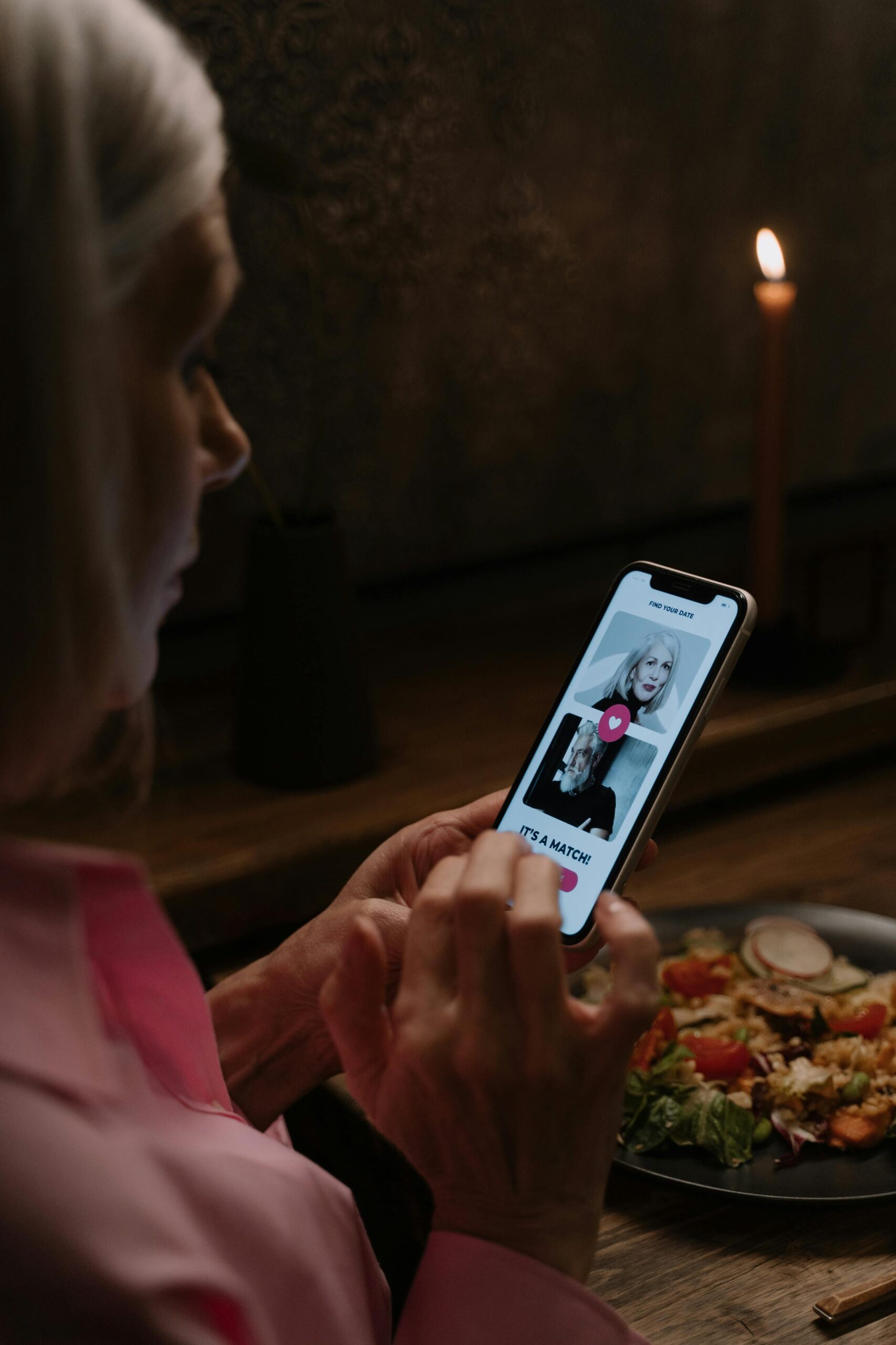
Dating apps fundamentally reduce people to caricatures of themselves and rob romance of its allure. Even if you leave dates with all your limbs in their rightful places and your pride in place, the apps undermine much of the spontaneous chemistry that is integral to human interaction. It’s time we limit how much we rely on dating apps to find long-term partners.
They work for a few fish in the sea. There are dozens of apps to fit your exact desire: Tinder if you want a quick hookup with your high school bully, Bumble if you’re looking to be friend-zoned, OkCupid if you are in the market for a sugar daddy with a couple of illegitimate children, and so on. For individuals with busy schedules, in socially limiting locations, or living through turbulent phases of life, dating apps offer a way of connecting with others on their own time. Some people are wary of being approached in public or getting set up by friends. Some people like the ease of interacting with someone virtually before making any in-person commitments. In an increasingly digitized world, it’s no wonder dating apps are so popular.
As of last year, 337 million people use dating apps worldwide, according to the Dating App Report by the Business of Apps. It’s a booming industry with plenty of young people using them as a first action rather than a last resort. Everything else we do, from banking to sending emails to navigating our whereabouts, takes place in apps. Why would love be any different?
But generally, people shouldn’t feel shame about using dating apps. If it weren’t for Hinge in my early years of being a commuter college student, I probably would be engaged at age 19 to a 30-year-old military man in my hometown with divorce looming in a mere handful of years. Sometimes we need to be reminded that worlds exist outside of our immediate environment, but when dating apps become the first step in seeking relationships with others, we risk dehumanizing each other. It is much easier to be judgemental and harsh when picking apart someone’s online profile than it is to say something to another’s face. It becomes tempting to safeguard ourselves to no return, waiting for the “perfect” profile to come along. Dating apps don’t bring out the best of us, which is what we usually want to share with potential partners.
Dating apps know they lack chemistry. They try to revive the excitement of meeting someone in real life with creative prompts for users to respond to. Recently, many platforms like Hinge and Tinder have incorporated voice memo features where users can upload audio instead of text.
But “as seen on my mom’s fridge…” and “my hidden talent is…” go only so far. With a set number of prompts and image galleries, users display their personalities in a very limited fashion. Just as much as my profile likely blended in with the hundreds of other young women in the Colorado Springs area, so did the men who appeared on my screen.
James, Jordan, and Joe all had a picture of a dead fish on their profiles. Max, Connor, and PJ all wanted a girl with a dark sense of humor. Daniel, Mitch, and Caleb all said the “greatest risk” they’ve ever taken was downloading the app. Despite the illusion of diversity, the fish in most seas are astonishingly alike.
This isn’t a bad thing. In fact, dating apps place a unique pressure on having to sell yourself as more than you are. Instead of meeting someone at a bar or function where you can immediately bond over a communal activity, you’re having to package yourself into a digitized advertisement. You want to be neat but not a prude. Funny but also serious. Attractive but not vain. Flirting becomes an exaggerated performance rather than a fun, engaging tool to navigate chemistry.
We’re missing a large part of dating: it is OK to just be a person. But in order to compete with the 30 other individuals lined up in that hour’s slew of faces, there is a pressure to be much more.
Using these apps, we seek intimate partners through the most disconnected means. And we are surprised when the romance an algorithm generated for us isn’t up to par with the stories we read, see, and hear about.
Love is one of life’s most beautiful and complicated experiences, but it’s not guaranteed for everyone. No algorithm can provide that assurance. There is pressure to find it in whatever way we can, even if that means selling ourselves and others short. General ideas of compatibility, shared interests, and worldviews can be garnered via a profile and some texts, but people need more than that. So the next time a relationship goes south and it’s time to enter the sea again, leave Hinge as option B. Or C. And if the time comes to re-upload your profile, do so cautiously and intentionally.
