
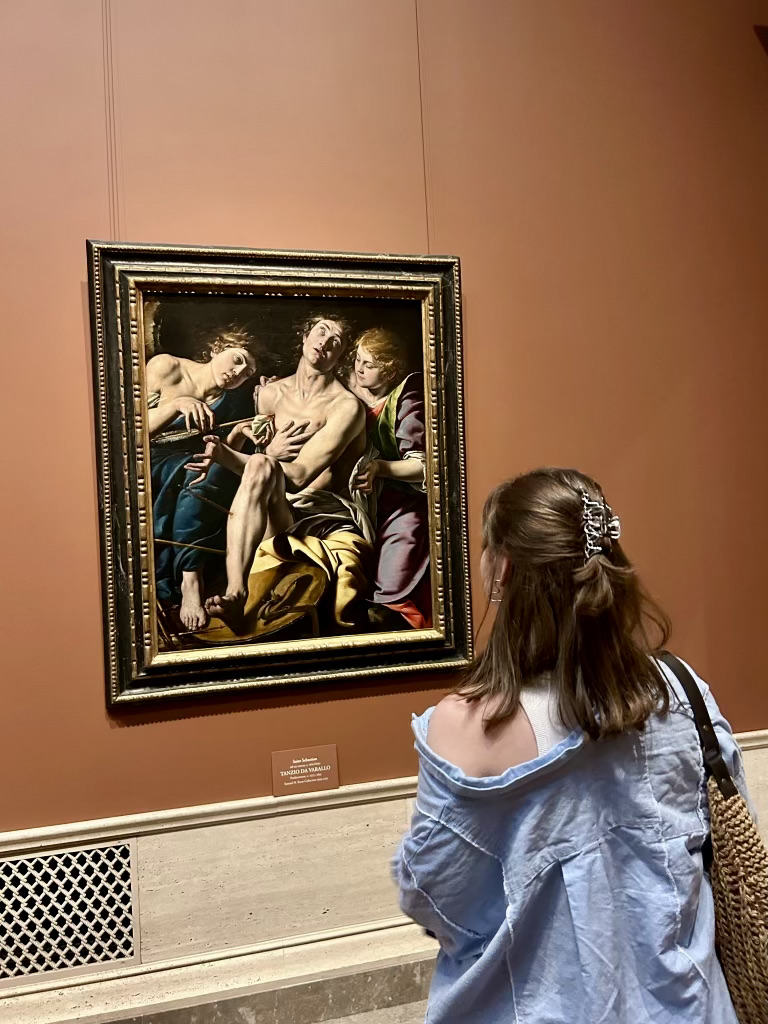
I’ve gone to art museums with people who go because it’s something to do and people who go because they want to stare at one painting for 15 minutes.
I am neither of those kinds of people.
For a long time, I went to art museums because I knew I was supposed to like them. Museums house incredible feats of human ingenuity, patience, and empathy all under one roof. Who wouldn’t want to spend an afternoon that way? Yet I failed to translate this idea into a reality. Art museums were boring.
I don’t want them to be. I am supposed to be artsy and cultured, so you can bet that coming to Washington, D.C. through the Washington-Hillsdale Internship Program this semester means I am going to figure it out.
This weekend, I went to the National Gallery of Art for the first time and felt the fruit of my labor. It seems I’ve successfully gained a love for art.
Granted, I still haven’t figured out why one painting can garner 15 minutes of focused attention, but the art made me feel something. Here are some of my reflections on why I was able to better engage this time around.
The National Gallery of Art creates a beautiful setting to showcase its art. It wasn’t the same room over and over again. A few atriums featured statues and greenery. Other rooms were decorated like the home of a very wealthy old woman: fireplaces, mirrors, dark wood, and carved tables, if you get the picture. The halls weren’t just passageways; they were lined with busts and statues that made the entire gallery a continuous experience.
The weekend I went, the museum had an exhibit called “Seeing People,” which showcased Dorothea Lange’s photography from the Great Depression era. Her photograph of a work-and-weather-worn woman staring off into the distance is one of the most famous photographs of all time. Lange’s career encompassed much more than that, though. She visited Egypt, Ireland, Japanese Internment camps during World War II, California after the Dust Bowl caused a mass migration, and a litany of other areas, all with the purpose of truly seeing people.
Walking through the room hung with photographs of a stenographer with mended stockings, an 18-year-old mother with her baby in a tent, and a young Japanese girl saying the pledge of allegiance in an internment camp, it was clear the title of the exhibit paid fitting homage to her work. While I have cried in many places, I have never cried in a museum before. Once I crossed that line, there was no going back.
I left the exhibit and went on to cry at roughly a dozen different portraits of Jesus, Mary, and Joseph. This was not a full-on weep; it was more of a subtle movement to tears because everything I saw was beautiful and meaningful, a true testament to human talent and a creative Creator.
That is, until I made my way over to the modern art building on the east side of the gallery. At risk of sounding like a curmudgeonly conservative who hates new things, I will say my emotional experience was markedly different. My dominant feelings switched from wonderment and awe to confusion and sometimes anger. “Yellow standing Nana” by Niki de Saint Phalle genuinely made me mad. One piece was a map of the U.S. with different translations of the word “goodbye” on it, which, to me, just screams “fake deep Pinterest.” And at this rate, I may never be a fan of Jackson Pollock or Mark Rothko.
That being said, at one point I did not even enjoy classical art. I was going to museums, bored out of my mind, wandering rooms in search of the thing that might anchor me to this tradition in which everyone else proclaims they see themselves. I am glad modern art exists for the people who see it and feel something, that look at a Rothko and tear up like I did in the West building. I think we all deserve to feel that way, and I also think it’s our job to do what we can to find that in the places it doesn’t come naturally.
I still haven’t landed on a clear-cut opinion on the degree of subjectivity within art and beauty. I do think that just because some old guy says something is beautiful doesn’t mean I have to agree. For every one of my fellow 21 year olds whose brains have been trained to love and appreciate the quicker, utilitarian, digital things, it’s worth pushing through the apathy until the human ingenuity, patience, and empathy all become irresistible.
