
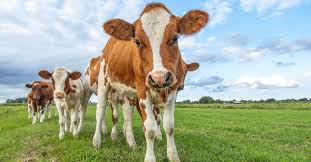
Forget coffee, energy drinks, and diet soda. There’s a new beverage trending on campus.
Bucking the usual college staples, this calcium-rich drink has students bypassing vending machines and late-night coffee runs for a more wholesome option. Its raw, unpasteurized milk — a drink that has quickly become a popular beverage among students.
For junior Maddie Hornell, it was an ice cream recall that first shed light on the benefits of raw milk.
In the spring of 2015, the South was thrown into a public health scare when Blue Bell Creameries initiated a recall on its products due to Listeria contamination. Although Blue Bell’s ice cream was made with pasteurized milk, the contamination prompted many consumers to question the efficacy of pasteurization.
“I got the glories-of-pasteurization talk from my parents in the spring of 2015 as the South was coping with the Blue Bell recall,” Hornell said. “In light of that, the alternative, raw milk, is something I’ve known vaguely about ever since.”
Besides the 2015 recall, junior Kelly Behling said typical milk sold at stores has lost some of its nutrients and health benefits.
“I did a lot of research on my own trying to find a local farm to source raw milk from. I prefer raw to commercial milk because all commercial milk is so nutritionally deficient in being pasteurized,” Behling said.
The Centers for Disease Control and Prevention supports pasteurized milk and said raw milk may cause health issues for those who consume it.
“Raw milk has not undergone a process called pasteurization that kills disease-causing germs,” the CDC website says. “Pasteurized milk is a safe and healthy food. When milk pasteurization began in the early 1900s, deaths and diarrheal illnesses in young children declined dramatically.”
Despite this warning, Hornell and Behling are bypassing commercial milk aisles altogether in favor of something they say is more fresh and nutrient-dense. They are purchasing milk straight from local cows through cow shares.
A herd share is a system where individuals buy a share of a cow, or several cows, and, in return, receive a portion of the raw milk produced. This milk is “raw” because it has not been pasteurized or homogenized.
“I first had the opportunity to join a cow share late this summer,” Hornell said. “Moving off campus and having a smaller meal plan, I get more of a say in what I eat. When a friend approached me about getting involved in a cow share, I was eager to try it out.”
In Michigan, the sale of raw milk is strictly regulated. State laws prohibit the retail of unpasteurized milk due to concerns over foodborne illnesses that can be transmitted through such products. This creates a significant hurdle for those who advocate for the consumption of raw milk and its health benefits.
For those determined to obtain raw milk, however, herd share agreements exist as a legal pathway. This arrangement allows individuals to buy a share of a dairy herd and legally obtain raw milk as part-owners.
Sophomore Brendan Semler said he discovered cow shares as part of a personal health journey inspired by the diet of Paul Saladino, promoter of the carnivore diet. Semler, initially thwarted by Michigan’s laws against the sale of raw milk, found his solution through a herd share program.
“I first heard about cow shares over the summer,” Semler said. “I figured that while I’m at Hillsdale, which is surrounded by farms, I’d look into a herd share program.”
Like Semler, junior Charlie Miggins said he is frustrated with Michigan’s raw milk restrictions.
“The biggest thing that I don’t appreciate is the fact that raw milk is illegal to sell,” Miggins said. “There are countless studies about how this milk builds strength in the early years of a human’s life. Local cow shares are an awesome way to support local farmers and to keep small businesses thriving.”
Cow shares for raw milk are surprisingly affordable, even for a college student. When students pool their resources and invest in a cow share together, the cost significantly reduces.
One herd share in Hillsdale charges a $60 buy in fee for a full share and $30 for a half share. After that, it costs just $20 a month for a gallon of milk a week or $15 for a half gallon. By splitting a full share four ways, the initial buy-in fee of $60 becomes a more manageable $15 per person and the monthly fee drops to just $5.
For Behling, who is sensitive to lactose, the allure of raw milk lay in its many health benefits.
“I wanted all the health benefits when I was making the switch from pasteurized to raw, especially since I was wanting to move away from plant-based everything,” Behling said. “I can actually digest raw milk, and I generally just feel better after drinking it. It tastes amazing,” Behling said.
Behling also said her decision to purchase raw milk was influenced by her desire to circumvent federal food agencies.
“I try to find as many ways as I can to get food not regulated by the government,” Behling said. “I trust sourcing raw milk from local farmers instead of a store regulated by silly government rules. It is also nice to support local farmers who are just as invested in producing quality, natural products from the earth.”
Semler also noticed significant improvements in his health after beginning to drink raw milk.
“My gut has never felt better,” Semler said. “A lot of people find our diet ‘primal,’ but I wouldn’t want anything else. This has been the way our ancestors have eaten for thousands of years. Now, Big Food and Big Pharma say they’re making a healthier world, yet there are more diseases than ever before.”
Still, Semler said the taste is the real reason he drinks it.
“It is nothing like your ultra pasteurized grade A2 grocery store milk. It has such a smooth, creamy taste, and you can tell that this is what humans are meant to drink.”
Beyond the taste and nutritional value, a sense of community has formed through this cow-sharing initiative, Semler said. Students who may never have crossed paths otherwise are coming together, united by their love for raw milk.
“Being a part of a herd share has opened me up to many people on campus that I never before found myself with. Each of us having the same goals in our health, getting back to an evolutionarily consistent diet, we all kind of found each other naturally,” Semler said.
Hornell said raw milk starts great conversations.
“I’ve definitely connected with more people than I otherwise would have about eating locally, finding quality ingredients, and feeding a family well,” Hornell said. “It’s a favorite conversation starter of mine when guests at my home ask about our milk jars.”
Hornell said she was surprised how many students buy raw milk.
“My first week, I pulled up to pick up,” Hornell said. “Immediately, a good friend pulled up on my right, and, seconds later, so did another on my left side. It was so funny and charming. I was so excited and surprised to see who I saw there and to realize how many I knew from the farmers’ market, church, and the community.”
