
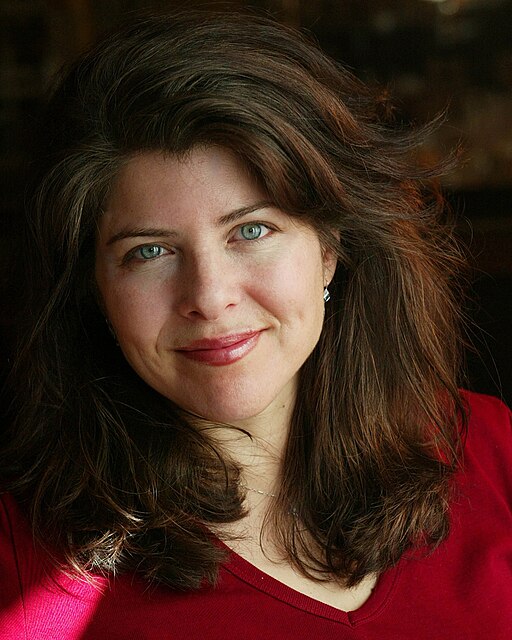
When Naomi Wolf walked onto the stage of Plaster Auditorium during last spring’s CCA on “Big Pharma,” a gasp escaped my mouth, and I just about lunged out of my seat.
I had just spent my winter break reading and rereading her 1997 book “Promiscuities” – a piece of creative nonfiction that follows her and her friend’s journeys as teenage girls growing up in New York City during the sexual revolution of the 1970s. It is a snapshot of the girls affected, for better and for worse, by the revolution that still stirs vitriol when mentioned in conservative circles.
It is a startling read, a relatable read, an accessible, nuanced piece of feminist literature that spoke to me and a lot of the questions, patterns, and frustrations I had shared with my friends about men, growing up, and conversations about sex.
In one section Wolf writes, “The danger is that the culture often makes girls turn into women in ways they do not choose, before they are psychologically ready, and it defines their readiness as a passive biological development.”
It was my first step into the pool of feminist literature, and I read it truly thinking everyone who read it would find her as charming, thoughtful, and nuanced as I did.
I was wrong. When the book came out, it was effectively slaughtered by outlets from the New York Times to The Library Journal, criticizing her for trying to “apply the microcosmic events of this mostly white, middle-class, liberal milieu to a whole generation.” Other complaints ranged from accusations of overgeneralization to overreaction to being simply offensive. Her other works garnered similar responses.
Not only was the book not well-received when it came out, but a lot of Hillsdale students post-CCA (if they weren’t already upset about her 2012 book: “Vagina: A New Biography”) were put off by the extremity of her ideas about COVID and the vaccine.
In other words, she has managed to step on the toes of the left by not being feminist enough, and she has managed to step on the toes of the right by being a self-proclaimed feminist. As of late, she has fallen into poor standing with the general populace by diving fully into a relatively niche sect of red-pilled conspiracy theories.
In fact, it became clear upon seeing the reactions of my classmates to her CCA talk and the discourse surrounding her name online that almost nobody likes her, at least not publicly. It then dawned on me that finding her book in the clearance section of a used bookstore in L.A. was not an act of divine intervention but one of the natural consequences that befalls a work by a canceled female author.
Despite maybe being alone in this, I maintain that “Promiscuities,” and the other works by her that I’ve read, were necessary and good first steps for me in starting to consider deeper questions of womanhood, masculinity, sex, motherhood, and a litany of other very adult conversation topics.
Not only are her ideas convincing and thoughtful, the voice and personality with which she presents these ideas is exactly the same. I didn’t have to be a teen in the ’60s or a big city native to relate to the universal questions she was raising about women’s relationship to sex and the staunchly different expectations we have for men in the same arena. She dove into a history of carnal, medieval, and — pardon my French — horny women that I had never come across in all my 12 years of public school history education. She doesn’t praise full sexual freedom as a good thing, and she does not leave the memoir with a clear cut resolution on what the right way to think about it is. She gives suggestions, but her tone is balanced, leaving room for the reader to disagree.
“I am conscious that an inquiry such as this ends by raising more questions than it can answer; sexuality is so personal, and the creation of a sexual culture such a subtle, collective undertaking, that any simple prescriptions are too crude a response,” she writes.
The reality is: to encounter a piece of completely politically correct feminist theory would be off-putting to sophomore year me who was just curious. Pieces of introductory feminist work, disparagingly called “Feminism Lite” by Michiko Kakutani in her 1997 review of the work, need to exist, and they are growing extinct because of internet backlash like the kind Wolf receives. In a world that punishes authors for moments of impartiality or seeking out common ground with “the other side,” “Promiscuities” is a refreshing, insightful read about a crucial time that really seems to have drastically altered the conversations and expectations of the women who raised us and all generations henceforth.
The question that then naturally follows is: why ought conservative women flirt with feminist ideas if they aren’t going to subscribe to some of the core issues at the heart of the wider, more popular movement?
Because conservative women are afraid of the word feminism, and they are suffering for it. In defending men from the “man-hating feminists” of the world, many have swung too far in their defense, expecting very little from men as a result. In many ways, we expect unkindness, indulgence, and mediocrity, and we are quick to defend it as a pre-programmed gap in maturity.
Wolf herself questions our understanding of masculinity in the book, and it is poignant:
“What would our violent landscape look like if men believed that true masculinity meant becoming an extraordinary lover to a life partner? What would we get if we let women’s passion truly enter and dwell in our social world?”
This “feminism lite” work traces the before, during, and after of a major shift in history while remaining a rare access point for more conservative, in the definitional sense, women to encounter ideas of female empowerment without being completely excluded by ideas that are incompatible with their religious or cultural worldviews. “Promiscuities” is and was that for me, and, luckily, it is uniquely cheap nowadays, so what better time to appreciate this woman scorned.
Jillian Parks is a junior studying rhetoric and journalism.
