
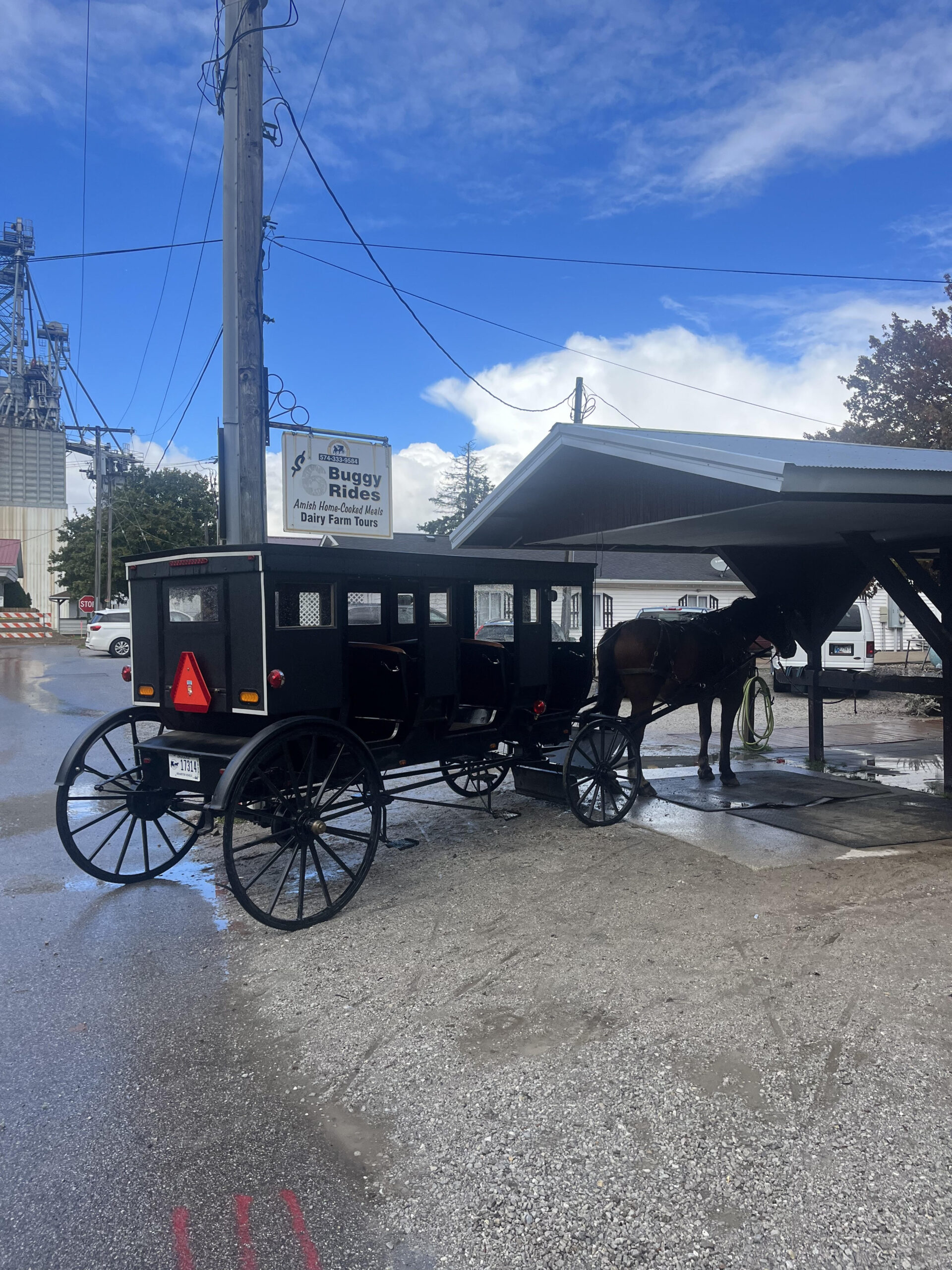
Last weekend, a few friends and I drove more than an hour from campus to visit the small town of Shipshewana, Indiana. The draw? Shipshewana is the third largest Amish community in North America, and invites visitors to shop, eat, and learn about its way of life.
While the delicious pies and home-cooked comfort food were a nice break from Hillsdale cuisine, the most memorable part of the trip was a buggy ride through the town and surrounding countryside. Terry the horse obeyed his driver, Elmer, and pulled five of us, squeezed into a buggy, around the town.
Along the route, Elmer explained the history of the town and the traditions within the Amish community. For the curious “English,” which means everyone who is not Amish, I discuss some of the memorable points.
Although the Amish historically lived on farms and worked in various agricultural fields, today, a growing number of young Amish work in RV factories for higher wages. Amish families, however, still typically live toward the edge of town or in the countryside to have enough room for their horses.
When asked how many Amish live in the area, Elmer instead referred to the population as “families.” Amish recreational activities demonstrate this communal focus. Elmer pointed out the Cove, a recreation center for Amish youth. He said it helped youth meet each other and encouraged wholesome activities.
Amish churches are also measured by family. Church services are held inside Amish homes, and a traveling bench-buggy delivers religious materials to the services. Once a church reaches 45-50 families, a new church forms. Elmer said the community’s goal was to have a school for each church district.
Shipshewana doesn’t sound like a typical Amish name. That’s because it isn’t. When an argument about naming the town arose between two competing Amish settlers, they decided to name the town after the former Potawatomi Native American chief, who formerly lived in the same area.
Although Shipshewana may seem dramatically different to the English eye, it is a more progressive Amish community than others. Many Amish children attend English schools, and some continue through high school to play sports. Additionally, the community recently allowed the use of tractors for agriculture and an Amish house in town sells electric bikes.
Though I won’t be trading in my car for a buggy, the homemade amish baked good just might bring me back.
