
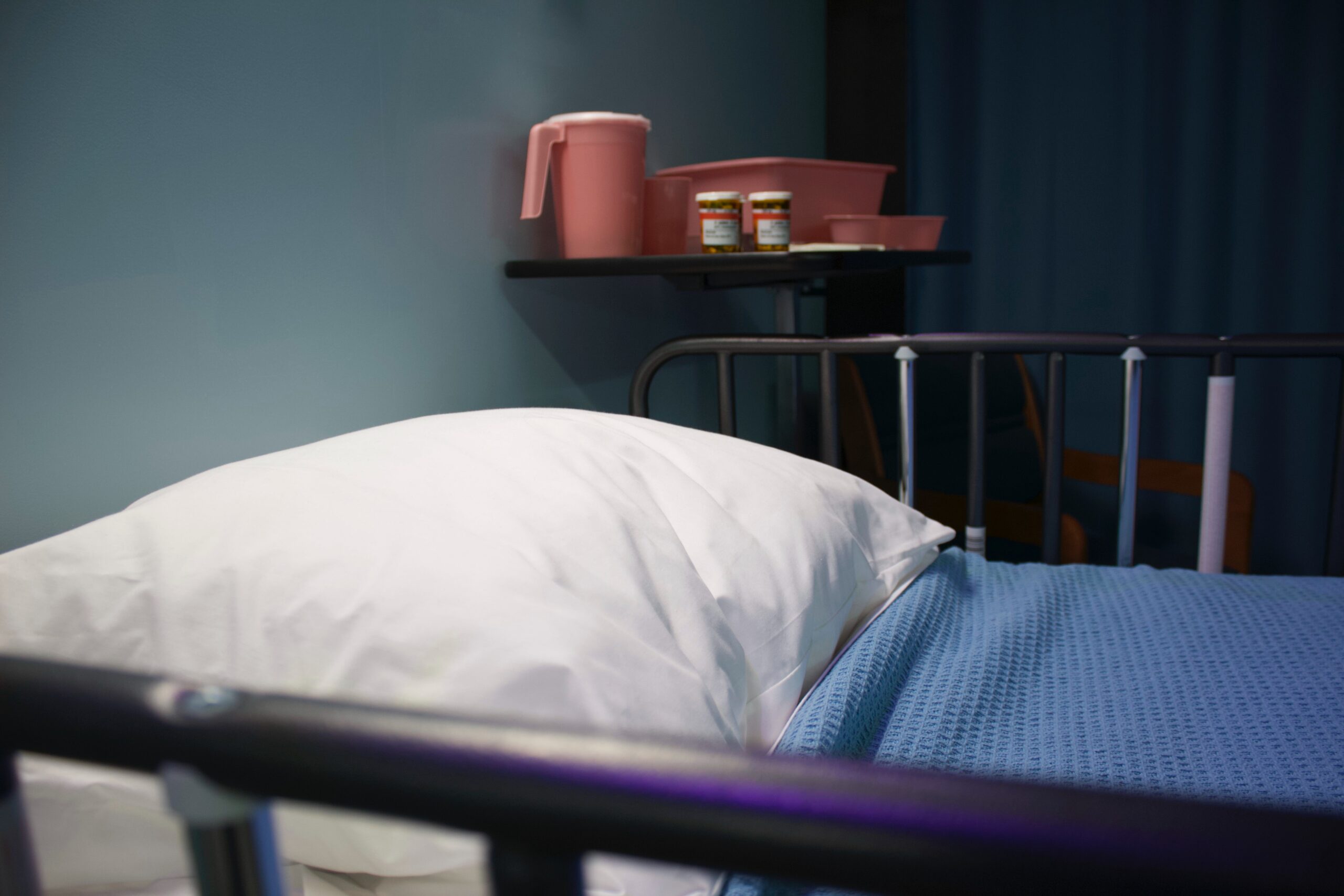
We have forgotten how to die well.
The euthanasia debate demands our attention. Twelve US states are considering legalizing euthanasia in 2023, and another 10 states currently permit it.
Euthanasia’s ever-growing place in the public sphere makes it an issue of concern for all of us. We need a consistent, compassionate response that is founded in our shared humanity.
The perceived need for euthanasia is rooted in mistaken ideas about love, dependence, and compassion. “When Patients Choose to End Their Lives,” a 2021 New York Times article, says that rather than physical pain, most requests for euthanasia are motivated by “a loss of autonomy, a loss of dignity, a loss of quality of life and an ability to engage in what makes people’s lives meaningful.”
Euthanasia proponents define meaningful lives too narrowly. My mother died in hospice last year. Even when she was too ill to engage with those around her, her life was profoundly powerful and good. Love, not bodily freedom, gave value to her existence. We are grateful for every minute we had with her, and would be suffering unimaginably more deeply if she had chosen to cut short her life. A good death, like hers, is an enduring gift and witness to hope for the deceased’s family and community.
Certainly, for suffering people, loss of autonomy and dignity are real concerns. Sickness and death necessitate a surrender of control that is unnatural in our modern age. We worship control, mistaking it for freedom. When age or infirmity strips us of bodily autonomy, we would rather die than live dependent on others. Yet, suffering does not have to rob us of self-worth. We can live dependence with dignity and grace.
The COVID-19 pandemic illuminated the current crisis in end-of-life care, particularly in nursing homes and dementia-care facilities. People are often right to fear that their declining years will be spent somewhere cold and sterile, where their life will be an inconvenience to others. We must make nursing homes and hospitals a last resort.
A pro-life geriatrician quoted in The New York Times article testified to the need for better palliative and hospice care.
“There’s currently no strong push for decency in long-term care,” Dr. Joanne Lynne said. “Euthanasia’s not a real choice if a person’s alternative is living in misery or impoverishing the family.”
Euthanasia loses appeal when people have the dignity of living their final years at home, with high-quality care and the loving support of their communities.
In an age of radical individualism, driven by a consumerist throwaway culture, euthanasia parades as compassion.
Dr. Charles Camosy, professor of medical humanities at the Creighton University School of Medicine and professor of moral theology at Saint Joseph’s Seminary, has written extensively about end-of-life issues.
One aspect of a ‘throwaway’ culture is the desire to look the other way when it comes to evils like euthanasia, best exemplified by the changing terminology. Euthanasia proponents often now refer to it as Medical Assistance in Dying, or MAiD, which deliberately conjures a softer image.
“If you can change the language, you don’t have to face the reality,” Camosy said.
We must refuse, then, to accept this false terminology. We must be brave enough to look the evil in the eye.
“Aiming at the death of someone–saying that it is better that you do not exist–is false compassion,” Camosy said in an email. “Non-violence, accompaniment, pain-management, and communal hospitality need to be at the heart of authentic compassion.”
The solutions to eliminating the ‘need’ for euthanasia burden us with care for one another. They should. Human beings have lived in community for all of recorded time. We do not outgrow dependence when we outgrow diapers. Reliance on each other is a lifelong blessing.
Forgetting this reality leads us to fear death more than we should.
“I think the key issue for having a good death is accepting it like a friend and doing it ‘in community’” said Camosy in an email. “This is what love means: in some sense we burden each other, yes, but grace and love transform that.”
We can put this compassion into action, blazing a trail of hope for those who are suffering. Before forcing through comprehensively pro-life policies, we need to transform our way of life.
We act against the despair that drives euthanasia by engaging with our loved ones and community. In cultivating interdependence and exercising authentic empathy, we combat loneliness and fear.
As voters, we must look for every way possible to achieve a pro-life society.
This April, Sen. Bob Casey, D-Pa., introduced the Better Care Better Jobs Act and the HCBS Access Act.
“The caregiving crisis in this country corners many Americans into upending their careers and living on poverty wages or performing unpaid caregiving for family members because they have no other options,” Casey said.
If passed, the acts will provide family-sustaining wages for caregivers, helping them to provide quality care for elderly and disabled individuals.
Political measures like these improve quality of life for vulnerable people, a step towards creating a society where life at every stage is cherished and supported.
Caroline Kurt is a sophmore studying English.
