
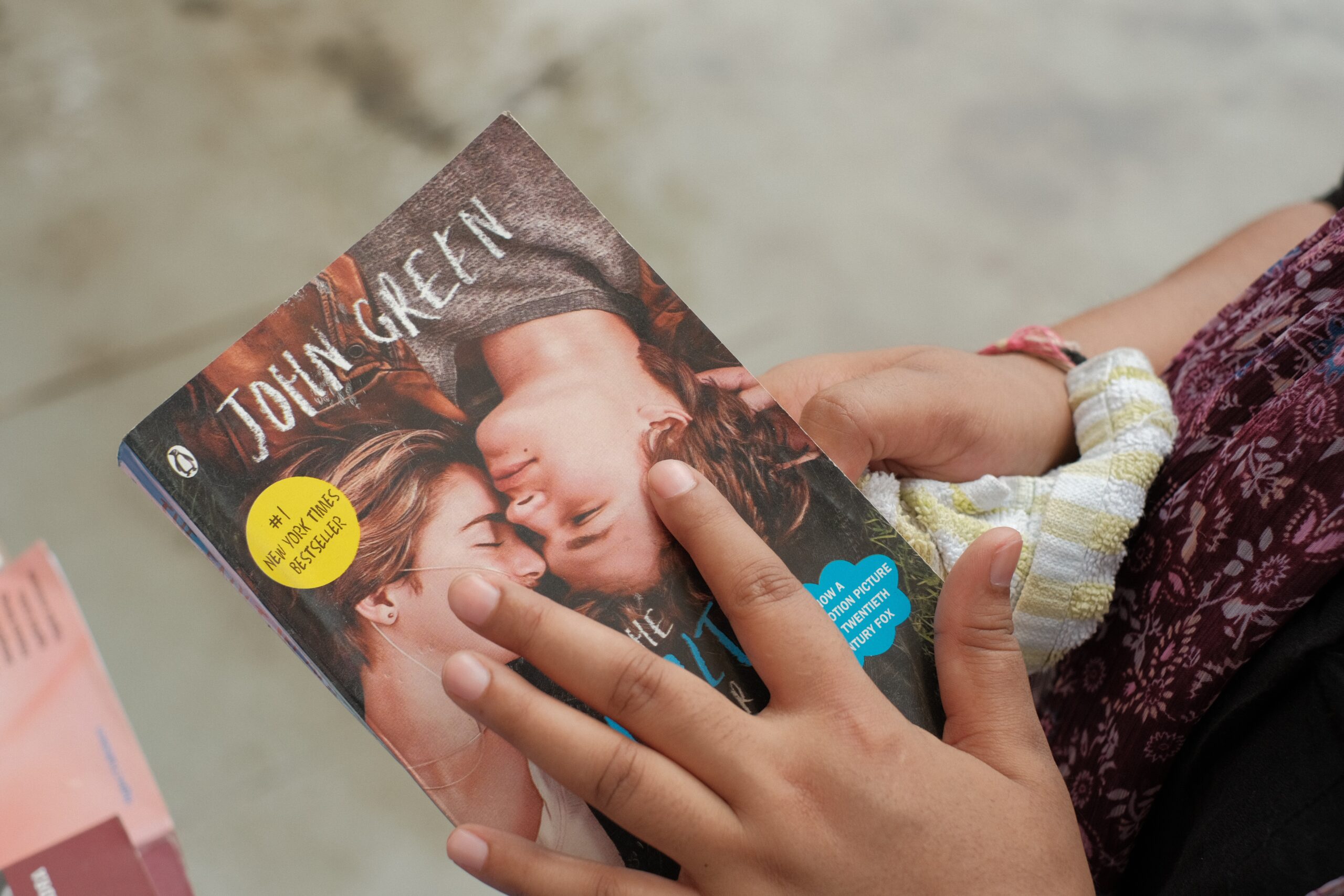
John Green may be the healthiest man in America known for illness.
Whether it’s his most famous book, “The Fault In Our Stars,” whose plot revolves around teenagers with terminal cancer, or his nonprofit work aiding healthcare systems in third-world countries, Green is the epitome of transforming study into action. He should be the 2024 commencement speaker because he exemplifies the real application of goodness, service, and equality that Hillsdale College aims to instill in its students.
In 2005, Green released his debut novel “Looking For Alaska” which won the Michael L. Printz Award from the American Library Association. A few novels later, Green went from indie starlet to mainstream author with “The Fault In Our Stars” in 2014. Soon after reaching global acclaim, the book went on to become a feature film. During the time of the novel’s success, Green also worked closely alongside his brother through their nonprofit organization, Foundation to Decrease World Suck. Through weekly videos and annual live streams, the Green brothers work with their devoted audience to raise money and distribute it to organizations in need.
Most notably, the Greens work with another nonprofit organization, Partners In Health to build, staff, and maintain a teaching hospital in Sierra Leone. This year’s fundraiser, formally called Project For Awesome, raised over $3 million. Through his health advocacy present in both his written and charity work, Green transforms the overused sentiment of “making the world a better place” into actionable career steps.
Green also helps direct and star in Crash Course, a video series that educates viewers through bite-sized video lessons, watched by 15 million subscribers. It produces everything from overviews of American history to botany, and the goal is to make well-rounded education accessible to anyone with internet access. The classes are taught by John and Hank as well as other professionals in the subjects’ fields, and they often work to create engaging and fun content complete with props and animations. Much like Hillsdale’s own online lecture series and classical school initiative, Green uses his platform to encourage audiences to take responsibility for their own education.
In 2019, Green began his podcast “The Anthropocene Reviewed” which allowed him to explore different writing styles and topics. In 2021, the podcast became a nonfiction essay collection called “The Anthropocene Reviewed: Essays on a Human-Centered Planet.” In both the episodes and essays, Green playfully rates aspects of modern life on a five-star scale. He derives meaning from seemingly random topics like the story of the Piggly Wiggly supermarket chain, the male camaraderie of sporting events, and the history of cholera.
The crux of his mission with “The Anthropocene Reviewed” is the rejection of despair. With each episode and essay, Green works to illustrate meaning in the minute, in the destructive, and in the pain that haunts everyday life.
In his piece on “Auld Lang Syne,” Green writes, “We live in hope — that life will get better, and more importantly that it will go on, that love will survive even though we will not. And between now and then, we are here because we’re here because we’re here…”
Despite being a Christian, Green’s faith only periodically comes up in his work. But with essays like “Auld Lang Syne,” he makes basic Christian values like hope, love for others, and faith in a higher good accessible to a generation that notoriously lacks a common faith and tradition. Readers, often confused young people, never have to pigeonhole themselves into certain modes of belief when interacting with Green’s work. He knows our language because his life’s work is based on it. Although Hillsdale students are generally more confident in their belief systems, someone like Green can offer a perspective that is rooted in faith but well-versed in secular culture.
In an age of constant bombardment of information, polarizing politics, and the normalized poor treatment of others, Green ultimately offers gentle but firm assertions of hope. And hope is the very thing all students need when entering the oyster of post-graduate life.
John Green is the perfect example of a contemporary writer and thinker who strives to use the tools of modern culture to kindle communities, reject feelings of despair, and make an actual difference in the world. The liberal arts exist to serve one another as well as ourselves, and Green’s work and personhood would be an excellent lesson in action as the class of 2024 moves out of its ivory tower.
Alexandra Hall is a junior studying rhetoric, biology, and journalism.
