
Something is rotten in the dining hall.
No, I’m not complaining about the food. The problem is more perennial; both Jesus and King Arthur have dealt with it. I refer to the question of tables and seating — I believe we should get rid of the long tables near the piano to encourage higher-quality conversation.
The problem with the long tables may not be immediately obvious. Sure, they might be a bit rickety, but they seem to be serviceable enough. What gives? The issue with the long tables is the way in which they constrain — or overly encourage — student interactions.
Especially during lunch, the long tables serve as a melting pot of student groups — they’re a space where anyone can find a seat without being part of a party large enough to merit one of the round tables. This isn’t bad; in fact, I think it’s a good thing. The problem is in the design of the long tables, not in their function.
If you happen to be sitting between two other students, it will be difficult to speak with anyone not immediately in front of or next to you. This makes it difficult to sustain a large group conversation. If your party numbers more than six, odds are you will choose a long booth or one of the big round tables for the meal simply in order to hear one another.
Even if your party numbers six or fewer, the long tables are still not an ideal option. Students tend to leave a space or so between themselves and their nearest trenchermates because it is rather awkward to sit right next to another group — especially one you may not know. This wastes space and makes it difficult to fill up the entire table — someone eating alone will probably not sit down directly between two chattering groups.
But this brings me to perhaps the most dangerous thing about the long tables — eating alone. On any given day walking through the dining hall, you may find students eating while distracted by their phones or a book; though this happens in groups as well, solitary diners are particularly prone to it.
To my great chagrin, I fall into the latter category: just last week I found myself behind on homework and decided to take Plutarch’s “Lives” on a lunch date. Space was limited, and I found myself at the long tables. A few minutes into my reading, I looked up from my Plutarch and pizza to see two girls sitting across from me. They’d come for a nice lunch time conversation together, and it was clear that I was infringing upon their freedom of discourse. We looked at each other awkwardly for a few moments. Shortly thereafter, I took Plutarch elsewhere.
Though the long tables make it difficult for large groups to hold conversations, the real problem is that they make it possible for students to be alone in the presence of others. Though there is certainly a time to be alone, that time is not mealtime — if you are sharing food by sitting at a table with others, the courteous and most human thing to do is strike up a conversation with them. Whether it’s Instagram or — as in my deplorable case — a book, anything which keeps you from being present to others ought not be part of a meal.
So what do the long tables have to do with any of this, and what can we do about these problems?
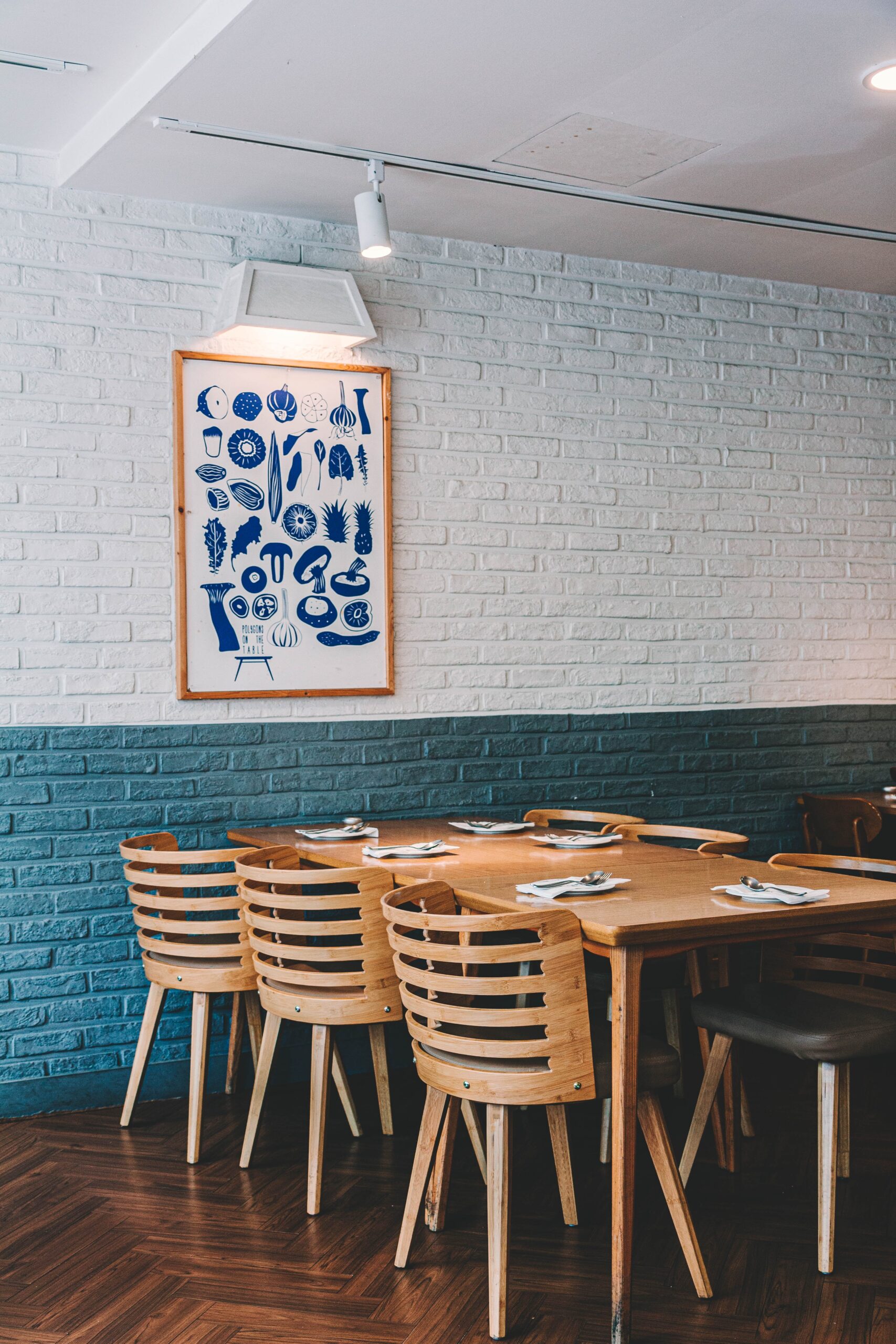
I propose that we split the long tables up into blocks of two or three small tables each. This would allow about six to eight students to sit at each block, which would make quality group conversations easier. At the same time, the shorter tables would be inviting for groups with fewer diners; it’s easier for three students to sit down at a table for six than at one of the big round tables.
Smaller tables will also make it easier for individual students to be present to their tablemates. If you are sitting alone at a table with only six seats and a group sits down at your table, you have no choice but to interact with them, which is the purpose of sharing a meal at a common table.
Unfortunately, breaking up the long tables will not make every meal a perfect, profound conversation — the important thing, however, is that we make it easier for ourselves to form good habits of meal-sharing. Rearranging the dining hall could bring many benefits to the table — we should keep our tables short to make our meals sweeter.
Zachary Chen is a freshman studying the liberal arts.
