
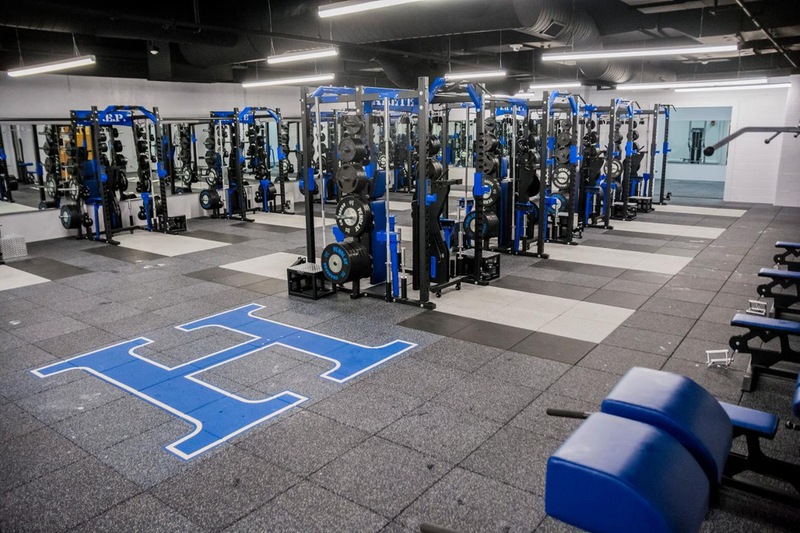
Hillsdale should offer sex-segregated physical wellness classes. Courtesy | Hillsdale athletics
“I had a gym date today,” sophomore Natalie Parker said.
As part of her physical wellness class, Parker’s professor asked the men and women in the class to raise their hands if they were familiar with the equipment in the gym. The men in the class raised their hands. According to Parker, the professor then asked the students to raise their hands if they were unfamiliar with the equipment in the gym. Parker and the other women in the class raised their hands.
The students were then told to pair up as a “gym date,” in which the men who were familiar with gym equipment showed the women who were unfamiliar with gym equipment around the gym. This method may be an efficient way to teach people how to use gym equipment, but it also reveals a problem in the physical wellness classes: men and women have different abilities and interests about their own physical health and wellness.
Men and women often exercise differently. They have different maximum aerobic capacities, can lift different amounts of weight, and have different preferences regarding exercise category.
For example, Matt Brzycki of Princeton University said “the absolute total-body strength of women has been reported as being roughly 67% that of men.”
With these different capacities, men and women often act differently in the gym. If the physical wellness class required by Hillsdale College wants to encourage students to exercise and care about their physical wellbeing, there should be an option that is sex-segregated, in order for men and women to get a more valuable experience that reflects the different capacities of both sexes. Hillsdale College offers self-defense and shooting classes that are exclusive to women, so why not extend the same separation to the class that all students are required to take?
The physical wellness curriculum is not exclusively about physical exercise. It also includes emotional and relational wellness instruction.
This is another area where men and women often have innately different interests. Women, for example, may prefer to learn about their own hormonal cycles and fertility, while men may be uninterested in that sort of education.
The Women’s Health and Nutrition class does specify women’s health, but there is only one section offered per semester, and the class is only open to seniors. Therefore, as good of a class as it is, comparatively few women can actually take it.
I went to a public school for 13 years, and had every single co-ed health instruction that that entailed, including lectures on sexual material where both male and female students were present. That environment fuels incredible discomfort and keeps students from asking questions that may otherwise be important to their health.
Hillsdale College’s physical wellness class includes components about relational wellness, which is important. However, women and men yet again have widely different needs as far as curriculum. Again, if the goal of a physical wellness class requirement is to encourage students to learn about their own bodies and how to be healthy, then shouldn’t the class cater to the questions and educational needs of the students?
Optional sex-segregated physical wellness classes would allow men and women to gain the most out of their physical wellness experience in all areas of the curriculum. They would be able to further their knowledge of physical exercise, human emotions, and healthy relationships in a comfortable environment where they can prioritize their health as it aligns with their sexes.
There is a place for co-educational wellness. There is a time for learning about the wellness of the opposite sex. But physical wellness classes should be an environment in which both men and women can best learn about their own needs, and sex-segregated class offerings is one of the ways to accomplish that.
