
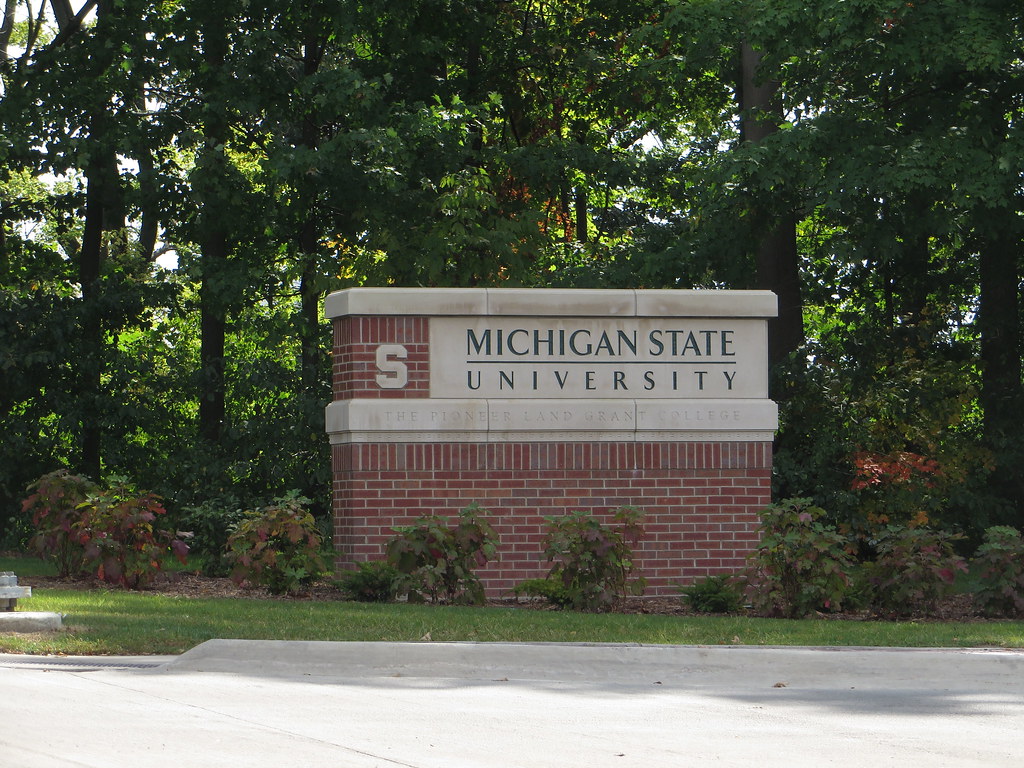
Lack of gun control did not lead to MSU shooting. Courtesy | Flickr
The Democrats who control Michigan’s state senate passed several gun-control bills last week in response to the deadly shooting at Michigan State University, but none of this legislation could have prevented any of the killings in East Lansing. What they tout as a promise to save lives is really a means of reintroducing failed legislation.
The 11-bill package includes bills on storage (SB 79-82), background checks (SB 76-78) and due process (SB 83-86). The MSU shooter obtained his firearms legally, despite multiple warnings in the past, meaning that even universal background checks could not have prevented the tragedy. In reality, the legislation is not about safety but taking advantage of a democrat majority in the legislature and governor seat. With Democrats holding a three-seat majority in the Michigan state house, the gun control wish list is bound to pass.
“The time for only thoughts and prayers is over,” Gov. Gretchen Whitmer said in a tweet last month. “We are in a unique position to take action and save lives. And that’s exactly what we are going to do in the weeks ahead.”
What Whitmer fails to address is that it was a plea deal, not stringent gun laws, that caused the deaths of three young students. The alleged shooter, Anthony Dwayne McRae, was charged in 2019 for illegally carrying a concealed weapon, which would normally be considered a two-year felony. A police officer on patrol had found and arrested McRae after discovering a loaded Ruger .380 in his pocket.
“The charge to which McRae pled is a felony punishable by two years,” Jeff Williams, Kalamazoo assistant prosecutor said. “A 2014 amendment to the Felon in Possession of Firearm statute says a conviction must be punishable by four years, or more, to make a person ineligible to possess a firearm.”
After pleading guilty, however, McRae was sentenced to one year of parole. With the charge dropped, he could lawfully possess firearms, even if there had been universal background checks at the time.
“We would all hope that a prosecutor would uphold the law as it’s written,” Lansing Police Department Chief Sosebee said in a public statement. “There’s always room for some type of discretion, however, that one will be scrutinized for a long time, I’m sure.”
Interim Deputy Chief Chris Rozman confirmed at a news conference DATE that McRae purchased the two 9 mm handguns used at MSU legally. Background checks would have done nothing.
It was later reported by multiple sources, his family included, that McRae was acting antisocial, up to the point of violence. No direct action was taken to combat this behavior, which began after the death of his mother, Linda McRae. With the lack of action by local courts and family, it is unlikely that red flag laws would have done much to prevent the shooting.
“He got mad if I tried to get him help,” his father, Micahel McRae, said in an interview with CNN on February 14. “I was trying to help him. He’d close the door. He stayed in his room a lot.” Michael McRae said he didn’t talk to anyone officially. “I didn’t want to start trouble– he’d get mad at me.”
With lax court sentencing, increased gun control only makes possession more difficult for law abiding citizens. Background checks and red flag laws have no lasting effect, and instead just slow the process. It is likely that McRae would have still acted violently upon MSU, even with the passage of the recent gun control package.
The legislation would have been ineffective at saving the three lives lost. It is nothing more than using a few thousand votes to diminish the Second Amendment.
