
Clean energy is not the solution. Courtesy | Flickr
Over 700,000 Michigan residents lost power during the recent ice storm. As power companies scrambled to restore energy, Hillsdale College hurried to install backup generators across campus to ensure dorm residents had power. Weather-related blackouts illustrate the weakness of the energy grid and fuel cries for more clean or renewable energy.
“Clean energy” is energy that comes from natural resources. Solar, wind, water, nuclear, and geothermal are all considered “clean energy,” with solar, wind, and nuclear being the most common.
The most common justification for clean energy is the reduction of greenhouse gases, but proponents also cite blackouts as a reason to ditch fossil fuels. However, despite the recent ice storm-related blackout in southern Michigan, there are a few reasons why clean energy is not the best solution to counter another ice storm.
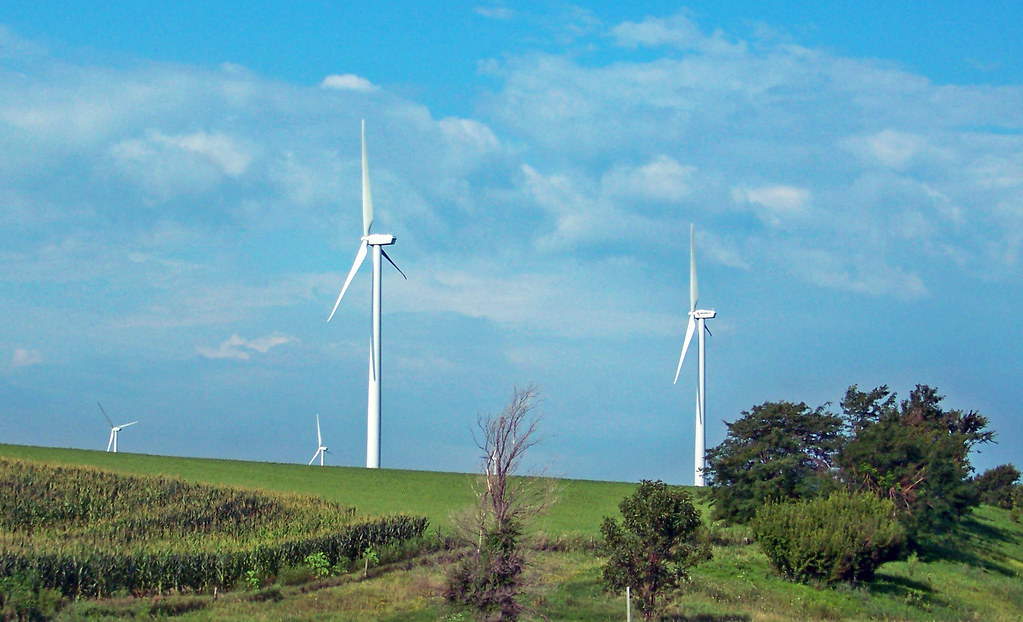
Let’s start with wind turbines. Consumers Energy operates a 60-turbine wind farm in Hillsdale County as part of a “$246 million investment in Michigan’s clean energy infrastructure.” One cited benefit of the turbines, besides the clean energy, is that they “provide an ongoing revenue source for participating landowners,” many of which are farmers.
The truth about wind turbines is less straightforward.
Turbines require acres of land to produce enough energy. Remote areas are best, but the energy must somehow be transmitted from the wind farms to more urban areas. Hillsdale is a less populated city, but it is still impossible to build turbines downtown.
A study on the impacts of low-frequency noise in turbines found that, despite the low volume, it can cause health problems ranging from headaches to dizziness to heart rate disturbances. Despite attempts to reduce noise, another study shows that, while daytime noise is relatively quiet, wind farms disturb sleep patterns. The same study notes that noise from wind turbines is more irritating than other noises at the same volume.
The turbines also negatively impact wildlife. One energy company recently pled guilty to its turbines killing approximately 150 bald eagles. Harms associated with turbines include disrupting habitats, lower survival and reproduction rates, and noise pollution. Bats are particularly at risk from turbines, with thousands dying every year.
Another problem is that, while turbines have a lifespan of 20 to 25 years, there is no great way to dispose of them. Companies are not required to dedicate funds for clean-up, meaning that while old turbines might be torn down, companies are not required to do so. If they are removed, the parts usually end up in a landfill instead of being recycled or reused.
Another form of clean energy is solar panels. A major benefit is that small panels can be attached to individual buildings. Some companies build solar panels on homes, and the electric grid buys excess energy from homeowners.
But solar panels do not work at night. Some panels can be connected to batteries, storing energy for later use, but they are a relatively new technology. Most of them work in real-time, meaning they only last until the sun goes down (battery options are usually expensive). Weather data shows that, on average, Michigan sees 10 clear days from December to February, and sunlight only reaches the ground 36% of the time. The result is that during winter months, solar panels would only function at 10-25% of their full capacity.
It would be wise to improve and diversify energy sources to help avoid another ice storm-related blackout. For now, however, resources should focus on improving the current energy grid.
