
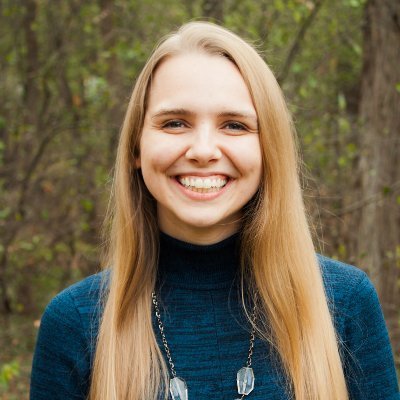
Just months after the Supreme Court overturned Roe v. Wade, Hillsdale alumna Leah (Hickman) Savas ’17, has published a 500-page book on the history of abortion in America from a pro-life perspective.
As a reporter for World, Savas spent the last three years co-writing “The Story of Abortion in America: A Street-Level History, 1652-2022,” with Marvin Olasky, former editor-in-chief of World.
“I hope this book adds for people what it did for me on the abortion issue,” Savas said. “When we started talking about the book back in 2019, I didn’t know much about the history of abortion in America.”
The book was originally meant to be an update to a book Olasky wrote in the 1990s about abortion, but as they started researching, Olasky and Savas realized they would have to write a new book.
“With just how much information and newspaper clippings and court records are available online now, he decided he needed to do a rewrite, not just an update,” Savas said.
The plan was to publish the book in January 2023, a month that marked the 50th anniversary of the handing down of the Roe v. Wade Supreme Court decision.
“When we started working on the book, we had no idea that Roe v. Wade would be overturned. That was not even on our radar,” Savas said. “Even when the Supreme Court took up the Dobbs case, we thought it would allow that law to stand. We never thought it would overturn Roe v. Wade altogether.”
After the Dobbs draft was leaked, Olasky and Savas realized the last chapter of the book would need to be about the end of Roe and how different states responded to it.
“We had already turned in all the other chapters and had started editing, but we told our editors and publisher that we need a little time in July to add this last chapter in, just to tie it up,” Savas said.
A native of Michigan, Savas said she never planned to end up in journalism.
“I just thought that journalism seemed a little too cutthroat for me. Kind of intense with lots of deadlines and I just thought that I’m not that kind of person,” she said.
As a student at Hillsdale, she and a few friends founded Fool’s Talk, the faith-based, student-run publication of Hillsdale College’s Equip Ministries.
One of those friends was Stephen Savas, whom Savas married in 2021.
“I loved all of my friends at Hillsdale,” she said. “We just always had a good time together.”
After graduating in 2017 with a Bachelor of Arts in English and double minors in classical education and German, Savas took a job in marketing at a small business.
“When I was at my first job after college, I would listen to the World podcast,” Savas said. “That’s when I realized that there’s some actual human interest in journalism, it’s not all about politics. They were telling stories of individuals and people, and I just thought, ‘wow, it would be cool to learn how to do this kind of reporting.’”
This podcast changed her view of journalism and led to her attending the World Journalism Institute in 2018. That then led her to an internship.
“In 2019, I took an internship with World and then they hired me at the end of that summer internship,” Savas said.
Olasky asked her to cover abortion, and later to help him co-write “The Story of Abortion.”
“Leah is great,” Olasky said. “She is smart, well-educated, articulate, and well-organized.”
Released on Jan. 3, the book has received many positive reviews from pro-life leaders.
“Olasky and Savas provide crucial historical context for the effort,” said Kristan Hawkins, president of Students for Life.
The book takes a “street-level” view of abortion over the “suite level” view in America, according to Savas.
“We tell the story of abortion in America through the everyday experiences of people who were personally affected by the issue,” Savas said.
The personal element was critical for Savas and Olasky as they wrote the book. According to Savas, they wanted to show how personal opinions and actions affect the larger cultural attitude towards social issues, including abortion.
“We just want to tell those personal stories to emphasize and debunk the common claim of pro-abortion advocates that abortion was seen as normal and accepted in early America,” she said. “Through these street-level stories, we hope to show what Americans actually believed about the issue and how it affected laws at the time.”
While Olasky and Savas collaborated on the entire book, Olasky wrote the first 40 chapters and Savas the last 10.
From early legal cases in which abortion was considered murder, to the stories of the many doctors who stated as early as the 1800s that life begins at fertilization, the book traces the history of abortion in America by telling the stories of those involved.
“I think it is really important, regardless of what someone’s view is on the abortion issue, to see that this is a very emotional topic that has affected a lot of people,” Savas said. “Among those people are unborn babies. We want to make sure that these babies are seen as characters in these stories. They are a very real part of the stories we tell.”