
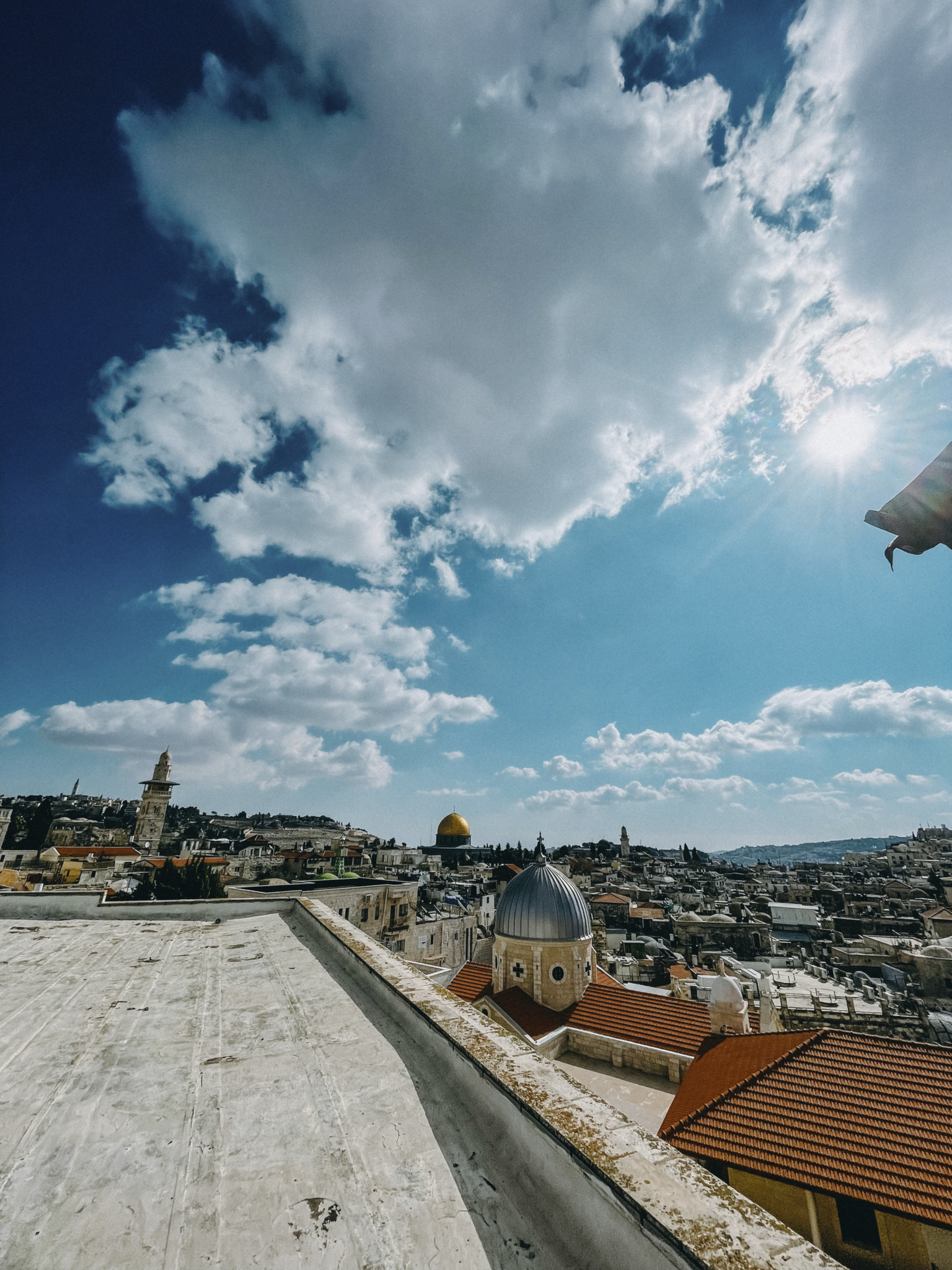
The Austrian Hospice overlooks the sprawling city of Jerusalem. Hannah Cote | Collegian
At 5 o’clock in the morning, Jerusalem is restless.
The Muslim call to prayer sounds across the city over loudspeakers; Palestinian Christians commute from the West Bank for work; Catholics prepare for a sunrise Mass. The Holy Land moves so fast it’s hard to keep up, living and breathing in constant chaos and noise.
Over Christmas break, I traveled to Israel with Passages, an organization devoted to bringing Christian students to the Holy Land and connecting us directly with Israel. Our group included 30 Hillsdale students, Brock and Jen Lutz, who served as our chaplains, three visiting fellows, and an incredible Australian-Jewish tour guide.
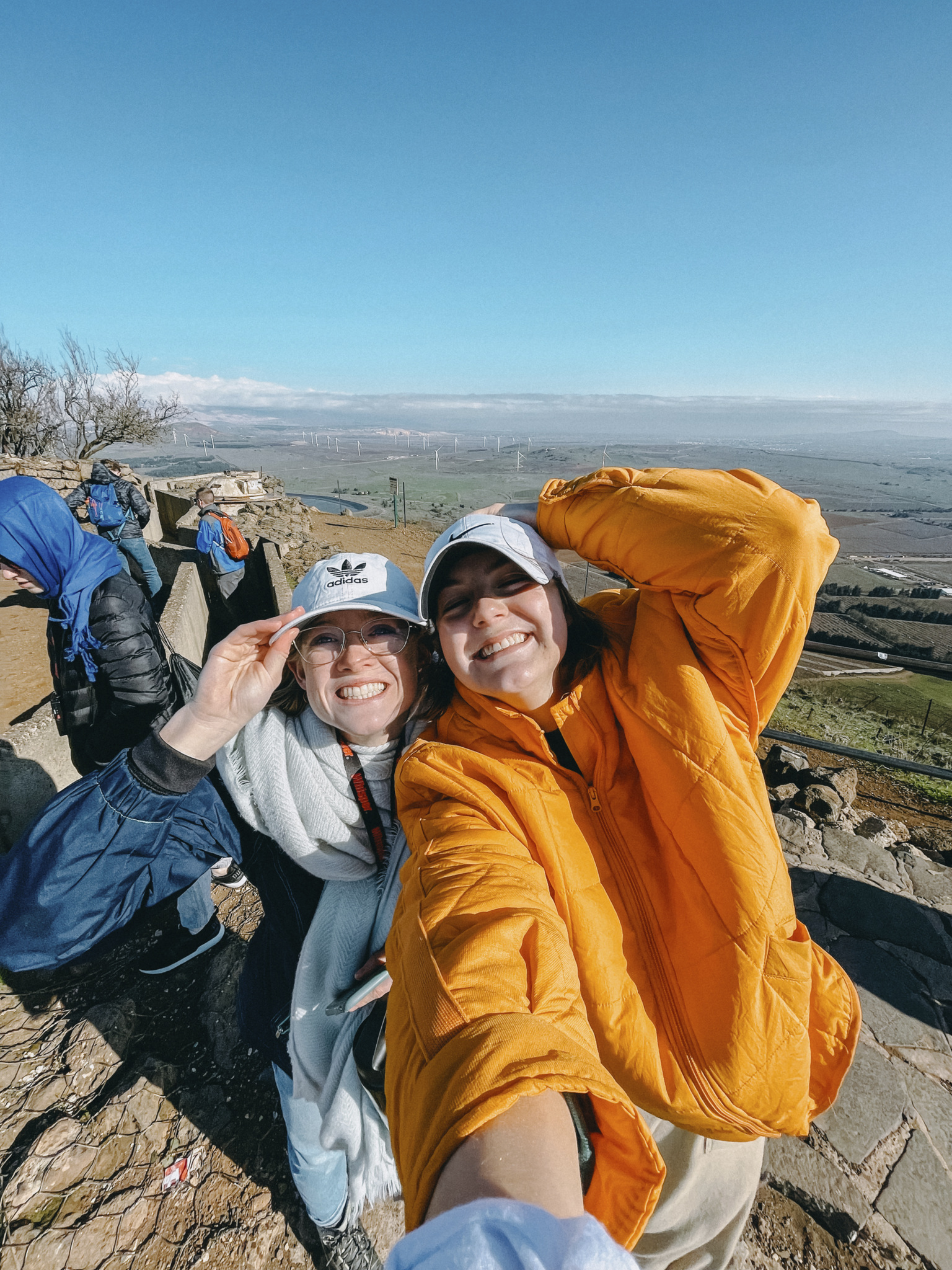
Golan Heights in Galilee.
Hannah Cote | Collegian
In just 10 days, we visited Tel Aviv, Nazareth, the Golan Heights, Tel Dan, Caesarea Philipi, Galilee, Capernaum, Tabgha, Magdala, the Jordan River, Ramat Rachel, Jerusalem, Bethlehem, Masada, the Dead Sea, Yad Vashem, the Gaza strip, and Jaffa. Nearly every night we heard lectures from Jews and Christians, journalists and speakers, and Israeli locals.
Israel is only slightly larger than New Jersey, and in this small stretch of land, Jews, Muslims, and Christians all fight for space — the tension is tangible.
Jerusalem, the heart of the country, contains most of the chaos. On days we traveled all around the Sea of Galilee and up to the Golan Heights, or high into the mountains of En Gedi and Masada, I felt a momentary breath of peace. But as soon as we re-entered Jerusalem, the energy of Israeli life flooded us.
My shock didn’t come from Israel’s hectic atmosphere. It came when a dear Jewish mother told me she loved the intensity.
Our group shared a Shabbat dinner with an Orthodox Jewish family during their sabbath. Every Friday, they leave all work behind to rest. They can’t cook, use electricity, or do anything that would include labor. During this sabbath meal, the mother shared about growing up in Jerusalem. When she went to visit the U.S. with her husband, she admitted to missing the fast pace of Israel.
This desire of hers confused me. While many families in America might prefer a farmhouse with acres of land, and maybe even a wraparound porch, the people of Jerusalem continue to build homes on top of each other, crammed up against Holy Sites, apartment complexes, and markets.
Somehow, different religions coexist in such tight spaces. As my group walked the Via Dolorosa, the Stations of the Cross, we could hear the Muslim call to prayer from loudspeakers all over town. Everything blends together across Jerusalem.
When I attended 5 a.m. Sunday Mass at the Church of the Holy Sepulchre, the traditional site of Jesus’ crucifixion and burial, I didn’t think we’d end up surrounded by tourists and Greek Orthodox priests so early in the morning.
I knew beforehand that this church is shared by multiple Christian denominations, primarily Catholics and Greek Orthodox, but even at the sunrise, distractions crowded the space.
As we celebrated Mass, Greek Orthodox priests walked around our group, shaking bells and incense during their prayers. I was quite annoyed, trying desperately to focus on the Gospel. And yet our priests were as calm as ever. They were a perfect example of virtue in tension.
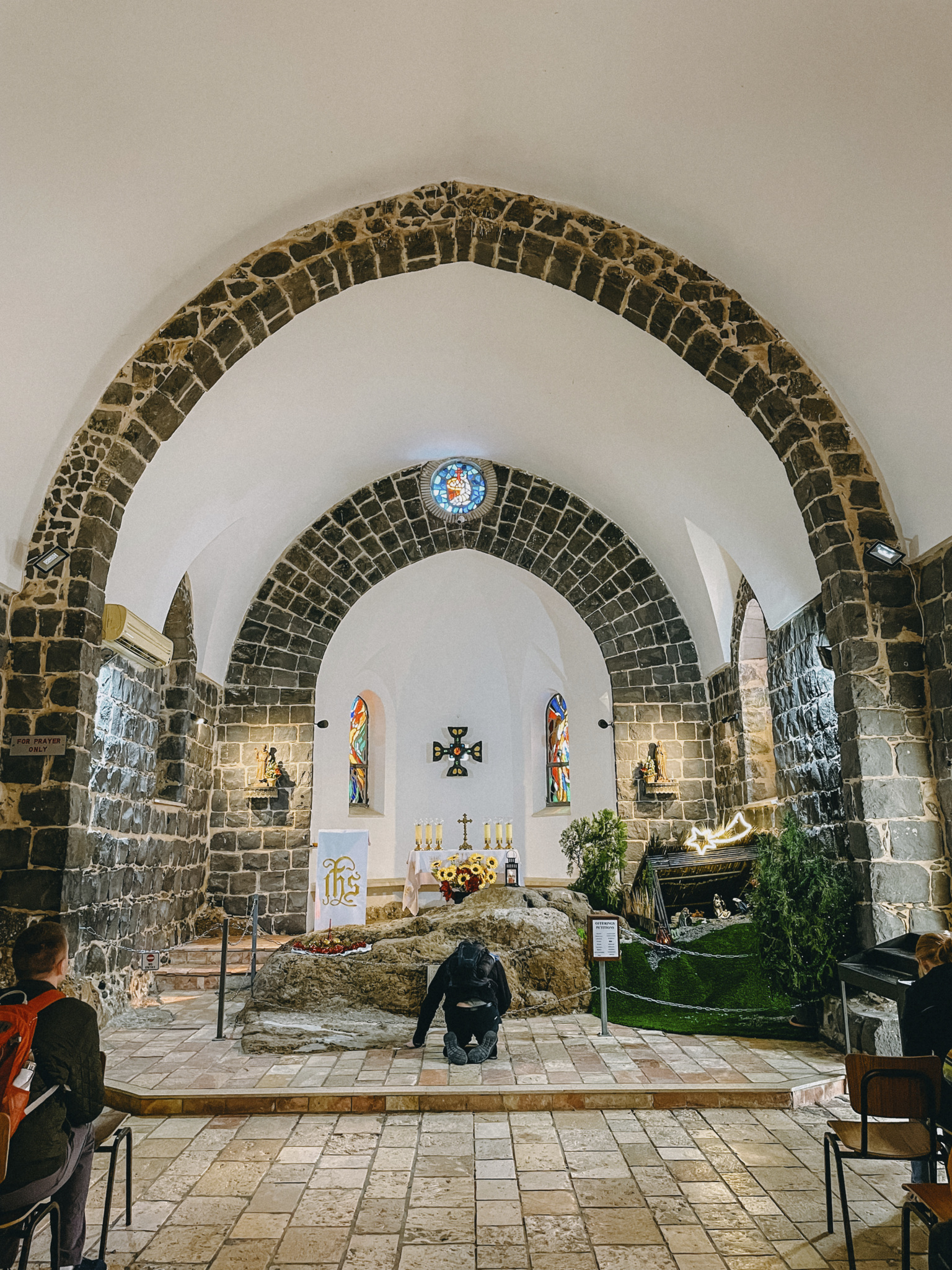
Hannah Cote | Collegian
We visited this church earlier in the week, and though the space is flooded with massive mosaics, hundreds of hanging candles, multiple relics, and towering stone archways, I still could not comprehend a beauty within such disruption like the Jewish mother did. But our tour guide shared a powerful reflection from a Dominican priest that has begun to transform my vision of this mess:
“One expects the central shrine of Christendom to stand out in majestic isolation, but anonymous buildings cling to it like barnacles. One looks for numinous light, but it is dark and cramped. One hopes for peace, but the ear is assailed by a cacophony of warring chants. One desires holiness, only to encounter a jealous possessiveness: the six groups of occupants – Latin Catholics, Greek Orthodox, Armenian Orthodox, Syrians, Copts, Ethiopians – watch one another suspiciously for any infringement of rights. The frailty of humanity is nowhere more apparent than here; it epitomizes the human condition.”
It’s difficult to choose virtue when overcome by struggle and tension. In Jerusalem, I came face to face with my humanity. My selfishness and pride arose in the Church of the Holy Sepulchre because I wanted that space for Mass. I didn’t want to share it for even an hour.
I’ve learned so much from pausing my own life and visiting the Holy Land. Walking on Jesus’ streets, miracle sites, and hometown — it’s incomparable to anything I’ve ever experienced. But what I hope to honor is not my own growth and transformation, but the steadfast example of virtue I discovered more than 6,000 miles away from home.
Each day I witnessed Jews, Christians, and Muslims attempt to share and respect the land. I won’t say their sharing is perfect, for all of us are human. But amid the abounding restlessness, there are people in Israel relentlessly pursuing virtue and goodness, intentionally seeking sabbath and rest, and surrendering themselves daily to God.
Thank you, Israel, for all you’ve taught me. You have made us for yourself, O Lord, and our heart is restless until it rests in you.
