
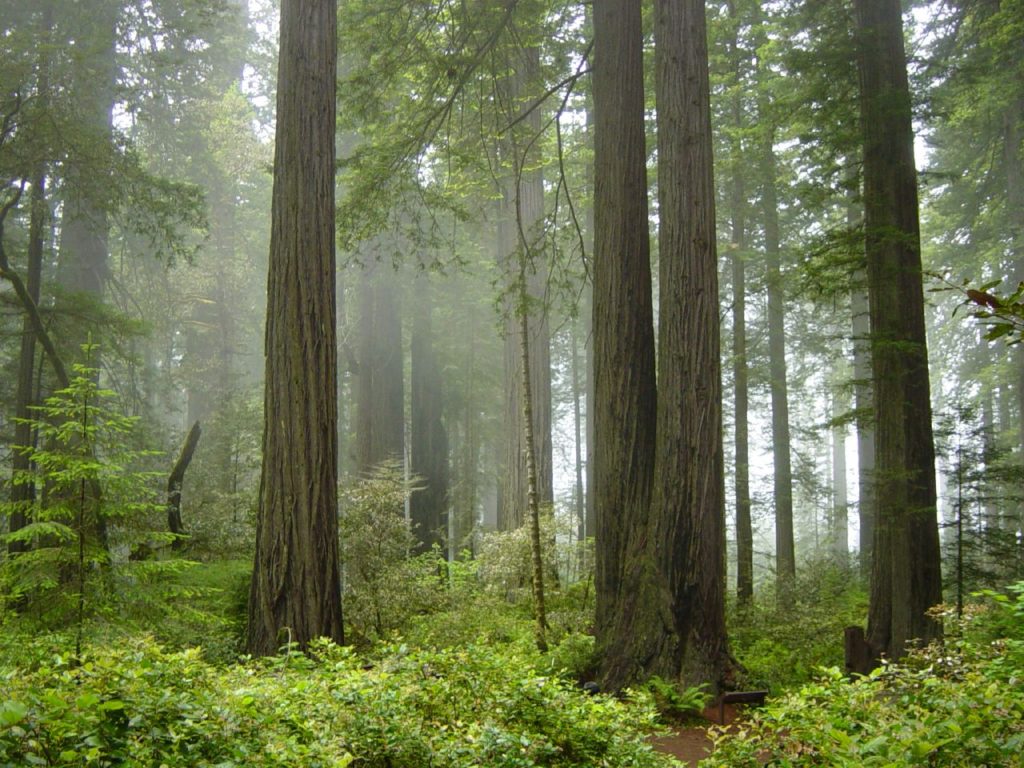
If you’re experiencing sensory decline, difficulty paying attention, physical or emotional illnesses, near-sightedness, or a Vitamin D deficiency, you may suffer from Nature Deficit Disorder.
Coined by international best-selling author and journalist Richard Louv in his 2005 book, “Last Child in the Woods,” Nature Deficit Disorder is a non-medical term referring to the symptoms experienced by children and adults who fail to spend sufficient time outdoors. Louv argued increased urbanization has alienated Americans from nature, slowing childhood sensory development and feeding adult mental illness.
“As young people spend less of their lives in natural surroundings, their senses narrow, both physiologically and psychologically,” Louv wrote.
The Outdoor Industry Association’s report in 2019 revealed that almost half of the U.S. population participates in no outdoor recreation, and outdoor excursions taken by children decreased by 15% between 2018 and 2012. Increased obesity, anxiety, and depression rates resulting from NDD suggest America is becoming an indoor nation.
Luckily, there’s a simple solution: spend at least two hours outside each week. The average college student spends between one and five hours per week on social media, a University of California, Los Angeles study said. Students should repurpose these hours to time in nature.
People who spend two hours a week in “green spaces” like parks are more likely to report physical, mental, and emotional health than those who don’t, according to a 2019 study conducted by the European Centre for Environment & Human Health at the University of Exeter.
“It’s well-known that getting outdoors in nature can be good for people’s health and well-being, but until now we’ve not been able to say how much is enough,” said social-psychologist Matthew White, who led the study. “Two hours a week is hopefully a realistic target for many people, especially given that it can be spread over an entire week to get the benefit.”
My dad has told me many stories of him and his brother spending their summers wading through Florida swamps in search of snakes and turtles to bring home as pets. Every morning, he went into the woods to look for wildlife, collect fallen branches to build tree forts, and build bonfires. Free of parental supervision, he and the neighborhood kids played pick-up games of baseball and had orange fights in local orange groves. Children like my dad once spent sunrise to sunset outdoors, not coming inside until dinner.
Now, children above the age of 8 are more likely to be able to identify characters from the videogame Pokemon than species of plants or animals, a University of Cambridge study discovered. Instead of collecting reptiles like my dad did, kids collect Pokemon cards. Children are no longer entertained by forests, rivers, and lakes, but by TVs, phones, and videogames.
“The more high-tech we become,” Louv said, “the more nature we need.”
Last summer, I went on a long hike with a friend in Northern Minnesota. We climbed over tall rock structures, explored waterfalls, collected rocks and shells from the beach, and dove into ice-cold Lake Superior. I saw the positive effect of nature on my own health as I felt my immersion in nature washing away layers of stress.
But is spending time in the great outdoors plausible in northern winters? Outdoor activities such as sledding and cross-country skiing are fun ways to be outside even when temperatures drop. Spending two hours outside per week bundled up for a snowy hike with friends can prevent NDD from setting in during the winter months.
“The future will belong to the nature-smart — those individuals, families, businesses, and political leaders who develop a deeper understanding of the transformative power of the natural world and who balance the virtual with the real,” Louv said.
Regardless of where you live, the prescription to cure Nature Deficit Disorder is easy to find. All it takes is a weekly dose of the outdoors.