
The Nimrod Education Center hosted Tom Opre, an outdoors film director, as he shared his first full length documentary titled “Killing the Shepherd” on Sept. 7.
The production crew took three years to make the film, which follows an African chief waging a war against poaching to eliminate poverty in her community.
Hunting serves as a primary form of sustenance and income for the village in the documentary. After years of environmental destruction due to poaching led to poverty and violence, the chief realizes she has no other option but to fight back using wildlife conservation.
“It’s a complex story, but the parallels to what happened in Zambia could be happening exactly here in Michigan or anywhere in the world, where people interact with wildlife every day,” Opre said. “I really want to target that 75-80% of people out there that just don’t understand our conservation ethos.”
Opre’s love of the outdoors stems from his father, he said. Tom Opre Sr. wrote a weekly column on wildlife for the Detroit Free Press for nearly 25 years.
“My dad made some films back in the late 1960s and early ’70s that were award winning films about hunting and fishing around the Great Lakes in Canada,” Opre said. “When I was really young I used to sneak into his office and throw up the rolls of 16 millimeter film on a projector. Then as I got older, like many kids I wanted to follow in my father’s footsteps, though of course my dad’s footsteps are rather large.”
After graduating from Grand Valley University, Opre worked briefly in the automotive industry before becoming a commercial producer for major outdoor companies. He produced a series for the Discovery Channel’s Shark Week, and then received a call from NBC Sports about starting a show called “Eye of the Hunter.” The show featured Opre and his wife, Olivia Nalos Opre, searching for big game across the globe.
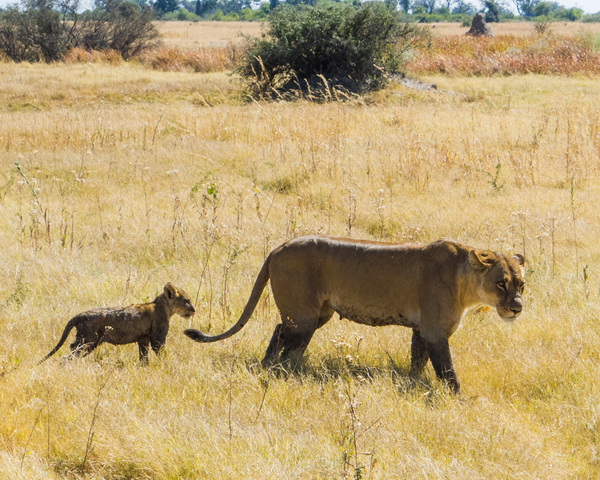
After years of success, “Eye of the Hunter” came to a sudden end after an African lion named Cecil was shot in 2015. Cecil’s death led to public distrust of hunting, and the subsequent cancellation of Opre’s show. According to Opre, this inspired his current mission: to educate the general public about how hunters promote wildlife stewardship.
“Over the years, I’ve grown to build really good relationships with other filmmakers and other wildlife photographers, so we all got together and decided to form a nonprofit called the Shepherds of Wildlife Society,” he said. “We’ve really come to understand that the people that live with wildlife, whether it be ranchers or farmers or remote communities, value it most because they can benefit the most from it and take care of it.”
The film’s presentation at Hillsdale is part of an effort by the Nimrod Education Center to promote the North American model of wildlife conservation strategies both on campus and across the country. The model views wildlife as a public resource, as well as ensures market protections through democratic government management.
“The reality is that hunters, anglers, and target shooters pay for conservation in this country. As people settled the country, they looked at the resources as being unlimited, and then exploited them to the point that by 1900 most of these species were almost completely eliminated, including those considered common today,” Al Stewart, director of the Nimrod Education Center, said. “In the early ’60s, there were no deer in Hillsdale County, yet now you can see them outside of Moss Hall.”
Viewers said they left feeling well-educated.
“I think that people who shoot have more of an investment in it than anyone else because if populations aren’t being cared for, then they’re not going to have their sport any longer,” sophomore Aaleyah Welman said. “You can debate all you want about climate change, but, at the end of the day, it’s common sense to care for the environment. Like God says, steward the earth.”
Opre’s films have also caught the attention of the U.S. Congress.
“We did a screening of ‘Killing the Shepherd’ at the U.S. Capitol. I ended up having a meeting with three congressional staffers to the Cecil Act, which is an attempt by Democrats to make it illegal to import animal parts from the Big Five from Africa,” Opre said.
If passed, the Cecil Act would prohibit trophy hunting imports of species listed as threatened or endangered by the Endangered Species Act, as well as outlawing the importation of elephant and lion trophies from Tanzania, Zimbabwe, and Zambia.
Opre said he hopes to continue his work with the Shepherds of Wildlife Society by drafting legislation entitled the Indigenous African Economic Empowerment Act, which would allow for further economic reinvestment in communities through hunting.
He also is in the final stages of production on two other documentaries. The first is titled “The Last Keeper,” which focuses on agriculture in Scotland. The other is called “The Real Yellowstone,” which highlights actual ranchers in Montana as a contrast to the popular TV drama.
Stewart offered a summary of Opre and the Nimrod Center’s shared mission.
“There are more than 50 million Americans hunting and fishing every year, creating over $200 million in economic activities and supporting over 1.5 million American jobs,” Stewart said. “It’s not that people need to go out and become hunters and anglers necessarily, it’s just that they need to understand.”
