
Wikimedia Commons
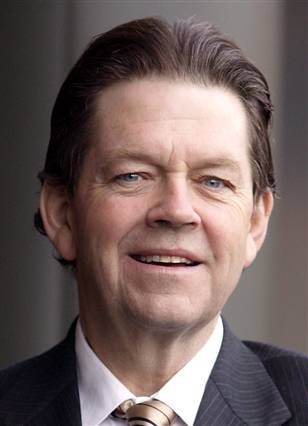
Hillsdale released its newest online course, “Supply-Side Economics and American Prosperity with Arthur Laffer,” on Aug. 23, addressing the economic concerns of voters ahead of the 2022 midterm elections.
This course “will be an excellent addition to Hillsdale’s online course catalog,” according to Gary Wolfram, director of economics and professor of political economy at Hillsdale College.
“Dr. Laffer for decades has been a force in explaining why prosperity can only come about through market forces and limited government,” Wolfram said. “As a member of President Reagan’s Economic Policy Advisory Board, he was instrumental in lowering the top marginal tax rate from 73% to 28%, resulting in economic expansion. His famous ‘Laffer Curve’ is a perfect example of how to clearly and concisely make people aware of the costs of excessive taxation and the dangers of government intervention.”
The course consists of eight lectures, guided by Laffer, with appearances from supply-side economic historian Brian Domitrovic, publishing executive Steve Forbes, Fox News financial program host Larry Kudlow, economic writer and commentator Stephen Moore, political and economic writer Amity Shlaes, and College President Larry Arnn. The course is the 35th free online class provided by the college.
The college produced the lectures in a documentary-style approach, the first of its kind among Hillsdale’s courses, according to Director of Online Learning Kyle Murnen. Viewers will learn the basic principles of macroeconomics, the consequences of high taxation, and why certain states prosper while others continue to struggle. They will also learn Laffer’s plan to reform and remedy the U.S. economy, Murnen said.
Laffer served as the chief economist in the Office of Management and Budget in the 1970s. In 2012, he founded the Laffer Center of Supply-Side Economics which is “dedicated to preserving and promoting the core tenets of supply-side economics,” according to LafferCenter.org. Laffer has advised many world leaders, including former President Ronald Reagan, Prime Minister Margaret Thatcher, and former President Donald Trump.
Laffer is known for his Laffer Curve, a model demonstrating the relationship between tax rates and tax revenue collected. It became popular in the late 1970s when the country was suffering from stagflation, according to Murnen.
“We live in similarly interesting times, brought about, as Dr. Laffer argues, by ‘runaway stimulus spending,’” Murnen said.
The stimulus spending refers to the funds distributed to American Citizens in the wake of the Coronavirus outbreak, passed under the Coronavirus Aid, Relief, and Economic Security Act in 2020. In 2021, the American Rescue Plan Act was passed–a $1.9 trillion stimulus package, the largest in U.S. history, according to USAspending.gov.
Americans wonder how to get the economy back on track and secure a prosperous future for their families in the aftermath of the COVID-19 pandemic, according to Murnen.
“Laffer explains complex data and ideas of supply-side economics, such as the impact of taxation, regulation, and government spending on the U.S. economy, in very intuitive, common sense ways,” Murnen said.
Associate Professor of Economics Michael Clark said it’s important for Americans to learn about supply-side economics. This aspect of economic thought focuses on increasing the supply of labor and goods as the path to fostering economic growth.
“There is much contention and debate in macroeconomics, but supply-side economics engages ideas that we know are fundamental to the long-term prosperity of a country,” Clark said.
