
The new Center for Military History and Grand Strategy launched last weekend with a panel and series of lectures, aiming to explain why the study of war and strategy remains important even as similar programs disappear from American colleges and universities.
“It used to be the case that there was a chair in military history at every major school in the country,” Professor of History Paul Rahe said. “It has been banished from the history profession, followed by diplomatic history which hardly exists anymore. To give you a sense of how bad it is, there are more military historians at Hillsdale College than in the entire Ivy League.”
The center held a discussion panel Friday afternoon composed of the Hillsdale faculty who teach courses for the program. The launch event included lectures by three other academics Friday night and Saturday morning. The new program will offer a minor to students and also plans to host guest speakers as well as an annual conference.
“Whether as educated voters or even more so as policymakers, people need to understand not just events but the explanation, the origin, the course, what war is, where it comes from, why it comes, how it’s played out historically,” Professor of History David Stewart said. “The center is designed to try to provide that kind of fundamental education for both informed voters and policymakers.”
Assistant Professor of History Edward Gutierrez, director of the new center, worked with College President Larry Arnn to create the new program.
Courtesy | External Affairs
“The first semester I was here, Dr. Moyar and I wrote a proposal, and I laid it out,” Gutierrez said. “I met with President Arnn again and laid out what I envisioned the center would look like. The first of those is the minor.”
The faculty laid out the requirements for the minor in military history and grand strategy during the panel discussion Sept. 9. Classes will be open to any students of any major with no prerequisites. Students studying for the minor will be required to take three core classes, as well as two electives and a capstone course on American grand strategy.
“We wanted to keep it small and manageable,” Stewart said. “A politics major can take and complete this minor and understand something.”
Chair of military history Mark Moyar spoke from his experience in government on the importance of understanding military history and strategy. Moyar has written books on the Vietnam War and served in the U.S. Agency for International Development in former President Donald Trump’s administration.
“The bureaucracy is very eager to make decisions when it can,” Moyar said. “It loves political appointees who don’t know anything. They can take advantage of you. We need to have people who are better educated, who understand these issues.”
Gutierrez said the center will likely host events, including a summer seminar at the Allan P. Kirby Center for Constitutional Studies and Citizenship in Washington, D.C. Later in the panel, Stewart hinted a graduate program may be in the works.
“There are conversations beginning to, perhaps, offer a master’s program where students can come and get a master’s degree in military history,” Stewart said. “I think the primary audience would be people who work in D.C., people who work in think tanks, people who are associated with the State Department, even military officers.”
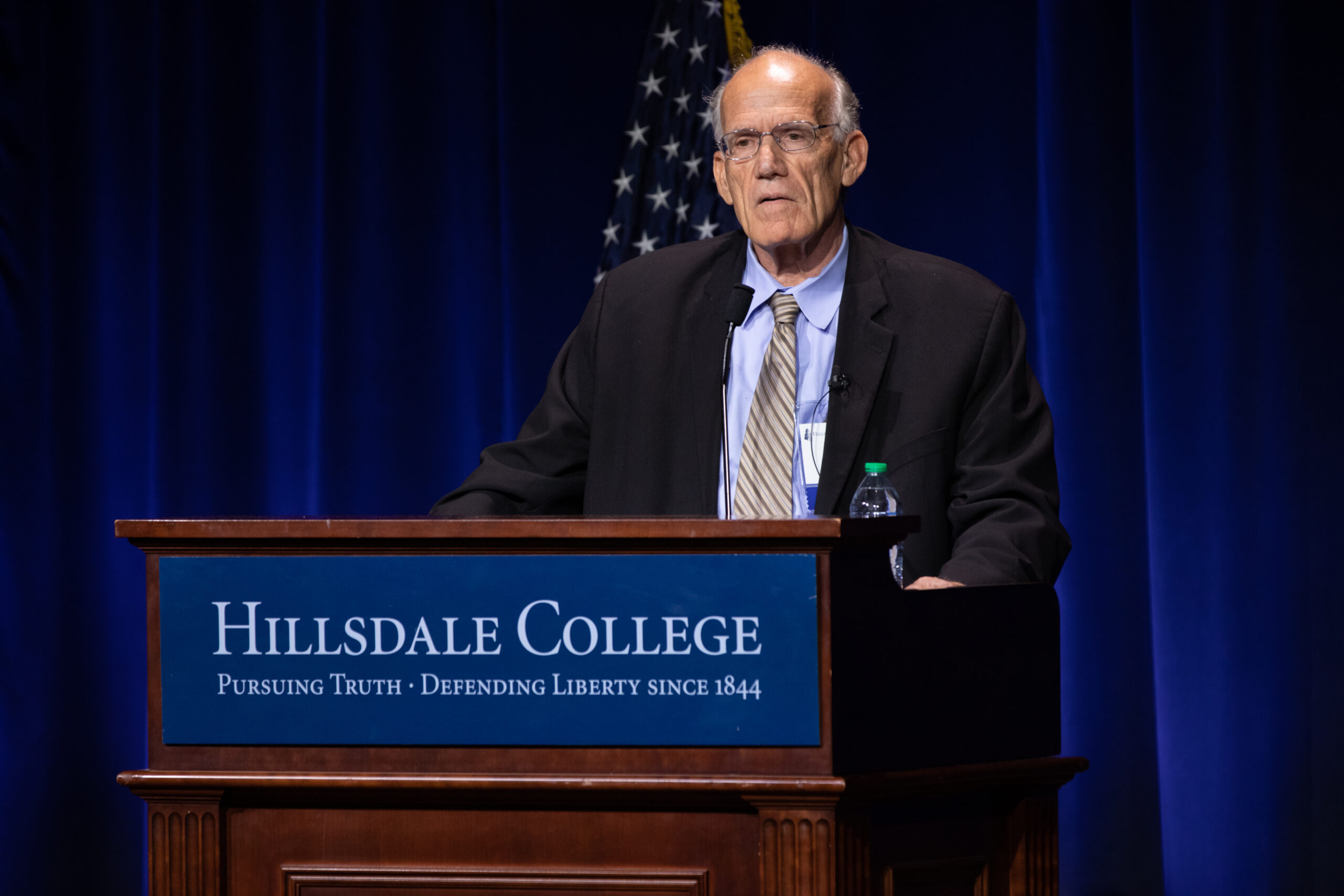
Victor Davis Hanson, a military historian and the Wayne and Marcia Buske Distinguished Fellow in History at Hillsdale College, delivered a speech Friday night on why the study of military history and grand strategy remains relevant today.
“It’s the citizen’s choice to decide when to go to war, if to go to war, how long to go to war, and how to resolve a war,” Hanson said.
“To make those choices, they should be acquainted with how wars begin and what they’re caused by, how they progress or regress, if they end, when and do they resolve anything. Social science cannot provide those answers. They are only found through history.”
Hanson also criticized the sentiments he said have driven war and strategy out of academia.
“Let’s be candid: military history is in crisis,” Hanson said. “We have this strange idea in the United States that the military historian is a sort of a dark brooding person who loves war. It’s almost as if you were to say that an oncologist goes into his field not to cure cancer but because he loves malignancies.”
Professors Sean McMeekin of Bard College and Ian Johnson of the University of Notre Dame followed Hanson Saturday morning with lectures sharing their perspectives on World War II strategy. Johnson spoke before the event about the importance of the center.
“Studying war and grand strategy are also crucial in understanding our present moment,” Johnson said. “The U.S. has troops deployed in roughly 130 countries, a dozen and a half of which are combat zones. Despite claims to the contrary, war hasn’t gone anywhere, and it is essential that we understand it.”
State Sen. Lana Theis, who chairs the Senate Education and Career Readiness Committee and attended the event Friday evening, said she supports the center’s effort to further educate students on military history.
“I’m excited for it,” Theis said. “To be able to provide that kind of context to their students in the way that they do in historical reality and historical truth and not a historical rewrite – I have a lot of trust in the curriculum they’re going to provide and a lot of confidence that they’re going to impart it well.”
Gutierrez said he has big plans for the future of the center, hoping it can become a well-known force in the field of war and strategy.
“I think we want to be something where we are known,” Gutierrez said. “Not just in town, not in the state, not even nationally, but internationally known as a place that is doing serious work as an institution where anyone can come.”
