
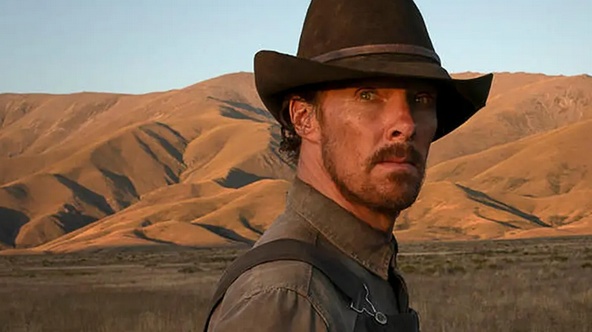
It is easy to see why “The Power of the Dog” is the current darling projected to reap the most awards at this year’s Academy Awards.
Already having snagged the 2022 Golden Globe Award for Best Picture, director Jane Campion has deftly crafted a story filled with big name actors, magnificent cinematography, and an excellent score. Despite these solid features, by the end of the film the viewer may be left with a sense of dissatisfaction—under the shell of the pleasing aesthetics lies a rather unoriginal story.
The film is adapted from Thomas Savages’ 1967 novel of the same name, exploring themes of family, jealousy, and sexuality (at times graphically, so be forewarned). The story takes place in the outback of 1925 Montana and presents a narrative that fits well with today’s moral and cultural mores.
Divided into six parts, the film opens on the ranch of the two wealthy and very different Burbank brothers, stodgy George, played by Jesse Plemmons, and domineering Phil, played by Benedict Cumberbatch.
Immediately, the figure of the brothers’ late mentor “Bronco Henry” begins to emerge as an ever-lingering presence. His memory looms over the characters with increasing intensity throughout the film. The fact that he is never portrayed but only mentioned or reverently invoked adds to his mysterious aura.
Although Phil tries his best to assume the same charismatic presence as his mentor, he succeeds in conflating true strength with a shallow attitude. He reveals the extent of his immaturity and emotional volatility when he reacts with petty jealousy to his brother’s new wife Rose, and to her teenage son, Peter.
A slow, painful campaign of spite commences upon their arrival, as Phil tries to undermine their relationships with George by denouncing Rose as a gold-digger, and taunting Peter for what he perceives to be his effeminacy.
But in this dynamic, the heart of the story reveals itself as the crusade becomes a reflection of what true masculine strength really is. Who is ultimately in control? Arrogant Phil, or the slyly quiet Peter? When Peter discovers the secret that Phil may be hiding behind his swagger, the conclusion is clinched then and there.
Packed with symbolism and foreshadowing to the point of obnoxiousness, “The Power of the Dog” gives little room for doubt. The dramatic music by Johnny Greenwood, à la his score for “There will be Blood,” is supposed to heighten the sense of suspense and doom. Without the ultimate devastating effect, one is only left with a vague sense of unsettlement, but certainly not surprise.