
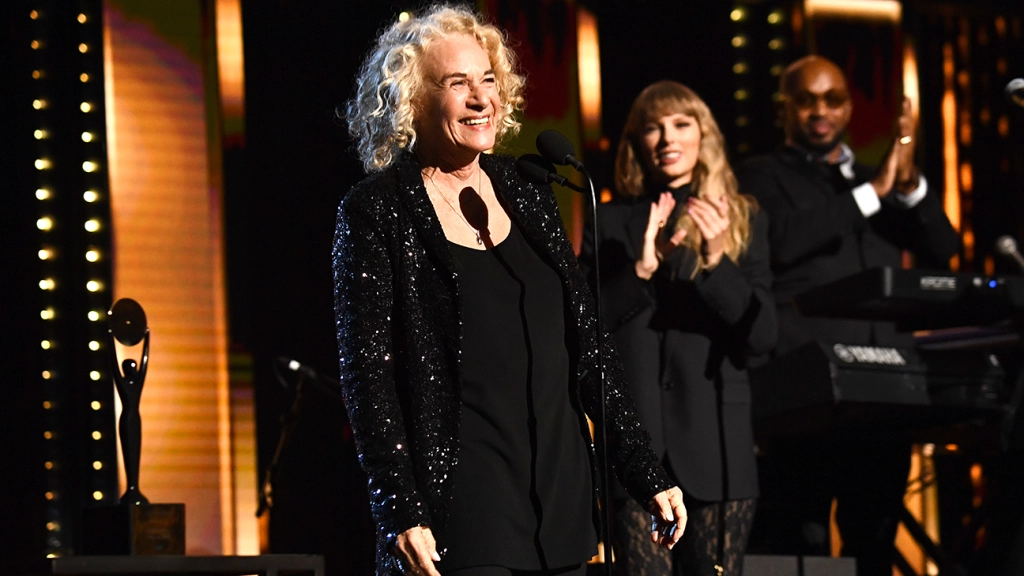
Carole King’s 1971 release “Tapestry” just hit its fiftieth birthday.
After its release, “Tapestry” cemented King as one of the most prominent singer-songwriters for decades to come.
The record, co-written with James Taylor, has since been certified platinum 13 times, according to CNN. King won Grammy Awards for Album of the Year and Best Pop Vocal Album pop as well as a Recording Academy Lifetime Achievement award in 2013.
Alongside her first husband, Gerry Goffin, the duo became majorly successful songwriters in New York. The Shirelles’ “Will You Love Me Tomorrow” was written by Goffin and King and later featured on “Tapestry.” In 1967, Aretha Franklin recorded her own version of the single, which solidified the song’s long-term success.
But a year later, Goffin and King got a divorce. King moved to California and met James Taylor with whom she recorded “Tapestry.”
Released amid the chaos of 1960s counterculture, “Tapestry” stands as an elegant display of King’s talent and role in the music industry. Pictured on the cover in blue jeans and bare feet, King sharply separated herself from the polished pop hits she had helped write. From the shadows of songwriting for others, King stepped into the limelight and made history.
King was the first woman to win Song of the Year after “Tapestry” was No. 1 on the Billboard charts for 15 weeks. Instead of subscribing to the “drugs, sex, rock ‘n’ roll” delusion that her peers were confined within, King wrote “Tapestry” from a place of hope, love, and resilience. Songs like “It’s Too Late” and “You’ve Got a Friend” navigate the complicated nature of romantic relationships without ever slipping into shallow, venomous jabs. “I Feel the Earth Move” and “Where You Lead” honor themes of desire and longing without any attempt to “girlboss” feelings away.
Today, you’ll find King’s work memorialized in the Gilmore Girls’ theme song, “Where You Lead,” and her legacy carrying on through sporadic releases. Although none of her other 17 studio albums have reached the acclaim and popularity as her first, “Tapestry” possesses a rich history. The record turns 50 this year but remains timeless.
