
courtesy | Jack Duffy
Jack Duffy is a junior at Hillsdale College. This interview has been edited for length and clarity.
How did you learn how to make kimchi?
A couple years ago, a friend gave me a book called ‘Wild Fermentation’ by a man called Sandor Ellix Catz. It includes fermentations from all manner of cultures. There are some really strange African, American, German, and Korean ones. You name it, it’s in there.
What is kimchi?
Kimchi is a sour, Korean pickle. It is similar to sauerkraut but has different spices.
What is the kimchi making process?
First of all, you have to get your ingredients, which definitely includes cabbage and then whatever other vegetables you can get. It doesn’t really matter what vegetables you use—carrots, turnips, radishes, onion, garlic — you name it. You chop it all up and really the important thing is to create the ideal environment for the growth of this strain of bacteria called lactobacillus.
What is lactobacillus?
Basically lactobacillus is this fermentation bacteria that will eat all the sugar from the vegetables depending on how long you leave it. It will produce this kind of sour vinegar flavor as well as carbon dioxide. Kimchi is typically carbonated. The way to create the environment for this strain of bacteria is with salt. It’s really as simple as salting vegetables so that the water content is drawn out of them. You put them in a jar so that the brine covers the vegetables entirely, which prevents surface mold from growing. In that salty brine, this bacteria will start growing and kill out any other bacteria that could grow. Then it’s gonna do its thing—eat sugar and create carbon dioxide.
Can you change the flavor depending on how long you ferment it for?
So you’ll get a culture in there within a day maybe. Traditionally, Koreans would dig holes and stick their croque of kimchi in the hole to keep the rate of fermentation down, so it will last longer. At a certain point it gets a bit too acrid. One of the joys of kimchi is tasting it at different stages, especially if you make a big batch you have the luxury of eating it throughout a long period of time.
Is there any other way to change the flavor besides fermentation?
The different vegetables you put in. And I suppose the most important thing that makes it kimchi as opposed to sauerkraut is the inclusion of some sort of red pepper. I use gochujang which you can buy at Kroger. Gochujang is a fermented soy bean and red pepper paste. So you throw that in. I like to throw fish sauce in as well. You can even throw in raw shrimp or scallops — that sort of thing. You can change how much garlic you have or how much ginger you throw in. There are a multitude of ways to manipulate flavors.
What is the best way to eat kimchi?
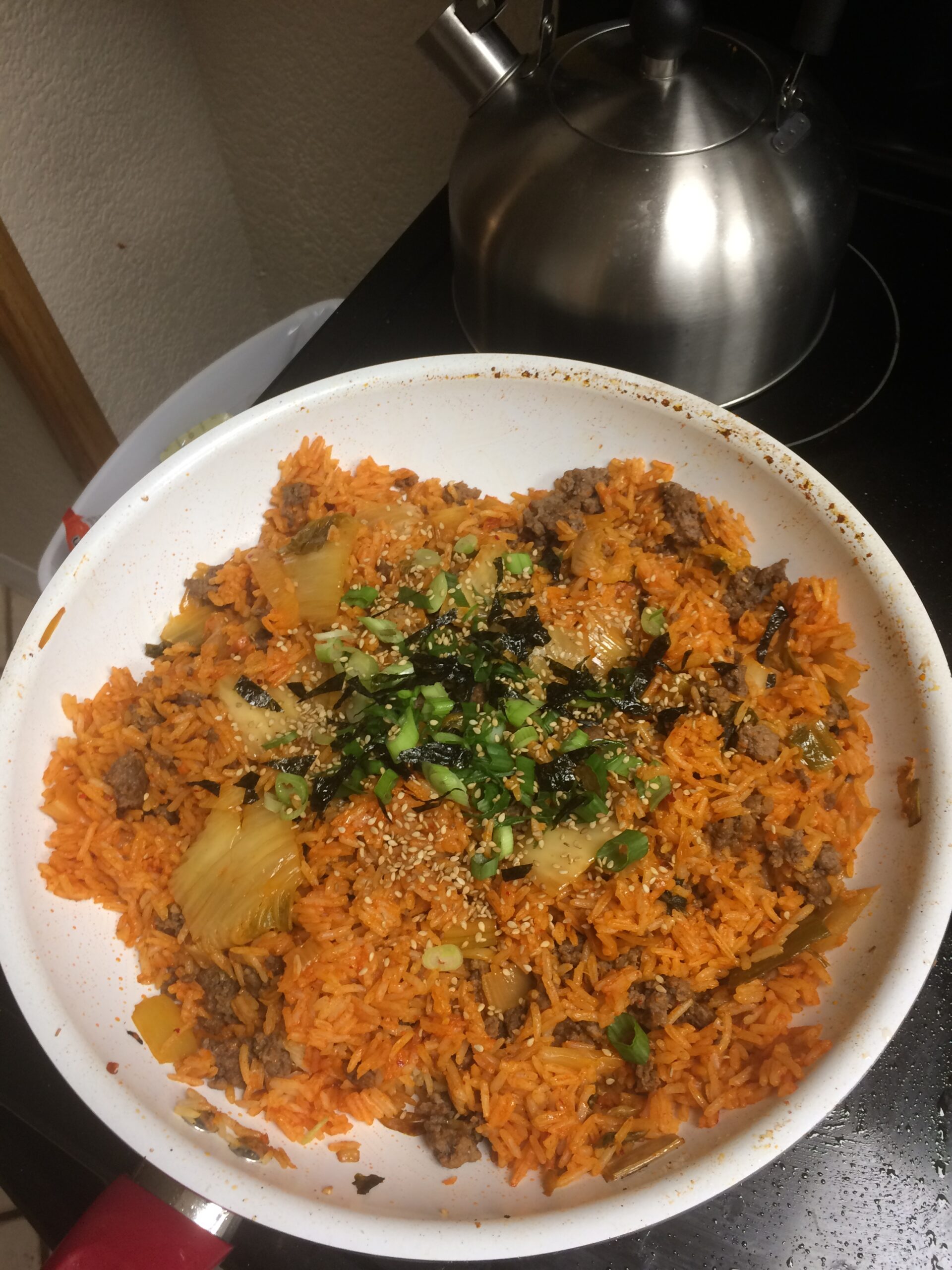
Typically I make kimchi fried rice with it, which is as simple as making rice by throwing some eggs and onions in it and then some kimchi. It’s delicious. But it’s also really good on its own.
Do you ferment anything else?
I make sauerkraut. I make cheese when I have the ingredients. I’ve made yogurts and hard ciders.
Where does kimchi rank among your favorite toppings?
When I have it, I eat it as often as I can. It is a staple of the Korean diet. I think the statistic is that Koreans will eat a quarter pound of kimchi a day.
