
Commons
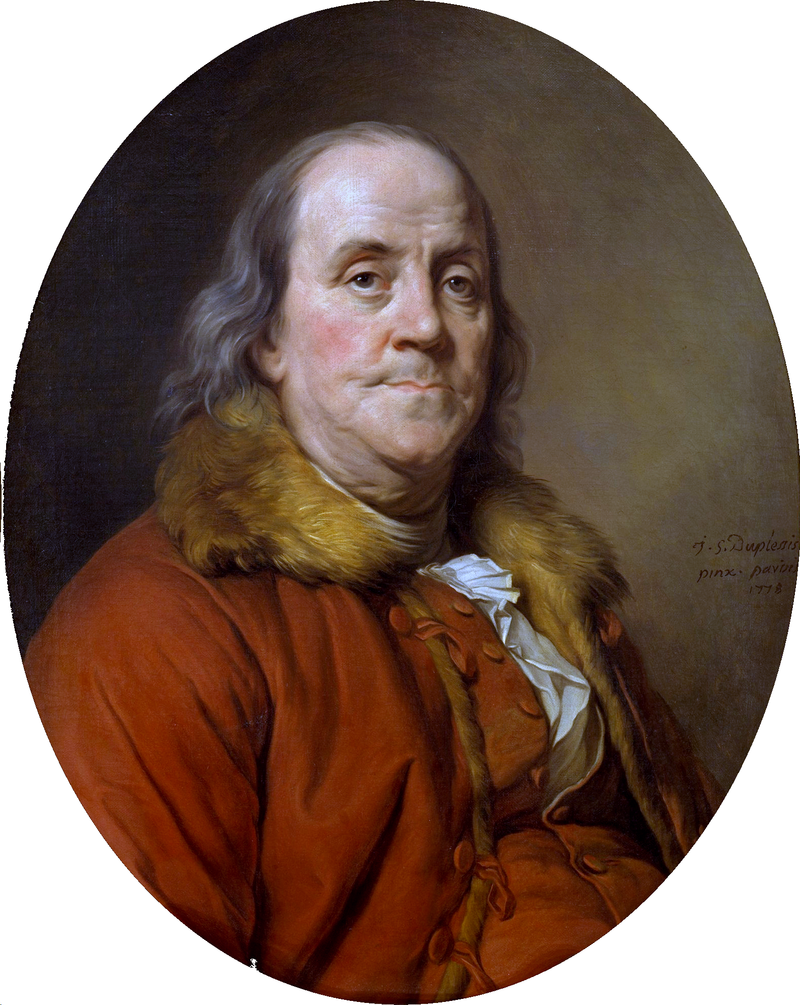
Distinguished Associate Professor of History Darryl G. Hart lectured on Benjamin Franklin’s unexpected spiritual life on Tuesday evening. “Benjamin Franklin: Cultural Protestant” is the second book in his series on the spiritual lives of the Founders.
According to Hart, readers may be surprised that the spiritual series features the seemingly secular Franklin.
“He was steeped in Puritanism in Boston, so he carried around a lot of religious ideas and Biblical language,” Hart said. “Plus, he was a keen observer of colonial life and there was a lot of religion happening in the colonies so it wasn’t that hard to place him in developments within colonial religious life.”
Franklin was a nominal Anglican, according to Hart. He attended services at Christ Chapel in Philadelphia, the namesake of Hillsdale’s chapel. He encouraged his wife Deborah and children to follow the teachings of the church and receive communion, but rejected the divinity of the trinity. Although he took a religious oath of office during his public service in England, he advocated against similar oaths in the American government.
Sophomore Mary Ruth Oster attended the lecture to supplement her learning in her American Heritage class.
“I found it interesting that although Ben Franklin was not particularly devout, those core virtues and beliefs of Christianity influenced him and his contributions to the founding of the United States,” Oster said.
Part of Hart’s inspiration for the book came from growing up in Philadelphia. He attended Benjamin Franklin Junior High School and visited the Benjamin Franklin Institute on field trips. Now, Hart teaches Franklin in American Heritage.
“Franklin is part of the furniture of the Philadelphia area,” Hart said. “He’s always been part of my mind in a way.”
Freshman Kody Richards said she attended the lecture because her American Heritage and Constitution classes are discussing Franklin.
“It was interesting to hear about the religious practices of American founders from the perspective of social class and social climbing,” Richards said. “I also enjoyed learning more about how Franklin’s autobiography was written.”
Hart began writing books during his teaching position at Wheaton College. A senior faculty member encouraged Hart to write every morning before other duties of the day.
“I try to write a page a day, and if you can do that, it does add up,” Hart said. “I had no idea that I would do this, but I do still get a lot of energy from writing.”
Currently, Hart is working on a book exploring whether Presbyterians were responsible for the American Revolution. The book combines both national politics and church history.
Since the book was published out of the London Office of the Oxford University Press, the Hillsdale bookstore has struggled to get copies of Hart’s book due to supply chain issues. Regardless, Hart said he enjoyed writing the book and planning his lecture.
“Franklin is a really charming and enduring fellow in my estimation,” Hart said. “When I have a chance to look at him again, I enjoy it.”
