
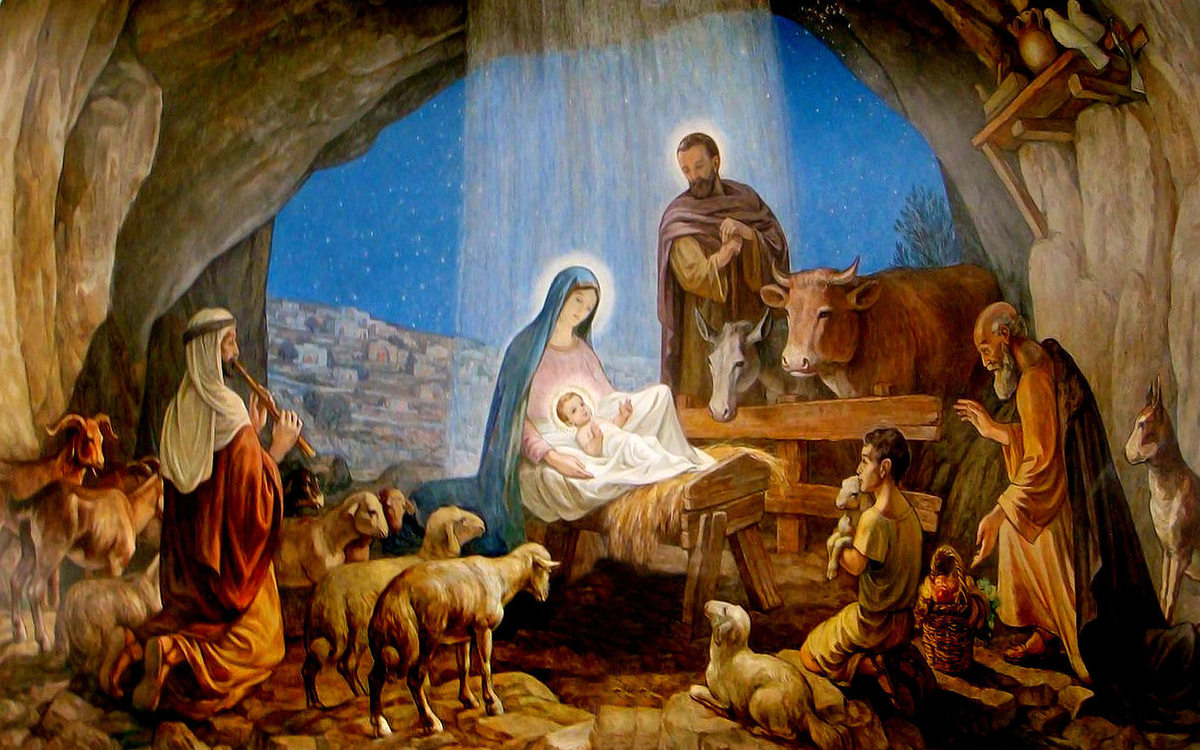
disregards the reason we celebrate the holiday. | Pixy.org
Dear baristas, shop clerks, store greeters, and all other retail workers: please say “merry Christmas.”
Workers have become hypersensitive to religious holidays, and in an effort to avoid offending someone, they have forgotten how to have a human conversation. It’s more meaningful to conclude with a personal pleasantry — which for most people in the United States is “merry Christmas” during the holiday season — rather than an impersonal, unspecific comment.
America is largely a Christian country. According to a 2019 Pew Research Poll, 65% of Americans identified as Christian, far surpassing all other religions. This means the majority of Americans celebrate Christmas. And according to a December 2017 Pew Research Poll, roughly 90% of Americans celebrate Christmas. It shouldn’t be controversial to hope that it is merry.
Many argue that because the United States protects individuals’ freedom of religion, the topic should be avoided altogether. That is not, however, what the Founders intended with the First Amendment. Congress begins its sessions with prayer, those on trial swear in with their right hand on the Bible, and paper money is printed with the expression “in God we trust.” The United States still has a clear connection to Christianity.
Freedom of religion means the freedom to practice whatever faith one prefers. It protects a person’s right to discuss his beliefs and celebrate whatever holidays he chooses. It guarantees every individual’s right to say “merry Christmas” instead of the neutral, non-religious “happy holidays.”
We should, of course, respect others’ beliefs. But respect doesn’t imply not acknowledging one’s own faith. We don’t have to pretend as if we don’t celebrate Christmas to avoid offending someone who doesn’t.
One of my childhood friends, Daniel, was the only Jewish student in my elementary school class. Despite the fact that all the students and teachers were aware of this difference, none of us felt even slightly offensive giving him gifts at Christmas time or reading stories about Santa Claus in class.
And Daniel enjoyed taking part in Christmas traditions. When my family and most others in our town sent out cards wishing everyone a merry Christmas with New Testament Bible verses, we sent them to his family too. And they took part, sending us a “Merry Anything” card in the same style. Daniel came to our Christmas parties, and we went to his bar mitzvah. And I wasn’t offended when he danced the hora.
As a child, I never entertained the thought that Daniel might be offended by my Christmas festivities. Christmas was what I celebrated and that was okay.
Americans should be able to declare what they believe and live in unity with others who don’t believe the same things, as Daniel and I were able to do. One of the greatest threats facing the nation today is the fear of offending someone. People have lost touch with one another as they substitute individualized greetings for robotic, politically-correct phrases.
I always aim to respect others’ beliefs, and I hope that they respect mine. I don’t say “merry Christmas” to offend anyone, but because I genuinely hope that they have a happy, healthy Christmas season, which I sincerely believe to be a holy time of year. I celebrate Christmas because it is the anniversary of the birth of Jesus Christ, and when I wish others “merry Christmas,” I’m wishing them the warmth and joy that I believe this holiday offers. When people say “happy holidays,” they merely wish that they enjoy the upcoming days.
Businesses should encourage more personal, meaningful conversation and bring a bit of humanity back into their employees’ and customers’ daily interactions. According to a 2018 CNBC article, retailers made over $1 trillion throughout the Christmas season. While they blare Christmas music through their shops to encourage sales, it is a shame they reap the rewards while not admitting the reason.
I hope that retail workers wish customers well by declaring what they as individuals celebrate, which I largely suspect is Christmas. And customers should return the kind wishes with a jolly greeting of their own: happy Kwanzaa, happy Hanukkah, or merry Christmas.
Allison Schuster is a senior studying politics.
