
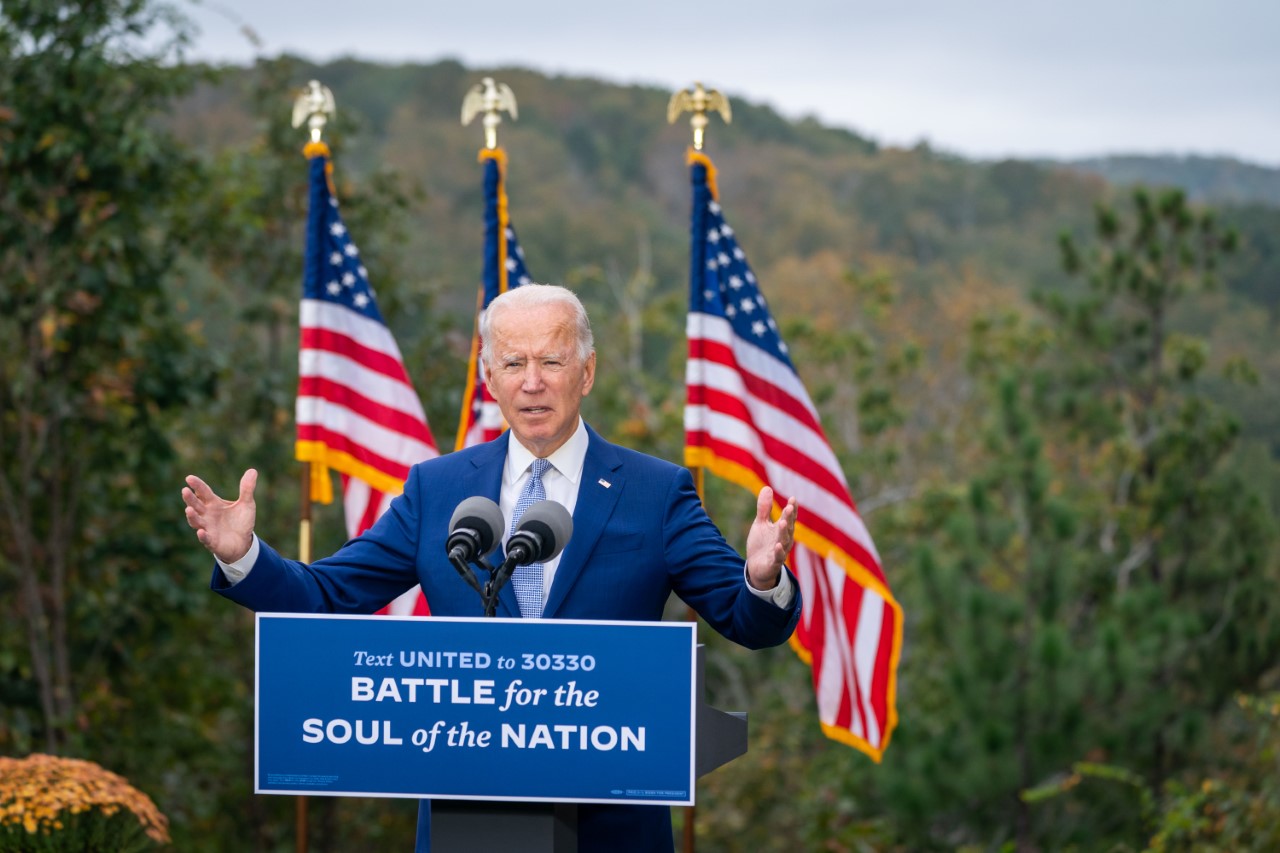
Many have rightfully viewed 2020 as a defining moment for the United States’ path forward; however, the results of this election, which are still being recounted and verified, show something different than expected. It appears that the Republicans are likely to lose the presidency but keep the U.S. Senate — dependent upon the Georgia runoff in January that’s necessary since neither candidate received at least 50% of the vote.
In the past few months, we have seen the Democratic Party’s plan to change the rules of the game by taking two actions to solidify their power for the foreseeable future: packing the courts and admitting Washington, D.C., (and potentially Puerto Rico) as states. After the confirmation of Associate Justice of the U.S. Supreme Court Amy Coney Barrett, many Democrats, including Rep. Joe Kennedy and Rep. Alexandria Ocasio-Cortez, threatened to add seats to the Supreme Court and appoint justices with their ideological bent — judges who, as President Trump told a crowd in Toledo, Ohio on Sep. 21, would “impose a socialist vision from the bench that could never pass at the ballot box.” By adding Washington, D.C. and Puerto Rico as states, as the House Democrats tried to do earlier this year, the Democrats would gain four Senate seats, most likely swaying control of the chamber to the Democrats. Republicans controlled the Senate after the 2016 election, but had these two territories been added as states, the Democrats would have been in control.
Without the Senate, the Democrats cannot accomplish this power grab. Nancy Pelosi already tried to admit Washington, D.C., as a state, but the bill never saw the light of day in the Senate. Moreover, there is no way a Republican Senate will pass any court-packing bill.
It is true that, while Democrats have refused to support President Trump’s highly-qualified court nominees, we should unfortunately expect a Republican Senate to confirm Biden’s ideological and Constitution-ignoring judges to the courts. Republicans are often too “nice” to defend the U.S. Constitution, as we saw with their acceptance of Obama’s court appointments.
Nonetheless, the worst-case scenario seems to have been avoided. We are spared from the radical legislative agenda and will not get the Green New Deal, nor Medicare-for-All, higher taxes, or the “Equality” Act. Government will expand and executive power will be abused. I am not going to pretend that a Biden presidency is good for our nation. Nonetheless, it is not as bad as some make it out to be.
I believe Georgia is an interesting case explaining what happened. Trump is behind, but Republican Sen. Perdue maintains a lead of more than 90,000 votes. This election was a rejection, not of conservatism, but of Trump. Voters appreciated Biden’s return to normalcy campaign and a battle for civility. They do not, however, support the Democratic Party’s socialist legislative agenda as promoted by Democratic senatorial candidates Jon Ossoff and Raphael Warnock.
With Trump out, Republicans now have an opportunity to define themselves. Are they for a balanced budget and fiscal prudence? Are they for free trade? What does a conservative foreign policy look like, particularly with relation to Russia and China? Will Republicans realize that a majority of Americans value civility and hate Trump’s aggressive style? Of the 70 million Americans who voted for Trump, so many held their noses and viewed Trump as a “lesser evil.” A 2016 Pew Survey found that one-third of Trump voters voted for him because they felt there were no other options than the “greater evil” of Hillary Clinton. In October of this year, Pew found that 32% of Trump voters supported him only moderately or leaned toward him rather than strongly support. Republicans have four years to regroup. Will they be able to provide a candidate who is good, trustworthy, smart, and conservative? Only time will tell.
Josh Barker is a sophomore George Washington Fellow studying politics.
