
On Sunday, President Donald Trump announced that he would extend social distancing recommendations through April 30 to mitigate the spread of COVID-19, the disease caused by coronavirus. It’s the right call.
The administration’s move to extend the recommendations appears to be driven by alarming mathematical models. In a Sunday morning interview on CNN’s “State of the Union,” Dr. Anthony Fauci, America’s top infectious disease expert, predicted that the outbreak could claim between 100,000 and 200,000 lives in the United States alone — even if mitigation measures remain in place.
The president echoed Fauci’s predictions during a White House press conference Sunday evening. If the U.S. can limit COVID-19, deaths between 100,000 and 200,000, he explained, his administration would “have done a good job.”
The scale of these numbers is staggering. During the 2017-18 flu season, the Centers for Disease Control and Prevention reported an estimated 80,000 flu-related deaths — a record for the highest number of deaths from flu. COVID-19 could easily surpass that record.
Given the enormity of these numbers, it’s important to take a step back and evaluate the challenges our country is currently facing, as well as the innovations that can help the U.S. fight the disease.
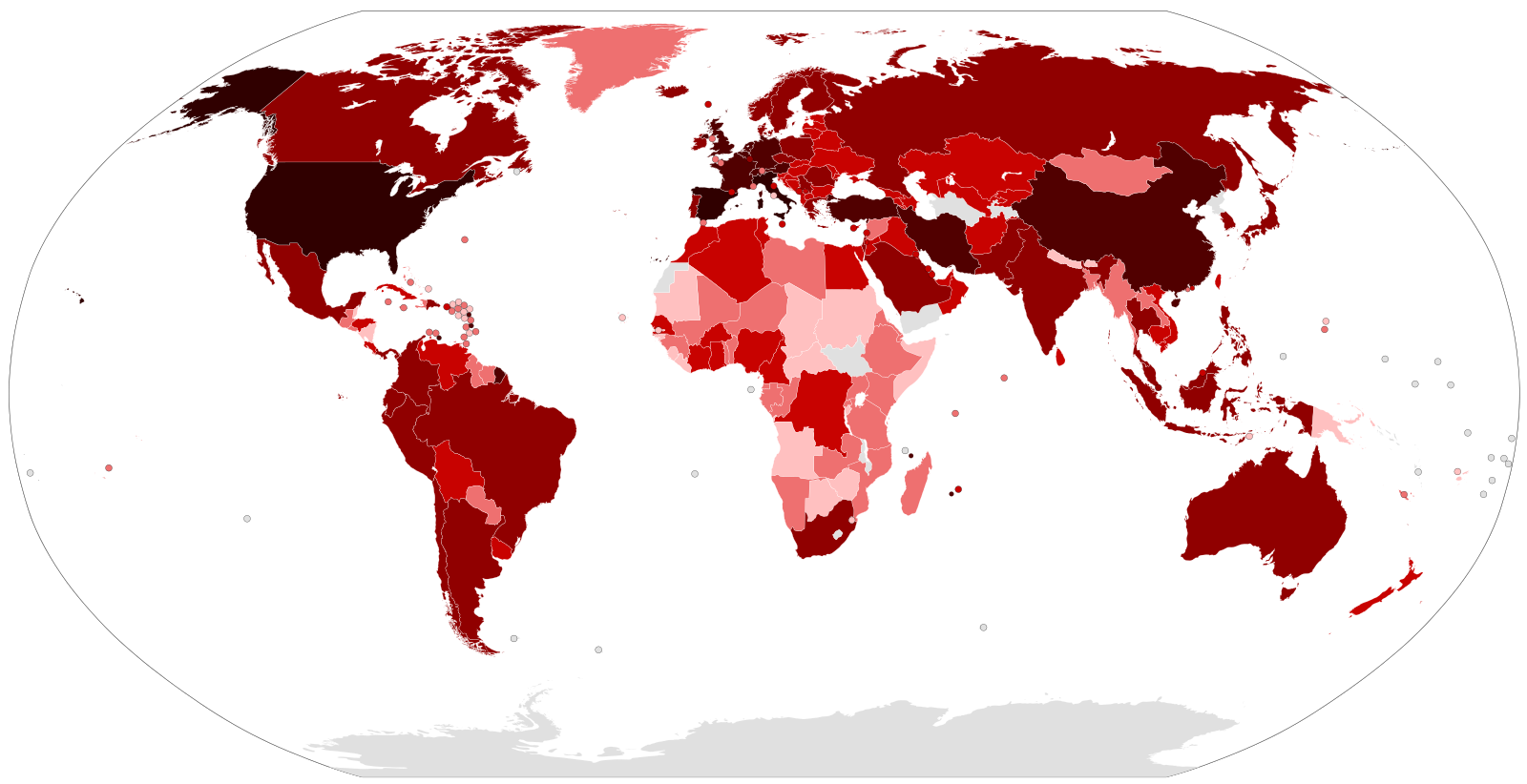
The biggest challenge the U.S. faces is a growing number of major disease clusters.
New York remains the epicenter of the outbreak in the U.S. With almost 84,000 cases and nearly 2,000 deaths, the state has roughly 7,000 more cases than Germany — home to the fifth largest outbreak in the world — and about twice as many deaths.
But disease clusters are emerging in other states as well. New Jersey has reported some 22,000 cases. California, Illinois, Michigan, Pennsylvania, Massachusetts, Florida, and Louisiana have reported at least 6,000 cases each. And as of last week, the cluster in New Orleans had the highest death rate in the world.
As the virus continues to spread, major clusters will continue to emerge in other urban areas across the country.
Another issue the U.S. faces is an increasingly-strained healthcare system.
COVID-19 has taken a heavy toll on America’s healthcare infrastructure. Doctors and nurses, working around the clock in warlike conditions, deserve the utmost praise for their efforts to fight the disease.
Healthcare workers face major shortages of personal protective gear, like respirator masks, gloves, and hospital gowns. With domestic producers overwhelmed, the White House has scheduled nearly two dozen airlifts of supplies from Chinese producers to urban areas across the country.
On March 27, President Trump invoked the Defense Production Act to require General Motors to produce additional ventilators.
Finally, in hard-hit areas like New York, hospitals are struggling to provide enough beds for sick patients. “We need to triple our hospital-bed capacity,” New York City mayor and former Democratic presidential candidate Bill de Blasio said. “It’s a daunting task.” The state is attempting to meet this need by authorizing the creation of more temporary hospitals.
But there’s hope. Both domestic and foreign companies are making progress on therapeutic drugs to treat the virus, while innovations in testing might allow health officials and policymakers to fine-tune their response.
On Sunday, the U.S. Food and Drug Administration authorized a new COVID-19 test that can detect cases within minutes. Abbott Laboratories, the test’s producer, plans to supply some 50,000 tests per day beginning this week, significantly bolstering the nation’s testing capabilities.
In addition, the FDA has eased regulations on the production of serological tests. By detecting whether a person has built antibodies against the novel coronavirus, these tests can determine whether a person has built immunity to the virus.
Widespread serological testing is a must-have for two reasons. First, since many cases involve mild to no symptoms, ascertaining the true scale of the outbreak requires testing even those who don’t display symptoms. Second, detecting which healthcare workers are immune to the virus is crucial to protecting those on the front lines.
And, on Sunday night, the FDA also issued emergency-use authorization for chloroquine and hydroxychloroquine, two anti-malaria drugs that some have touted as a potential therapeutic for COVID-19. Producers have donated millions of doses the U.S. Strategic National Stockpile.
Our country will face many major challenges in the coming weeks. But Americans are nothing if not resilient. Together, we can weather this storm for a few more months, if necessary.
Efforts to limit the spread of the disease aren’t limited to the federal government. By observing state and federal social distancing guidelines, we can all play a part in fighting COVID-19.
Brady Helwig is a junior studying politics.
