
Iran experienced its lowest voter turnout ever for its Feb. 21 parliamentary elections. Since the regime managed the elections, it was no surprise that hardline candidates took 221 of the 290 seats in parliament. But the low turnout and general boycott of the election is a bellwether that the ruling elite is becoming increasingly detached from the public and Iranians are becoming disillusioned with the government.
It’s time for the United States to increase pressure on Iran even more so that Iranian frustration with the regime continues to grow. Since the United States has already maxed itself out on Iran sanctions, the best way to pressure Iran is through its neighbors who are still engaged in trade, such as the United Arab Emirates. The United States should seek to pressure the UAE into applying sanctions to Iran, and as the economy would suffer even more, Iranian disillusionment with the regime would grow and could eventually lead to change.
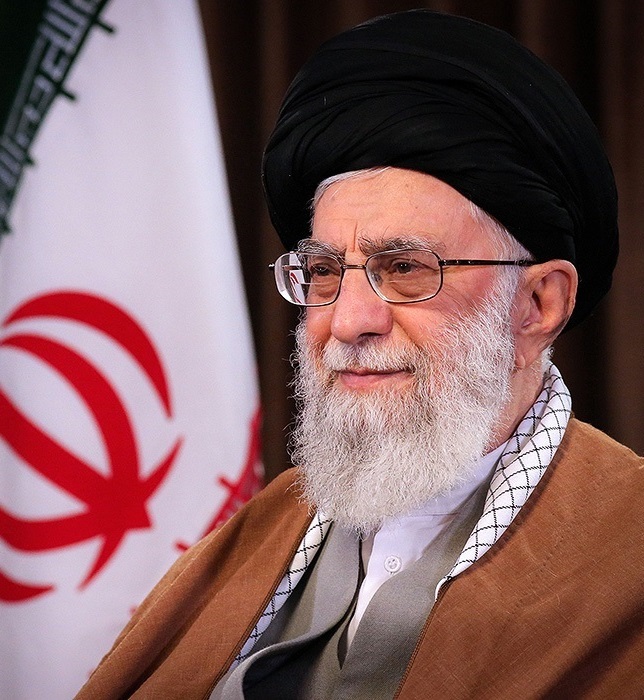
The election had the lowest turnout since 1979, despite the regime’s pressure and pleading with the public to turn up at the polls. Ayatollah Ali Khamenei asked the people to vote for the sake of patriotism and resistance to U.S. sanctions, while the regime-supporting senior ayatollahs said that voting was a religious duty. But the official turnout was only about 20% in Tehran and 40% nationally. And those numbers were likely inflated by the regime. There was a 62% turnout in 2016, and 66% in 2012.
Iranian elections have always been a farce because they are managed and fixed by the regime. Khamenei is not interested in a democratic system but in strengthening his own rule. That’s why every candidate had to be pre-approved by the Guardian Council, a 12-member body tasked with upholding Islamic law and supervising elections. In this election, the Guardian Council disqualified more than 7,000 candidates, many of them moderates and reformists who support former President Mohammad Khatami’s movement to allow more freedom and democracy in the Iranian political system.
Though elections are managed by the regime, they still carry some weight. Sanam Vakil, deputy director of the Middle East and North Africa Program at Chatham House in London, explained that though the elections have always been managed by the regime since the rise of the Islamic Republic, they are still important. Since 1979, elections in Iran have been a tool for the leaders to build consensus at home and make a show of outward strength to the rest of the world.
“The fact that Iran has elections, albeit managed ones, is used to demonstrate that the Islamic Republic is more legitimate than other countries in the region,” Vakil said.
Iran’s leaders sought to use this election to build public consensus and show outward strength after November’s violent suppression of protests and January’s unrest surrounding Qasem Soleimani’s assasination and the military’s shooting down of the Ukrainian airliner. But many Iranians were discontented with the disqualification of so many candidates and thus the majority of the population boycotted the elections.
“I won’t be part of the show as long as I can’t see my favorite candidate who I genuinely support and believe in. I won’t choose between bad and worse anymore,” one Tehran resident told the Wall Street Journal.
Iranians were more than just discontented with the chosen candidates. Many are also skeptical of elected officials and disappointed in their powerless positions.
“MPs who speak out against the system’s radical policies haven’t been able to change anything. So you tell me: Why bother?” Bardia, an Iranian information technology manager, told the Wall Street Journal.
Khamenei uses the parliament for his own self interest. In this case, he stacked the parliament with hardliners to neuter moderate President Hassan Rouhani who has been trying to negotiate with the United States. The new parliament will not seek to ease tensions with the United States, which will leave the Iranian economy in shambles and only increase the public discontent with the regime.
After the United States pulled out of the 2015 Joint Comprehensive Plan of Action in 2018 and reimposed sanctions on Iran, the Iranian economy floundered and there has been no improvement. In 2018 alone, Iranian inflation reached 33.5% while growth declined by at least 6%. And with current conditions and sanctions still imposed, the U.N. predicted that Iran’s economy will shrink by 2.7% and inflation will remain above 30% in 2020. The current restlessness among Iranians is in large part due to the crumbling economy and the regime’s refusal to improve it.
Khamenei and his government will keep the economy in shambles by refusing to negotiate with the United States. Rouhani was the only person in Iran trying to improve relations with the United States, and now Khamenei has taken that power away from him with the new hardliner parliament. Now Iranians are blaming Khamenei and his government for the economic problems and the decline of Iran.
One NPR reporter spoke to Iranians asking them, “Who do you blame for Iran’s economic trouble?” One Iranian quickly replied, “I think our government.”
Another Iranian told NPR, “Most of our politicians have a bird’s-eye view and don’t understand the troubles of the lower classes.”
The United States already applies economic, trade, scientific, and military sanctions against Iran, so there is not much more damage the United States can do on its own to the Iranian economy — there is hardly any more trade between the two countries. But the UAE is still a major trade partner with Iran and the best way for the United States to pressure Iran would be by convincing the UAE to apply sanctions against Iran.
According to Iranian statistics, about 10% of all Iranian imports and 15% of its exports are through the UAE. Last year, Iranian exports to the UAE totalled about $1.55 billion. Because the United States is one of the UAE’s biggest trade partners and allies, it would be easy for the country to convince the UAE to apply economic pressure on Iran. In 2018, trade between the UAE and the United States totalled $24.5 billion, with the United States exporting $19.5 billion to the UAE.
With so much restlessness surrounding the Iranian elections this is the perfect time for the United States to pressure Iran via the UAE. The Iranian economy needs to continue to crumble for the disillusionment to keep growing until it affects change. It is a bit of hard ball politicking since the Iranian public will suffer under the economic strain, but this seems the best way to bring about change, or at least civilian discontent with the regime in Iran.
Abby Liebing is a senior studying history. She is the associate editor of The Collegian and a columnist on foreign politics.
