
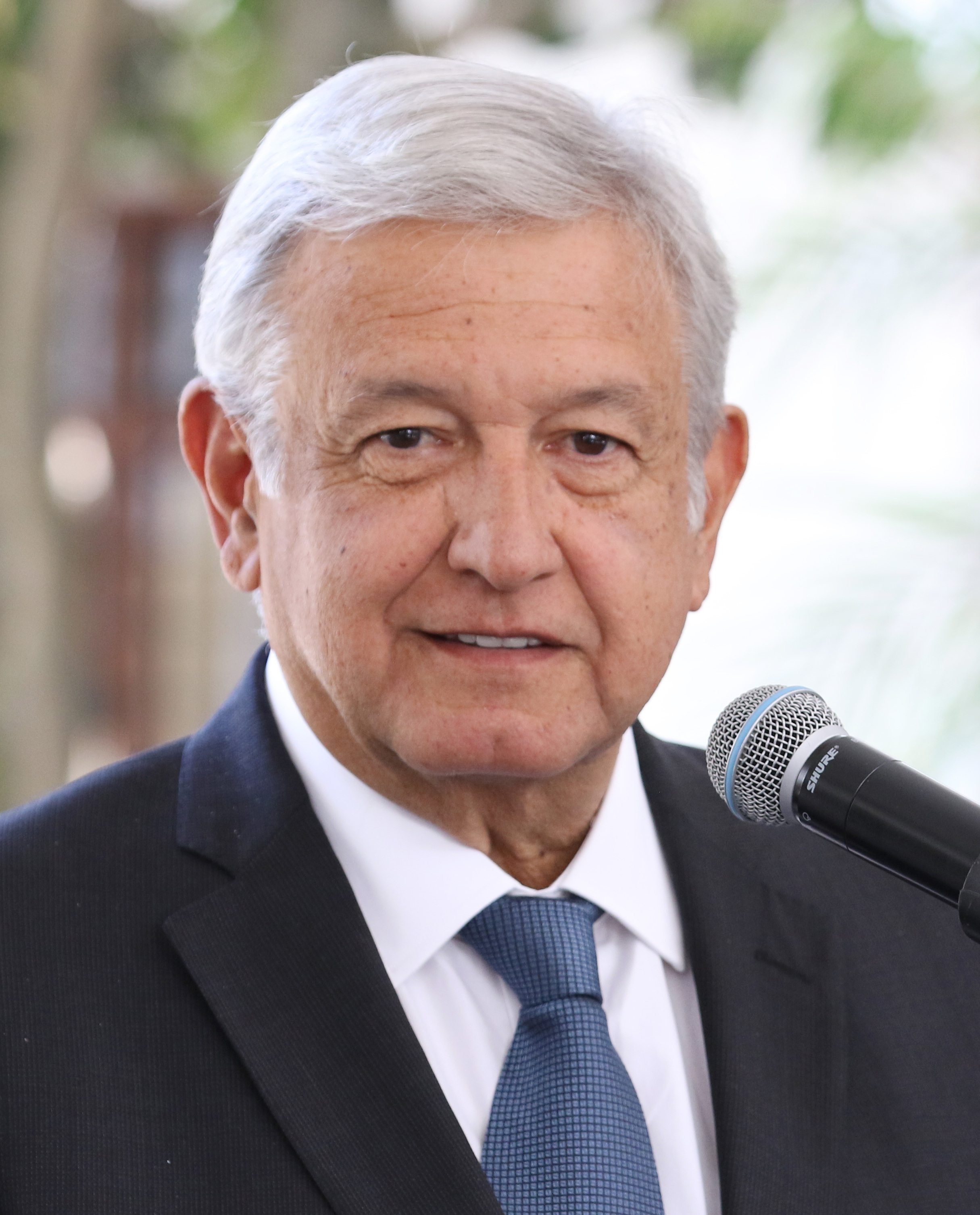
When running for President of the United States, one would think that candidates would have some knowledge of what is going on in neighboring countries.
But when Telemundo reporter Guadalupe Venegas asked Democratic presidential hopefuls Sen. Amy Klobuchar, D-Minnesota, philanthropist and billionaire Tom Steyer, and former South Bend Mayor Pete Buttigieg about Mexico, had trouble even naming the president of Mexico.
When Venegas asked the seemingly easy question of who the president of Mexico is, Steyer just said, “I forget.” Buttigiege hesitatingly guessed the right answer. But Klobuchar hilariously tried to dodge the question until Venegas finally asked her, “Do you, I’m sorry to ask this, but do you know who he is? Do you know his name?”
Klobuchar unsuccessfully tried to play it off by answering, “Yeah, yeah. I know that he is the Mexican president.”
Venegas asked again, “But can you tell me his name?” And Klobuchar finally had to say no.
But as amusing as the interchange was, it’s deeply concerning that some of the people running for U.S. president cannot name Andres Manuel Lopez Obrador as the president of Mexico.
If they don’t know Obrador’s name, then they probably also don’t know how messy Mexico is and how their economic situation will threaten the U.S. economy.
No matter how much U.S. officials such as Trump and the Democratic presidential hopefuls may try to ignore Mexico and literally wall off its problems from our own, what’s going on in Mexico has and will always have ramifications in the United States. So it might be good for U.S. politicians to start brushing up on their knowledge of what’s going on south of the border.
Sadly, with rampant violence, cartel power, and government weakness, there is never a dull day in Mexico. Each year the murder rate in Mexico increases, and in 2019 it broke its own record with nearly 35,000 murders.
Last week, a 7-year-old girl was kidnapped, murdered, and left in a bag south of Mexico City. The week before, a 25-year-old woman was stabbed to death, skinned, and then had her organs removed. After the gruesome Jan. 17 killings of local musicians, the community of Ayahualtempa, Mexico is arming its children, ages 6 to 15, and training them to become vigilantes.
“We are surrounded by the bad guys, so we have to prepare ourselves to defend our town and our families,” 13-year-old Luis Gustavo Morales said.
Meanwhile, El Chapo’s daughter had an ostentatious wedding as she married the nephew of another well-known criminal. As the cathedral was locked down and closed to the public, the grandiose wedding was a reminder of the Sinaloa cartel’s power and the rest of the country’s weakness.
The United States cannot keep ignoring its southern neighbor as the rule of law is continually flouted and violence continues to rise. Besides the plethora of ethical and human rights abuses that should concern the United States, Mexico’s violence will affect the U.S. economy, which at the very least, should concern U.S. leaders.
Trump has been paying attention to Mexico, but responding in all the wrong ways. He thought that renegotiating the North American Trade Agreement was enough to shore up the relationship, but then promptly returned to villainizing Mexico.
“The Democrats want Open Borders. I want Maximum Border Security and respect for ICE and our great Law Enforcement Professionals!” he tweeted in 2018.
In June 2015 when he was campaigning, Trump even went so far as to call Mexico an American enemy.
“And now they are beating us economically. They are not our friend, believe me. But they’re killing us economically,” Trump said when he announced his candidacy.
But Trump seemed to forget that Mexico is still an incredibly important trade partner and blocking out its problems will not solve issues.
Many politicians focus on how dependent Mexico is on the United States for economic growth, which is undeniable. The United States is Mexico’s largest trade partner and number one source of foreign direct investment. But Mexico is the United States’ third largest trade partner. Mexico ranks second as a source of U.S. imports, after China and Canada, and second as an export market for U.S. goods and services. Much of the bilateral trade between Mexico and the United States is particularly important because it happens in the context of supply chains, as manufacturers in each country work together to create goods. That means that many United States manufacturing industries, such as automotive, electronics, appliances, and machinery, all rely on Mexican manufacturers
“The health of the Mexican economy certainly affects the U.S. economy. Bilateral U.S.-Mexico trade totaled $671 billion in 2018, with Mexico ranking as the second-largest importer of American goods,” James M. Roberts and Devin DeCandia from The Heritage Foundation explained.
Violence in Mexico actually costs money and deteriorates its domestic economy, which in turn can hurt its trade with the United States. The Mexico Peace Index estimated that the level of peace in Mexico deteriorated 4.9% in 2019, costing $268 billion and making it the third year of successive deteriorations that is costing Mexico lives and money. An investment in decreasing violence would help the Mexican economy, which in turn will of course benefit the United States.
“If violence and its consequential economic impact were reduced to the level of the five most peaceful states in Mexico, the resulting peace dividend would amount to 10 trillion pesos over a four-year period,” the 2019 Mexico Peace Index discovered.
A more peaceful Mexico will lead to a better economy for Mexico and also the United States. Any increase in peace in Mexico will literally make the United States more money. Mexico is in shambles and that is the precise reason that the United States needs to pay attention and invest in anything that will decrease the violence. And the first steps American officials can take in helping Mexico is learning the Mexican president’s name.
Abby Liebing is a senior studying history. She is the associate editor of The Collegian.
