
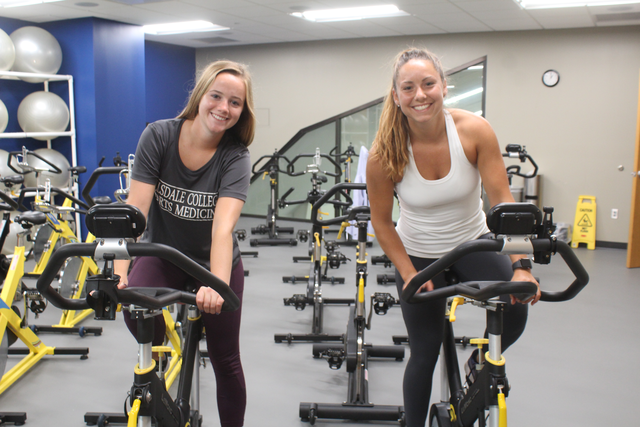
Balancing time between arduous study sessions at the library, scrambling to meet office hours, and extreme class schedules is difficult, so some students find it helpful to add time at the Roche Sports Complex into the mix.
Students often look for ways to manage intense academic and social stress. At Hillsdale, many students exercise for the physical and mental health benefits. According to the Mayo Clinic, exercise in any form can relieve stress, and provide plenty of other health benefits.
Junior Claire Froman finds her study stride while running. When experiencing difficulty concentrating on homework problems in the evening, Froman typically steps away from her work to go for a short jog outside, and then returns with a clear mind.
“Running is my way to escape from my problems in the world,” she said.
Her shorter evening runs usually range from two to three miles. She runs five to six miles in the afternoon because she feels safer in the daylight and has more time for exercise.
According to Froman, running is methodical and reminds her to put one foot in front of the other and focus on breathing, which she uses as a tool to help soothe her anxiety.
Running is her go-to exercise activity, Froman said, but she enjoys switching it up and trying other group workouts or high-intensity interval training when in a more adventurous mood.
“Running is what I know that I love,” she said, “but sometimes when I’m in a different mood I get more out of different exercises and exercising with other people.”
She listens to music while running, the genre fluctuating along with her daily running goals. Sometimes Froman listens to upbeat music to brighten her mood or more calm music to relax. Her pace changes throughout the course of a run as well, so her playlist may change multiple times throughout.
Froman has also attended Senior Kamryn Matthews’ spin classes held at the sports complex in the past, and she said she enjoys the way her mind and body feel after each class. Individual students find different results with certain exercises depending on personal preference. Junior Jessie Collins, for example, turns to yoga as her stress reliever. Sophomore and swimmer Becca Briskey enjoys swimming laps as a way to destress after a long day of classes.
Matthews enjoys all forms of exercise. As a student-athlete, she works out around three hours each day including tennis practice and her own personal exercise routine. This routine is anything but routine, however, as she does everything from high-intensity interval training to lifting to cardio.
The mental health benefits she gains from time in the gym are part of what inspire Matthews to work out, she said, agreeing with Froman that it is an escape from her other problems. It is difficult being a student and spending so much time sitting down studying, she said, so dedicating time each day to physical movement recenters Matthews.
“It’s really nice to go from studying and classes and just do something that gets your mind off of everything else,” she said. “It’s my little chance to get away.”
The mental boost she receives is in part due to the awareness of her body’s physical improvement.
“Every time I workout, I think of it as making myself better,” Matthews said.
Knowing you’re advancing your health and fitness goals is mood-boosting even if you don’t see physical changes right away, she said.
“It’s mental and physical in that you know you’re doing something good for your body,” she said.
It is especially helpful for students since it can create a positive mindset toward academics. Instead of just focusing on grades, she has personally learned to focus on how studying and learning help her grow and improve.
Assistant Athletic Trainer Dan Hudson said he recommends students get at least 30 minutes of physical activity per day. He emphasized this doesn’t mean an intense 30-minute lifting session in the gym, but it can mean several short periods of physical activity throughout the day, such as 10 minutes of walking three times.
Exercise boasts many benefits, Hudson said, including relieving stress, reducing anxiety, releasing hormones associated with happiness, and boosting mood.
For students in particular, he said, it is important to exercise for the mental benefits. When he was in college, he studied for final exams while on a spin bike, which he said helps with cognitive brain function and improves memory. The majority of the Hillsdale student body is healthy and concerned with regular exercise, according to Hudson. He admits that working mostly with athletes skews his perspective, but he also teaches physical health and wellness and sees students regularly working out; he thinks students here tend to take care of themselves.
In terms of what exercise most effectively relieves stress, Hudson said it completely depends on personal preference. Just as Froman prefers running long distances outdoors and Collins opts for a relaxing yoga class, everyone releases stress differently.
“My general advice is to always get some form of exercise,” he said. “It’s so important to get your body moving.”
