
Despite being in middle-of-nowhere Michigan, the city of Hillsdale and Hillsdale College have a claim to unique people who shaped history in their own ways. Hillsdale students call the ‘Dale home for at least four years. They should be familiar with a few of the individuals who shaped their community.
Baw Beese
Most students like to spend the few warm days of the year at Baw Beese Lake, swimming, kayaking, or picnicking on the shore. Few students are aware of the lake’s name sake, Baw Beese, a Potawatomi chief who lived from about 1790-1850. Baw Beese led a band of 150 men who kept a sort of base camp on the shore of the lake which would later be named by European settlers after the chief.
According to the Hillsdale County website, early settlers said Baw Beese and his men gave them aid, including food, in the midst of the trying winters. He also was said to have seen himself as a landlord, sometimes charging rent from settlers for the land and water from the lake.
A statue of Baw Beese’s daughter Winona stands in Mrs. Stock’s Park. According to an MLive article, Winona was married off to a man from a rival tribe. Her husband, however, was an abusive alcoholic and a gambler. One day, she stabbed him through the heart. By Native American law, his family had the right to have her killed in like manner.
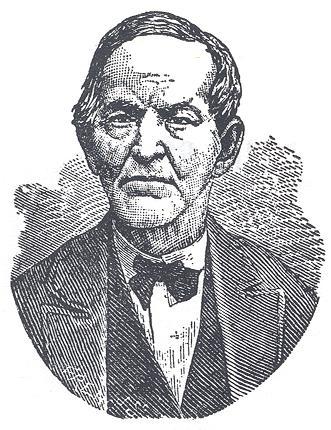
Sile Doty
A nearby cave only about 10 miles away is rumored to have housed a stolen horse for a lifelong thief.
Sile Doty, born in 1800, grew up stealing horseshoes and pen knives for fun. He eventually became a bank robber and also committed the occasional home burglary. He Killed a man in Steuben County, Indiana, about 40 miles from Hillsdale, according to a Collegian article.
In 1846, he was placed in jail after stealing buffalo robes, but he eventually escaped and fled to Mexico. During the Mexican-American war, he stole from local Mexicans and American soldiers alike. After a robbing a peddler, Doty was again thrown in jail, this time in Hillsdale. In his autobiography, which was published posthumously, he said he admired the town and that the citizens were “kindred spirits.”
In one passage of his autobiography, Doty writes that he stole a horse from a local barn and hid it in a cave in the southern part of the county for three days. The cave believed to be the one Doty mentions is located in the Lost Nations Game Area, and it is said you might still encounter Doty’s ghost to this day.
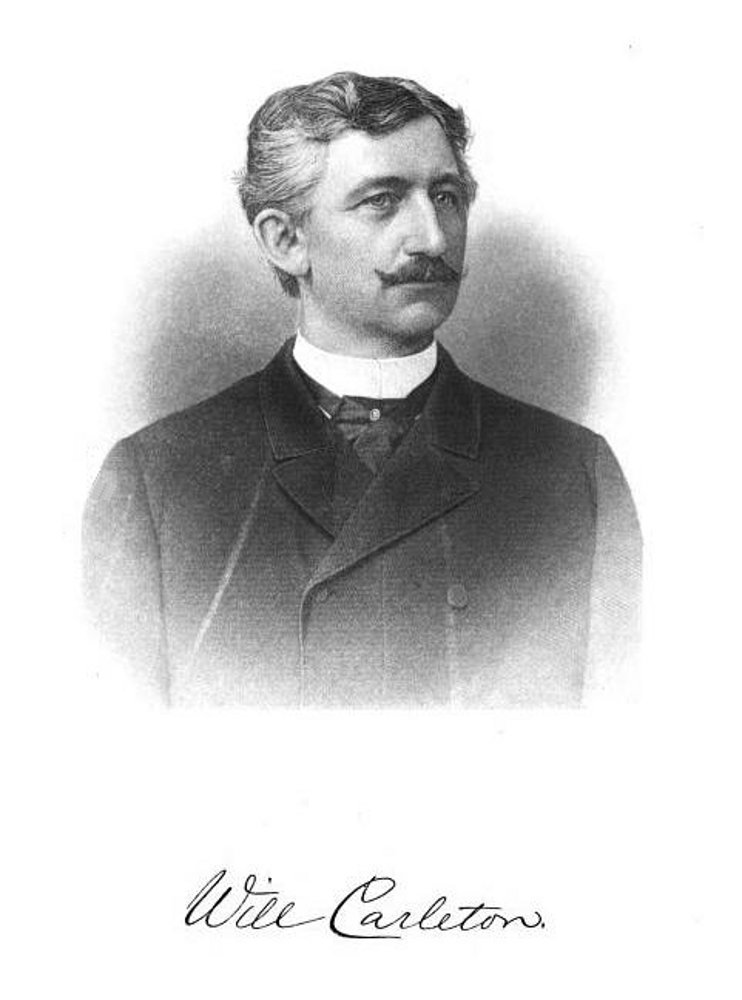
- Will Carleton
In our liberal arts education, we share the study of great literature with former Hillsdale students. One such student, Will Carleton, went on to become a poet of the rural life.
For the occasion of his graduation from Hillsdale in 1869, Carleton wrote his poem “Rifts in the Cloud.” At the ceremony, he recalled the president throwing him a bouquet of flowers, knocking him over.
At the age of 25, while working as an editor of the Detroit Weekly Tribune, Carleton wrote a story about divorce, “Betsy and I Are Out,” which was first published in the Toledo Blade. After published his “Over the Hill to the Poor-House” in 1872, Carleton enjoyed fame as a poet, and he wrote and lectured nationally for the rest of his life.
After Hillsdale students survived this year’s polar vortex, they likely can look back and relate to the words of Carleton’s poem “Autumn Days,” in which he writes: “Shivering, quivering, tearful days,/Fretfully and sadly weeping;/Dreading still, with anxious gaze,/Icy fetters round thee creeping.”

Jared Arter
Hillsdale College has a long tradition of defending human rights: The school sent a host of students to fight for the Union in the Civil War, and it was a hotbed for abolitionist politics. Jared Maurice Arter was born a slave in West Virginia. While his father died when Arter was seven, his family was eventually freed in 1863 by the Emancipation Proclamation, and, upon gaining their freedom, Arter’s mother moved them to Washington, D.C.
Arter graduated from Hillsdale College in 1886 with a Bachelor of Divinity. At his commencement, according to a Collegian article, Arter encouraged African-Americans to “push off from the dark background and inhospitable shores of the past toward a future of nobler manhood; that industry shall displace indolence; providence, improvidence; intelligence, ignorance; virtue, vice.”
He became an ordained Christian minister in 1887 and began working at Curtis Free Baptist Church. In 1921, he was the pastor of Curtis Free Will Baptist Church in Harpers Ferry, West Virginia, near where he had lived as a slave.
The next year, his autobiography, “Echoes from a Pioneer Life,” was published, in which he chronicles his life growing up as a slave through his work as a minister and also an educator at Storer College. In the book, he records a sermon given to a girls’ school in 1918, and he encouraged his audience: “Life is progressive. This is true of all life. It is especially true of the Christian life. Grow in grace and in the knowledge of the Lord Jesus. The Christian life is spiritual, the highest type of life. The best and greatest things grow slowly.”
