
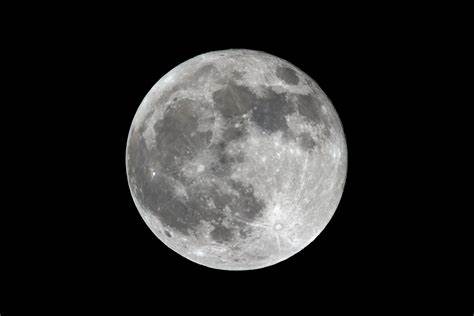
A great revolution in human affairs is unfolding 200 miles above your head. Vice President Mike Pence announced last week at the Marshall Space Flight Center that it is a “stated policy” of the Trump administration “to return U.S. astronauts to the surface of the moon in the next five years.”
July 20, 2019 will mark the 50th anniversary of the Apollo 11 moon landing, and as Pence put it, “We’re in a space race today, just as we were in the 1960s.” And the prize is greater than ever before. Ice, an essential resource for life support and propulsion, was discovered on the surface of the moon in 2008, astounding scientists and throwing open the doors for a lunar real-estate scramble.
Admittedly, the words “space race” are no longer the magical incantation they once were — several administrations since John F. Kennedy’s have unveiled new pathways into space that became political bridges to nowhere because of electoral change, plodding bureaucracy, and budgetary constraints.
Instead, Pence’s magic phrase that will send Americans to the moon is “mission over the means.” Sending a clear message to the builders of the years-overdue and over-budget government Space Launch System, the Vice President announced that the government would “consider every available option and platform to achieve our goals” and “if our current contractors can’t meet this objective, then we’ll find ones that will.” Even further, “if commercial rockets are the only way to get American astronauts in the next five years, then commercial rockets it will be.” This sense of urgency, prioritization, and focus will get us to the moon.
As incredible as it seems, landing on the moon is hardly the most important news to come out of the fifth meeting of the National Space Council. Many of the goals targeted in the Trump administration’s series of four Space Policy Directives were announced as well, such as 5G spectrum reallocation to expand access to space industry, the loosening of export controls on civilian space technologies, and the implementation of new initiatives regarding orbital traffic management, crucial for managing ever larger satellite constellations.
While Pence observed that previously the “greatest barriers to space entrepreneurs have been bureaucratic barriers, sweeping changes are underway throughout the bureaucracy. Secretary of the Air Force Heather Wilson announced a planning commission that will set up the Space Force as the sixth branch of the military within five years. ” The planned Bureau of Space Commerce will soon become the one-stop-shop for commercial space ventures. And most importantly, Transportation Secretary Elaine Chao announced the posting of new launch and reentry licensing rules in a herculean effort, completing the first update and liberalization of the rules in 12 years.
This truly is a revolution. This isn’t just a trend — it’s bigger than the White House or NASA. Unlike previous eras, the government is not the sole actor in space. In the last six months, advancements in policy were matched by almost-daily triumphs in the American space industry. In November of 2018, Morgan Stanley predicted a trillion-dollar space economy by 2040, driven by what the Department of Commerce called a “wave of innovation” in remote sensing, communications, weather forecasting and imaging that will eventually expand into habitation, tourism, space-based solar power, and mining.
Cell phones, not Apollo, are mankind’s beachhead in space. With 3.5 billion people still not online, communications satellites are the primary growth market today. Scores of startups are rushing into orbit, pioneering massive constellations of small satellites, not least among them Google and SpaceX’s own planned Starlink network of 1,584 satellites to provide global broadband access. By 2021, three giant ViaSat satellites (best known for supplying in-flight internet) will blanket the whole Earth in the first global cell network.
In February, Israel launched its first spacecraft in history to the lunar surface, essentially contracting a space program wholesale from SpaceX. According to the Council, “access to space is the key enabler,” and 2019 will bring four additional launch vehicles are online. The deepest underlying trend: venture capitalists poured $3.25 billion into the global space industry in 2018, up 29 percent, an even greater increase than the year prior.
For the Trump administration to put the next “man and woman” on the moon in 2024, reelection is almost certainly required. But even now, the Space Council and the Administration have replaced pork projects with a timely, focused vision for America’s space presence and are making enduring strides forward in unleashing American space enterprise.
Most important, the march to space is no longer defined by government, as communications and launch enterprises erect the first pillars of a future space economy. You may not see it yet, but the paradigm shift is broadening and accelerating. As commerce and settlers enter space, the final frontier will become mankind’s highest home.
Man moves, haltingly, spontaneously, but continuously into outer space, to learn, to profit, and ultimately to live. The discovery of the New World revolutionized world history — who can imagine how our story will read when mankind finally ventures beyond the dim crevasse of its gravity well and sails the celestial seas?
