
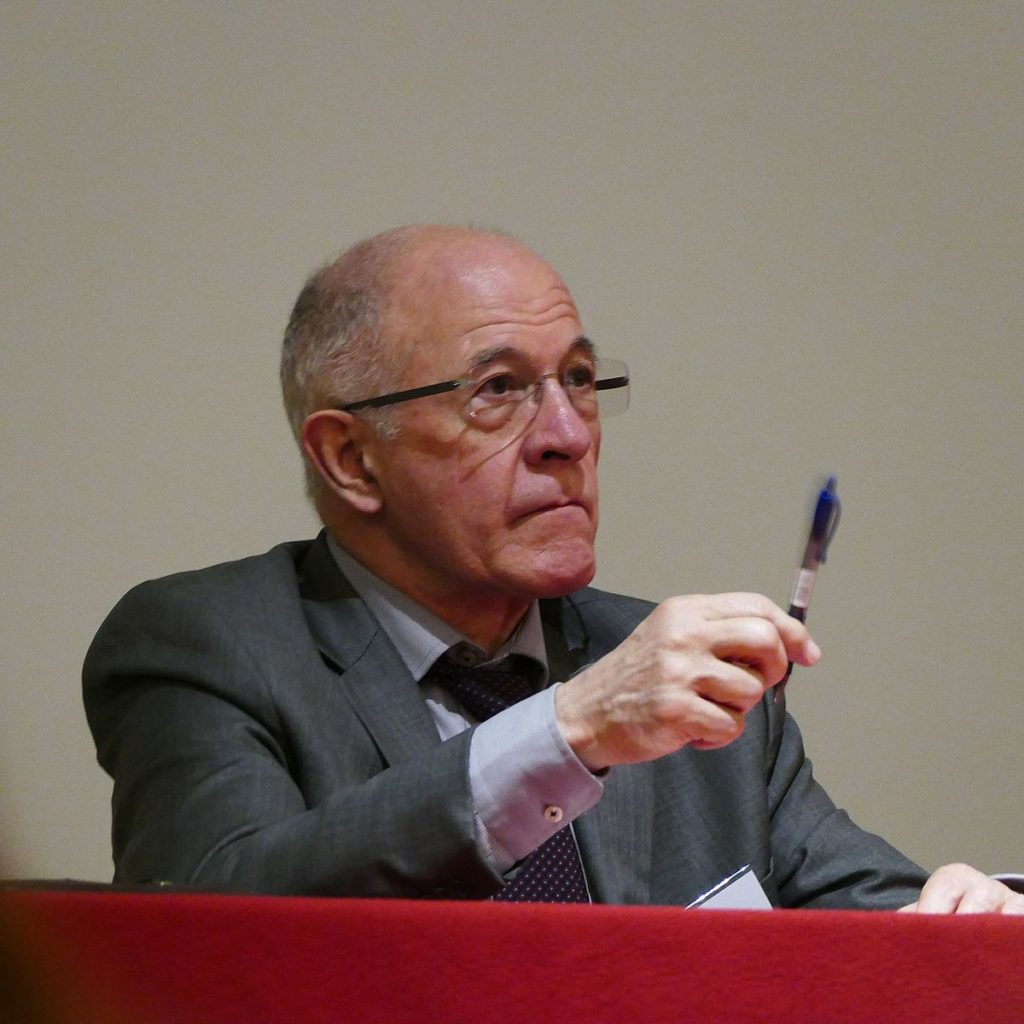
French historian and philosopher Remi Brague will be on campus Monday, April 1 to speak on the study of classical languages. The lecture begins at 8 p.m. at Dow Conference Center rooms A & B.
Brague is professor emeritus at Sorbonne, otherwise known as the University of Paris, and the Ludwig Maximilian University in Munich, Germany. The title of Brague’s upcoming lecture is “Our Own Others,” and it will focus on why studying classical languages and cultures is important.
Associate Professor of English Dwight Lindley describes Brague as an “intellectual historian” who is an expert on the intellectual culture surrounding Christianity, Judaism, and Islam.
Lindley has read many of Brague’s books, and said Brague reached out to him after learning that Lindley had authored his Wikipedia page.
“I’ve essentially been a fan of his for a while,” Lindley said. “I’ve heard him speak a few times, and we’ve known each other and exchanged emails on and off. This year, it’s finally worked out to bring him here.”
Lindley has taught Collegiate Scholars seminars on Brague, and said Brague has expressed interest in coming to Hillsdale to speak.
“It’s a great privilege to bring him here,” Lindley said. “He’s interested in Hillsdale: he knew about it already before I got in touch with him and has been wanting to visit.”
Brague’s writings and studies have centered around the Western tradition and how it has progressed from the ancient world to modernity, according to Lindley.
Senior Sammy Roberts, one of the students who took Lindley’s seminar, said Brague’s focus is not only on what important to the West, but why it is important.
“At Hillsdale, we make a big deal about reading the Great Books and learning about the Western Heritage, but we sometimes don’t reflect on why these books are great or why this heritage is worth talking about,” Roberts said. “I think Brague’s scholarly endeavor — one that seeks to explain why civilizations return continually to their intellectual past and set out in search of extra-cultural interlocutors — will help us to articulate our justifications a little bit better.”
Roberts said he appreciates Brague’s ability to involve a variety of disciplines in approaching scholarly questions.
“You’ll see him cite philosophy, historical chronicles, modern philology, and popular novels in one swift stroke,” Roberts said. “His ability to integrate all these different forms of knowledge together grants him insights denied to less open-minded academics.”
While Brague’s influence and notoriety are well-established in Europe, Lindley said his popularity in America has been increasing. Brague’s book, “Eccentric Culture” is perhaps his most famous work in English, wherein he discusses the way Christianity, Judaism, and Islam view and relate to the past.
“In his opinion, what has made the West great is the specifically Christian way of relating to the past as opposed to the Jewish and Muslim ways to relating to the past,” Lindley said. “He thinks the greatness of Christianity is that it’s been able to appreciate the past on its own terms — that each culture from the past has something to give as itself.”
