
Audrey Hepburn was known for many things. In 1953, the Dutch legend-to-be made her first memorable movie appearance as an undercover heiress, racing across the cobblestone streets of Rome on a motorcycle with a journalist (Gregory Peck) in “Roman Holiday”. In 1961, she made fashion history in her role as Holly Golightly, the solemn escort in “Breakfast at Tiffany’s.” And Hepburn was known for her spaghetti al pomodoro.
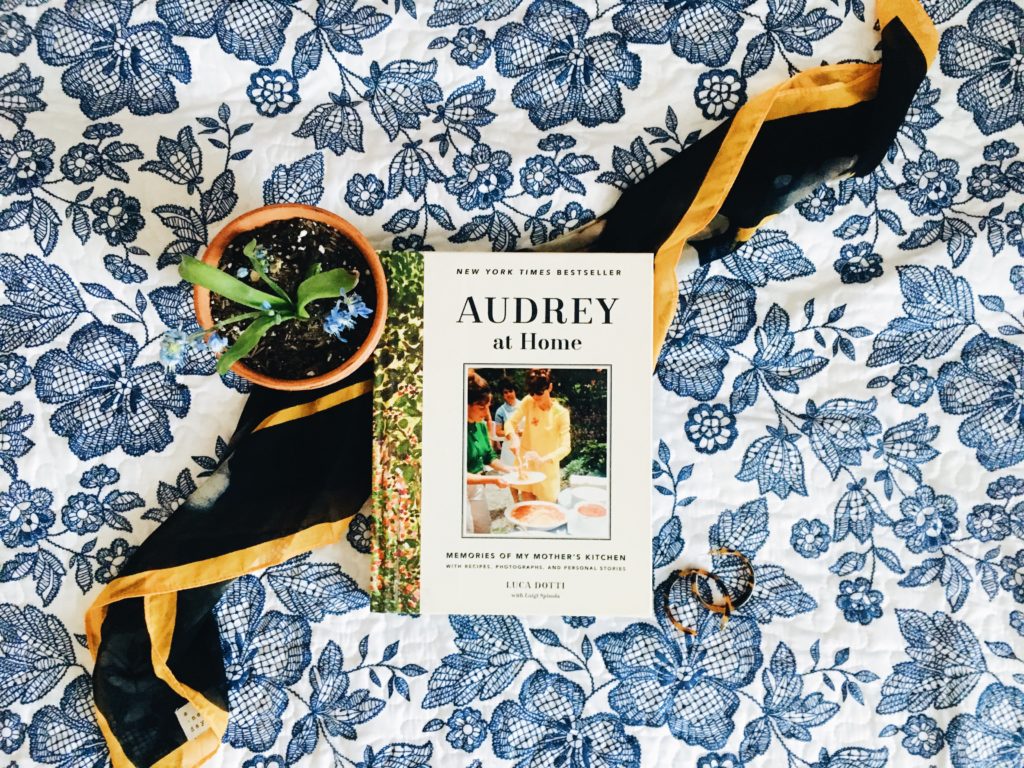
Many are surprised to discover that Hepburn was a dedicated cook. It wasn’t until I read a biography on her in 2014 that I discovered her food philosophy was equally inspiring, if not more so, than her film career (and I acquired her cookbook posthaste). “Audrey at Home,” the New York Times bestselling cookbook compiled by Hepburn’s son Luca Dotti, shares the classic recipes her family loved and the stories and photos that accompany them, wrapped in a cover of floral orange and green.
Her cookbook embodies the same classic elegance that her Hollywood style was known for, and Hepburn’s recipes are staunchly traditional: not traditionally American, not even entirely traditionally Dutch, but always traditionally Hepburn.
Tucked between a chocolate cake recipe, gnocci alla Romana, and Turkish-style sea bass, is a recipe for “hutspot,” a Dutch word used to describe a puree of potatoes, carrots, and onions. The recipe dates back to the 1574 Spanish siege of Leiden, and is eaten every year to celebrate Dutch liberation, a symbol of Holland’s ability to withstand invasion. Hepburn often shared this dish later in life with her friend and longtime companion Dutch actor Robert Wolders, and during her own time of waiting for liberation: the Nazi occupation of the Netherlands, during her childhood. It was more than food: it was home.
Hepburn’s classic chocolate cake recipe — called “Liberation in a Candy Bar” — is a nod to that post WWII European liberation, when a Canadian soldier gave Hepburn seven chocolate bars, the most food she’d seen in months. It’s accompanied by a photo of Hepburn, a sticky note stuck over it, captioned: “Me, 1946, having stuffed for the first time after the war.”
Hepburn’s early life was heavily tinged with sadness, a flavor that would linger into her adulthood, but her relationship with food was always one of joy. Even when her personal life was fraught with stress, and she was known to worry about the size of her ears, the shape of her nose, or the dark circles under her eyes caused by anemia, food was one of the few things Hepburn enjoyed with abandon. She was known to eat generous helpings of pasta, and somehow never gained a pound.
“Let’s face it,” Hepburn said. “A nice creamy chocolate cake does a lot for a lot of people. It does for me.”
Chocolate meant liberation. Gstaad’s pesto, made from basil plants grown on your kitchen windowsill, meant summertime in the Swiss Alps. Veal roast with mushroom sauce meant small village markets, shopping for even more fresh greens, though Hepburn’s own garden boasted many, and chanterelles — or “trompettes de la mort,” as she sometimes called them — mushrooms. Food had significance, it was not just something that a person ate mindlessly. Perhaps having been without it for so long increased its significance for Hepburn, or perhaps she just liked to savor it.
Despite having access to some of the best food around the world, the war-time child in Hepburn never completely left. Hepburn grew her own tomatoes, plucking them when they were green and putting them on the kitchen windowsill to redden, but one of her favorite “junk” indulgences was penne with ketchup straight from the bottle — a real insult to most traditional chefs, but a real treat during WWII.
“All my life, what I wanted to earn money for was to have a house of my own. I dreamed of having a house in the country with a garden and fruit trees,” she said.
Hepburn’s philosophy was to live life well. Sometimes that meant using the finest herbs available, and sometimes it meant penne tasted best to her with ketchup, and she scorned neither. She was not interested in things because they cost money, but because they had a richer value to her: whether in their history, her tradition, or, quite simply, for nostalgia’s sake, like her recipes.
“It’s going to sound like a thumping bore,” she told Larry King on “Larry King Live” in 1991, “but my idea of heaven is Robert and my two sons at home — I hate separations — and the dogs, a good movie, a wonderful meal … I am really blissful when that happens.”
She was known as a film legacy, but equally important were the legacies Hepburn preserved and perfected in her kitchen — one penne alla vodka at a time.
