
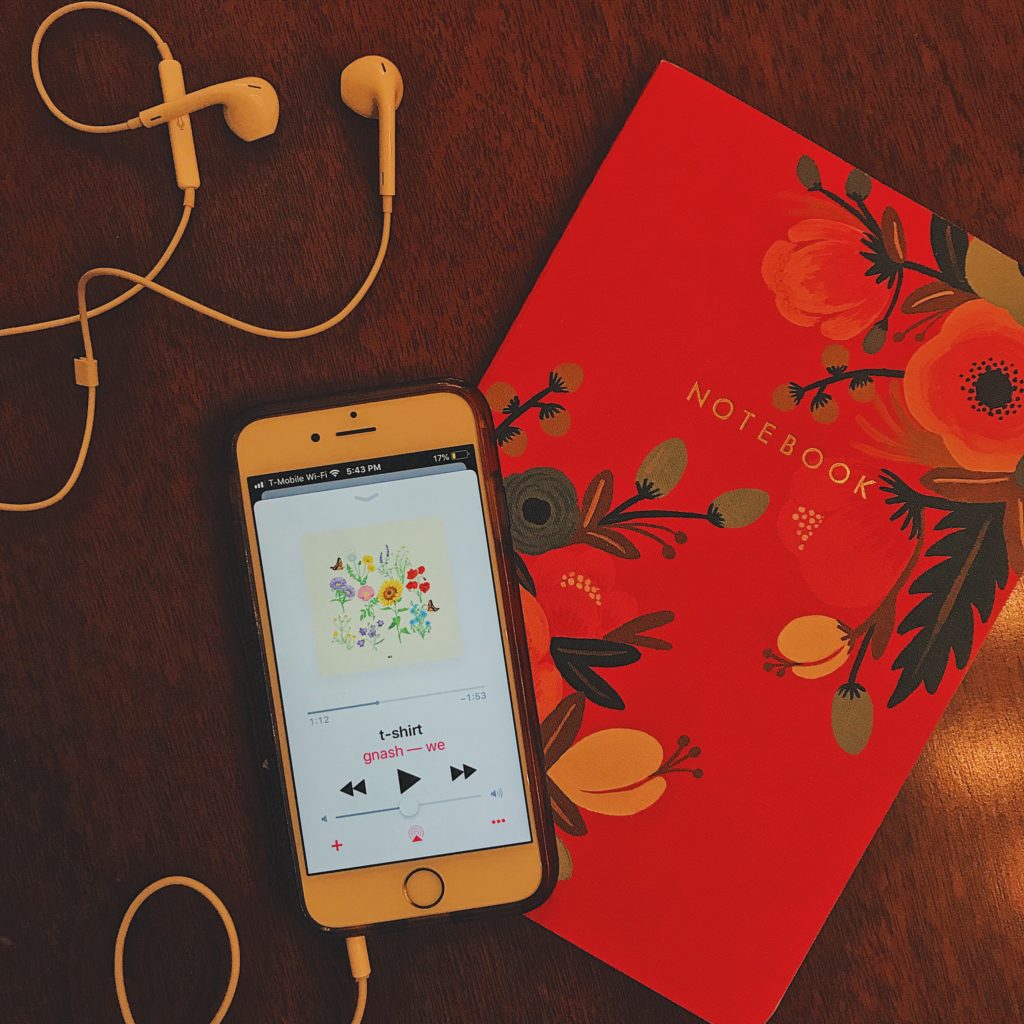
You’re sitting on your bed, looking out the window, reminiscing about the good times you had with your high school heartbreaker. And you’re probably listening to gnash’s debut album, “we.”
Coming out from the heart of Los Angeles, gnash, otherwise known as Garrett Nash, not only flexes his rapper-singer-songwriter identity in his first full album, which released Jan. 11, 2019, but also develops an acoustic tone and a rock‘n’roll capability that may surprise his fans.
Filled with a touch of teenage angst and an overload of millennialism, gnash represents both the relaxed and nearly complacent nature of our emotion-driven generation. The lyrics, “Don’t get stressed, don’t get dressed” has a particular resonance with our generation, who gnash encourages to stay in their pajamas and not leave the house.
Resembling artists like Twenty One Pilots with his borderline painfully real lyrics, yet not overwhelming his audience with rap music throughout the entire album, gnash showcases his word-spitting abilities in “nobody’s home,” as he says “You and I were king and queen of quiet nights in,/We’d order food and watch a movie” and talks about the generational issue of spending a night, not only at home, but all alone with himself and his phone.
DJ-ing since the age of 13 and developing music in his garage, gnash has released three EPs and a number of singles prior to this album, including his most popular song “i hate u, i love u,” featured on “we,” though it was originally released in 2016.
In the song “be,” he echoes the style of Plain White T’s “Hey There, Delilah” with an introduction of soft strums of the guitar and his sentimental tone of voice. But gnash has the unique artistic ability to take his audience from a mood equivalent to that of resting on the shores of a beach, to a high-energy and teenage garage-rock-band-esque vibe, as experienced in “t-shirt.”
Gnash doesn’t allow his audience to experience such angst immediately: First, he introduces the song with a climactic building of acoustics that quickly shift to the sound of an electric guitar, and soft head-banging shouts.
Gnash creates a bouncing melody perfect for drives by the coast, native to gnash’s Southern California origins, in his “imagine if,” reflecting on future plans and past loves as he echoes “Aye-oh, aye-oh!”
Addressing another longing of the millennial generation, gnash contemplates “Imagine what the world be like/If everybody stayed in love/If everybody stayed offline,” not only addressing the overuse of social media in romantic relationships and staying connected online, but also referencing the regret of human inability to rewind time like that of a movie.
After a series of alternative mixtures of rock band instruments and acoustics, gnash surprises his listeners with his most popular song of the album “i hate u, i love u,” featuring artist Olivia Brien, released in 2016. A tug-of-war of emotions, the song explores whether gnash and Brien’s characters actually love or hate each other as it builds to an emotional climax in the infamous love-hate relationship. Brien’s voice and the piano chords strike the heart of the listener, as building claps and tension characterize gnash’s introduction into the song.
Stripped down and presenting the transparency of the internal battle that is love, gnash and Brien complement each other’s voices while building a narrative for the seemingly superficial generation that the album is meant for, but it recognizes the deeper emotional issues that also characterize our generation.
A rollercoaster of emotions, gnash builds an album with “we” that not only showcases his rapping abilities and nature, but that shifts from soft, sentimental acoustic melodies to that of aggressive, nearly rebellious, garage punk. He sprinkles his album with rhythms that sound upbeat, while also providing raw lyrics and addresses authentic struggles experienced by our current generation.
Speaking the language of millennials and providing a variety of moods with which to resonate, gnash’s “we” serves as a universally accessible album to all millenials who choose to listen.
