
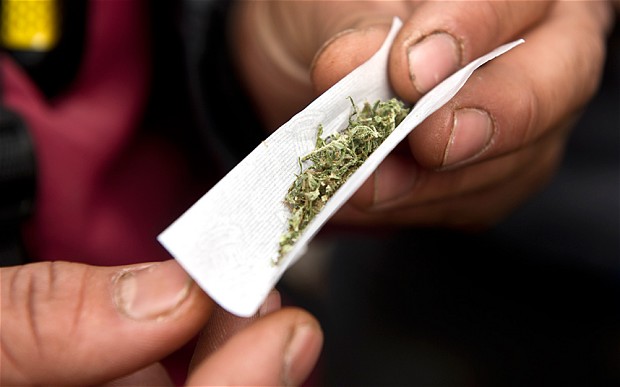
If the polling proves accurate, Michigan voters will soon approve a recreational marijuana ballot proposal. Marijuana support has become not only socially acceptable, but in vogue, uniting conservatives, liberals, and libertarians; hip politicians and stoned citizenry. Indeed, despite federal and state bans, fans of the drug are ubiquitous — even pious Hillsdale College is home to quite a few consumers, and even more advocates.
Slow your roll. Ballot Proposal 1 isn’t about weed, it’s about commercial sales — widely marketed and disseminated weed. The amply-funded marijuana lobby convinced most Michiganders and Americans to support recreational legalization, even though less than a quarter of American adults have used the drug in the last year. Far more citizens agree that medicinal marijuana merits legal status. But this ballot proposal takes it too far: It’s an all-in bet on the beneficence of weed; it’s THC gummy bears in a shop on the corner, and the introduction of something into society that will never removed. Michiganders should vote no.
Voting no isn’t an endorsement of full and eternal prohibition. The privately-smoking adult and the medicinal user have been unmolested for some time, and won’t go away. Society needs to inch toward a better legal relationship with weed, rather than plunge fully and irreversibly forward.
Backers of Proposal 1 tout the change as a victory of moderate sensibility against the “devastation wrought by the war on drugs.” A few pot shops, the reasoning goes, are preferable to powerful Mexican cartels or the destruction to urban communities caused by overcriminalization. But the caprices and excesses of the war on drugs are no reason to support Proposal 1. Harsh sentencing and the community problems it can create may be mended without making recreational weed more common. Talk of the war on drugs in this context places emphasis on the wrong victim. On Proposal 1, voters should primarily consider not those who wallow in prison for a bit of bud, but those whose lives would be affected by legalized recreational use. As for cartel revenue streams, the permissions and interdictions of our laws should not be determined primarily by the flow of dark money. Blocking illegal profits might be a benefit of legalization, but the tradeoff is less abstract: Far more Americans know people who’ve been harmed by weed than people killed by MS-13.
Weed supporters commonly insist that “it’s not that bad.” It isn’t, they say, as addictive, destructive, or dangerous as the prudish naysayers might have the public believe. It’s hardly a compelling argument — is weed even “that good?” Positive evidence is usually necessary to adjust the status quo, and the science on marijuana is still embryonic. Slower legislative change and the preservation of community control over the drug would allow citizens to examine more carefully what they want and don’t want from marijuana legalization. Few voters want their kids to have easier access to a full slate of recreational marijuana products; few wish that their own parents had been recreating with weed while child rearing. Kids, with their growing brains and developing intelligence, shouldn’t partake in mind-altering drugs — nor should they be given the opportunity to do so. The science must be heard and the kids must be protected.
Yet the potential benefits and innocuous uses of marijuana and its derivatives are undeniable. Medicinal marijuana is already available in Michigan to citizens with certain conditions — 11 new conditions became eligible in July. The countless testimonies of people stricken with problems ranging from arthritis to ulcers, whose chronic pains were alleviated by marijuana, are powerful and persuasive. Marijuana derivatives, like the increasingly popular cannabinoid CBD, are also both non-intoxicating and apparently remedial or therapeutic. Michiganders are right in looking forward to these benefits. But there is no reason why Michiganders must accept the ballot proposal instead of seeking more nuanced legislation. It might be reasonable for Michigan to legalize low-potency medicinal marijuana and non-intoxicating derivative products, while combating problems like harsh sentencing in other ways. Despite millennia of abuse, alcoholic drink remains legal because of its moderate uses. In a similar way, legislative action should seek to promote the moderate uses of marijuana while fighting selfishly indulgent, reckless, or dangerous uses.
By charting a different course, Michigan could set a national standard for a measured approach to marijuana legalization. The Supreme Court has maintained that, pursuant to the Commerce Clause, the federal government has the power to regulate local marijuana usage. But if the states demonstrated a more cautious approach, perhaps Congress could be convinced to remove marijuana’s Schedule I classification and allow it interact benefically with society.
Joshua Pradko is a senior studying American Studies.
