
There is a shortage of perfect writers in this world; it is a pity to lose one more.
Brides still recite his lines at the altar; journalists take his advice to “follow the money”; Hollywood wannabes console themselves with his confession that “nobody knows anything.”
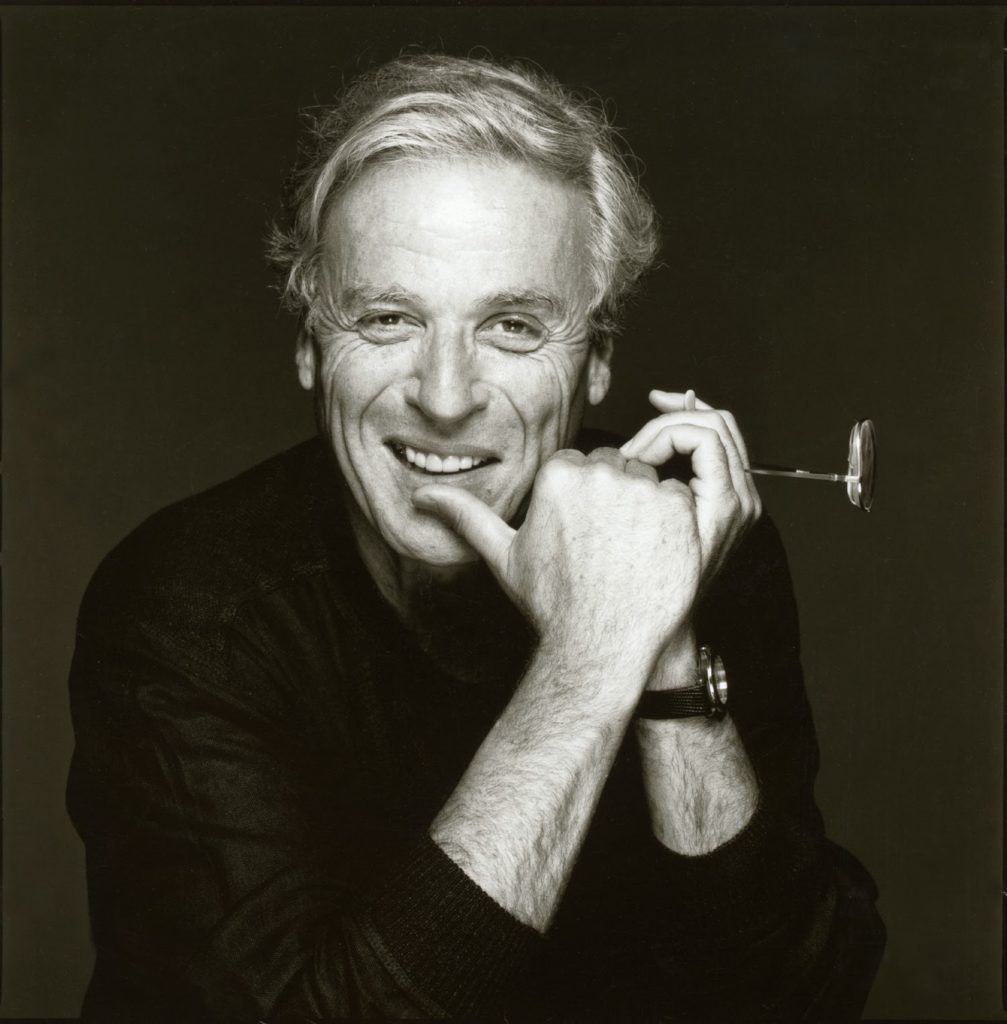
William Goldman, the beloved writer behind the “The Princess Bride” and “All the President’s Men,” died at 87 on November 16.
Goldman first wrote his swashbuckling cult-classic “The Princess Bride” for his two daughters. While Goldman told them bedtime stories, one asked for a “princess” and the other for a “bride.” So Goldman gave the world “twue wuv” in “The Princess Bride,” which came out as a novel in 1973 and a movie in 1987.
Goldman won Oscars and Golden Globes for writing the scripts for “All the President’s Men” and “Butch Cassidy and the Sundance Kid.” But his heart belonged to “The Princess Bride,” according to the cast’s recollections in the book “As You Wish: Inconceivable Tales from the Making of The Princess Bride.”
“Please understand that this is a very personal project,” Goldman told the cast in a whisper. “Normally I don’t care much for my work. But this one is different. It is my favorite thing I’ve ever written in my life. So if I appear a little nervous, that’s the reason.”
“A little nervous” did not mean what he thought it meant. The writer was petrified.
In the scene where Buttercup catches fire in the Fire Swamp, the writer yelled, “Oh my God! Her dress is on fire! She’s on fire!”
That wasn’t the only take he ruined. The director had to retake another scene several times because of a “strange incantation or chanting of some kind” in the background. When he searched for the culprit, he found Goldman crouched behind a toadstool, praying.
Goldman cared about details. He spent months researching the sword scene alone—months reading books by Italian maestros and Flemish sword masters and literal Renaissance men. The duel is an exquisite showcase of techniques from legendary 16th-and-17th century swordsmen.
And Goldman wasn’t alone. The cast shared his passion, and as the filming continued, passion became obsessive commitment.
To Mandy Patinkin, the actor who played Inigo Montoya, Goldman’s script became a way to reach out to his father, who had recently died.
“I read that script and I wanted to play Inigo because my mind immediately went, ‘If I can get that six-fingered man, then I’ll have my father back, in my imaginary world. He’ll be alive in my imagination,’” Patinkin said. “It was like, ‘I’ll become the greatest sword fighter…and my reward will be that my father will come back.’”
Leading man Cary Elwes so loved Goldman’s book that he risked dying with a heroic dive into lightning sand. Elwes first read Wesley’s exploits as a 13-year old, and he wanted to remain true to Wesley’s character. Unfortunately, that meant his head would be crushed if a trapdoor didn’t open in time.
“Just so you know, guv’nor, we’re not liable,” the special effects men warned.
In order to act as Fezzik the Giant, André Roussimoff overcame awful pain. The Giant was famous for how much he could drink—his classic was “the American,” a pitcher filled with beer and liquor. Once, when André looked peaky on set, the producing partner asked the Giant what was wrong.
“I had a tough night last night. I drank three bottles of cognac and twelve bottles of wine…I got a little tipsy,” André replied.
On another evening, he passed out in the hotel lobby, and when the staff could not move the 500-pound man, they surrounded him with velvet ropes.
Roussimoff drank to manage chronic pain. Goldman and the director plucked him from a wrestling career, where almost no one held back when fighting him because he was giant. Past opponents had jumped up and down on his back, and smashed metal chairs on his head. André had to conceal a back brace in his costume, but he still acted in “The Princess Bride.”
William Goldman gave the cast of “The Princess Bride” something worth the pain, the risk, and the work—something even better than cough drops. And he gave all of us thwarted romantics something to adore.
The world will be poorer without him. But in the words he gave to Wesley, “Death cannot stop true love. All it can do is delay it for awhile.”
