
“DO something instead of writing on a sidewalk.” This was written in front of Mossey Library on the Hillsdale Student for Life’s annual “Chalk Day.” Though, as a participant in the event, the note was frustrating (and ironic, considering it told students not to write on the sidewalk by writing on the sidewalk), the more I thought about it, the more I simultaneously agreed and disagreed with the statement.
I doubt the author meant to be taken literally — chalking is “doing something.” If it wasn’t, then why did my body object to kneeling on a rough sidewalk at 8 a.m. to draw hundreds of hearts? So theoretically, there are at least two motivations for the statement. If the author was appealing to the hypocrisy of apathetic pro-lifers, then I agree with the sentiment. But if the author meant that only doing “big things” matter or can make a difference, then I disagree.
I think the author rightfully noticed that many people who claim to be pro-life don’t do much about it. They might vote pro-life, march for life, or buy a “Choose Life” bumper sticker, but when it comes down to the hard stuff, like lobbying for pro-life legislation or sharing with a friend why abortion is wrong, we cave. We often don’t have the guts to stand up for the thousands of innocent lives murdered daily. I know people struggle with this because I have myself.
Last semester, I was convicted of my lack of involvement in the pro-life movement. I vividly remember the American Heritage class when we read “Letter From a Birmingham Jail.” Although it was the second time I had read the speech, it was the first time I realized Martin Luther King Jr.’s plea transcended farther than the Civil Rights movement and applied to my own apathy about abortion. I claimed to be pro-life, voted pro-life, yet was comfortable doing nothing else to fight the slaughter around me. I was one of those Christians who knew abortion was wrong but didn’t care enough to get out of my comfort zone or try to make a difference. That day in American Heritage, I realized that I was no different from the Christians with whom King pleaded. He urged them to join the effort to end segregation; just like he was urging me to fight the injustice of abortion.
So, if the author’s claim ends with an accusation of my apathy and a call to start helping, then I wholeheartedly agree. If I really believe abortion is the unjustified taking of a human life, then I need to be committed to ending abortion; which will require personal sacrifice.
But the statement itself goes farther and implies something deeper, even if it was unintended by the author. The statement implies that only bigger, more significant, and more impactful things count as “doing something.”
This begs the question: Which ways of getting involved are significant enough to make a difference? Does that mean something has to make a difference to be worth doing? If we apply this reasoning to how we get involved, then we will constantly second-guess our actions. Is volunteering at a pregnancy care center “big enough,” or is that too insignificant? How about collecting loose change in baby bottles? Is marching in Washington D.C. “big enough?” What about being involved in a pro-life club on a mostly pro-life campus?
My point is, if we constantly weigh whether an action is significant enough, we will be paralyzed to inaction. As humans, we are often tempted to think that the little things don’t matter, and, therefore, to put them off until a bigger, more glamorous and self-glorifying opportunity arises for us to show off to the world how much we care. But in reality, if we wait around for the perfect opportunity, it will never come. If we wait for the most ideal way to fight injustice, we will never join the fight.
Instead, we should take advantage of every opportunity to make a difference, no matter how big or small the action is. The little things we do daily — praying to end abortion, collecting loose change for donations, boycotting an organization that supports abortion, and even drawing colorful little hearts on a sidewalk — are constant reminders of the injustice we are fighting. If you think doing these little things isn’t enough, I agree. But while the little actions may not seem to make a difference, they prepare us for the battle. And when the time comes to stand before a committee to lobby for pro-life legislation, to do outreach or sidewalk counseling, or to share with a pregnant friend why you know her baby is a human life worth protecting, you will be ready. This is why we do the little things. These daily reminders keep the fight constantly before us, motivate us to go outside our comfort zone and be intentional about fighting, and prepare us to take action in unexpected and more difficult situations.
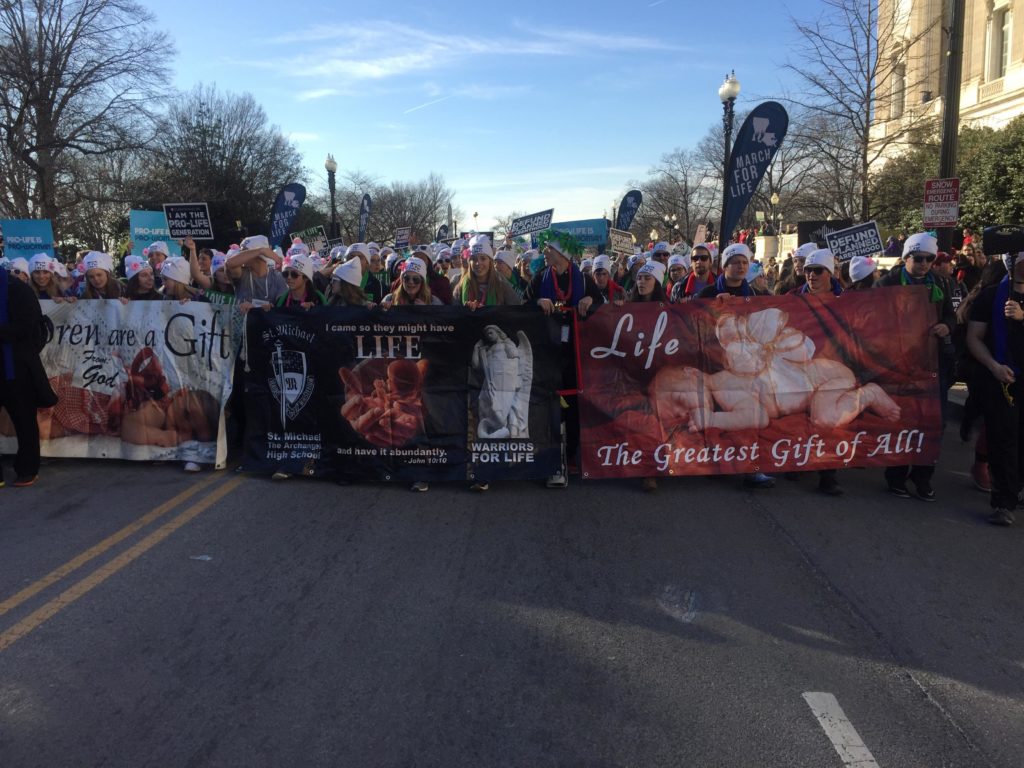
To whoever wrote on the sidewalk: Thank you. You get it; it is not enough to say you are pro-life and continue ignoring the legalized mass-murder happening in towns nearby. That’s hypocrisy and you aren’t afraid to call it out. But if you assume that chalking isn’t “doing something,” you are wrong. So allow me to join you in urging others to “do something.” Read a pro-life apologetics book so you can better engage with pro-abortion friends. Volunteer at a pregnancy care center so you can show love to women who need help choosing life. Go to the March for Life. Write your senator. Lobby for pro-life legislation. Don’t stand down when someone ridicules you for speaking the truth. Do something. But don’t believe the lie that only big things matter. Don’t believe the lie that you can only help the cause by doing full-time, pro-life work. Don’t be paralyzed by the fear that what you do might not make an impact. Do something. Even the little things. Even if it’s just writing on a sidewalk.
Adelaide Holmes is a George Washington Fellow and a junior studying politics.
