


There’s an old Russian folktale that is often told with the help of Matryoshka nesting dolls.
A man was trying to pull a turnip from the ground, but it was much too big. He called his wife to help him, but still the turnip wouldn’t budge. The wife called their granddaughter over. The three pulled, pulled, pulled with no luck. Next, the dog was called, and a great effort was made. Even after the cat offered to help, the turnip stood fast in the ground. The dejected troupe saw the mouse crawl out of his hole, and they asked him if he could help them try, just once more, to pull the turnip out of the ground. Finally, with the help of everyone, the prized turnip came out of the dirt.
This story was told again and again by a Russian woman selling hand-painted Matryoshka dolls at this past weekend’s Russian festival. In its sixth year, the Ann Arbor Russian Festival is rich with culture and fairy tales similar to the Giant Turnip story.
Aside from Russian nesting dolls, different tents sold traditional scarves, handcrafted flower hair clips, and various Russian-themed goods. Several shirts and mugs with pictures of Putin, often with funny sayings, were also for sale; a particular favorite of festival-goers was a mug with a picture of Putin holding a puppy. The religious-themed items, on the other hand, were said to be reminiscent of the traditions of pre-Soviet Union Russia.

“Everything – culture, folklore, and more – was soaked in faith,” Leta Nikulshina, a member of the planning committee, said. “The Soviet Union caused it all to be polished and neutered. The festival helps bring back some of what was lost, but still accounts for the climate during and after the Soviet Union.”
This union of a saturation of faith and basic day-to-day life can be seen in many aspects of the festival. A painting of Mary, the mother of Jesus, on a wooden egg is displayed next to nesting dolls depicting Harry Potter and his friends.
Men and women of the parish served food, eager to help those fluent in Russian and confused Americans alike. Locals spent the morning of the festival cooking traditional Russian food and drinks, including soups, crepes, shish kebabs, coleslaw, dumplings, and Russian teas. Many of the parishioners preferred to grab some vodka from the beer tent.

The focal point of the festival was the music tent. Singers, dancers, or musicians were continuously on the stage with beautiful displays of art through their talents and customary colorful costumes. The Konevets Quartet filled the tent with their sonorous voices and the Russian language. Dancers from Russia and Ukraine used their skills to express the stories told before they graced the stage. Each act was introduced by a lively Russian guitar player with an inclination to crack jokes about America and Russia alike.
The audience itself ranged in age and ethnicity, but the common link was in everyone’s deep appreciation and enjoyment of the entertainers. Snezhana Knysh, a member of the women’s group at St. Vladimir’s, believes that the church and festival fits in perfectly with their location.
“The city of Ann Arbor is very cosmopolitan, and we’ve met so many people who are happy to have us here,” Knysh said. “The University [of Michigan] also fits into it all with its growing interest and curiosity of our food and dance.”
Russian immigrants were looking for a place to celebrate their faith and Russian heritage in the late 1970s after settling in and around Ann Arbor. The small group originally held services in the basement of a Roman Catholic Church until they finally raised enough money to purchase 10 acres of land to build their own church upon. Now, more than 150 families make up the diverse parish of Russians, Arabs, Serbs, Greeks, and Americans. Despite different backgrounds, parishioners find comfort in the church’s roots in the Slavic tradition of the Orthodox Church.
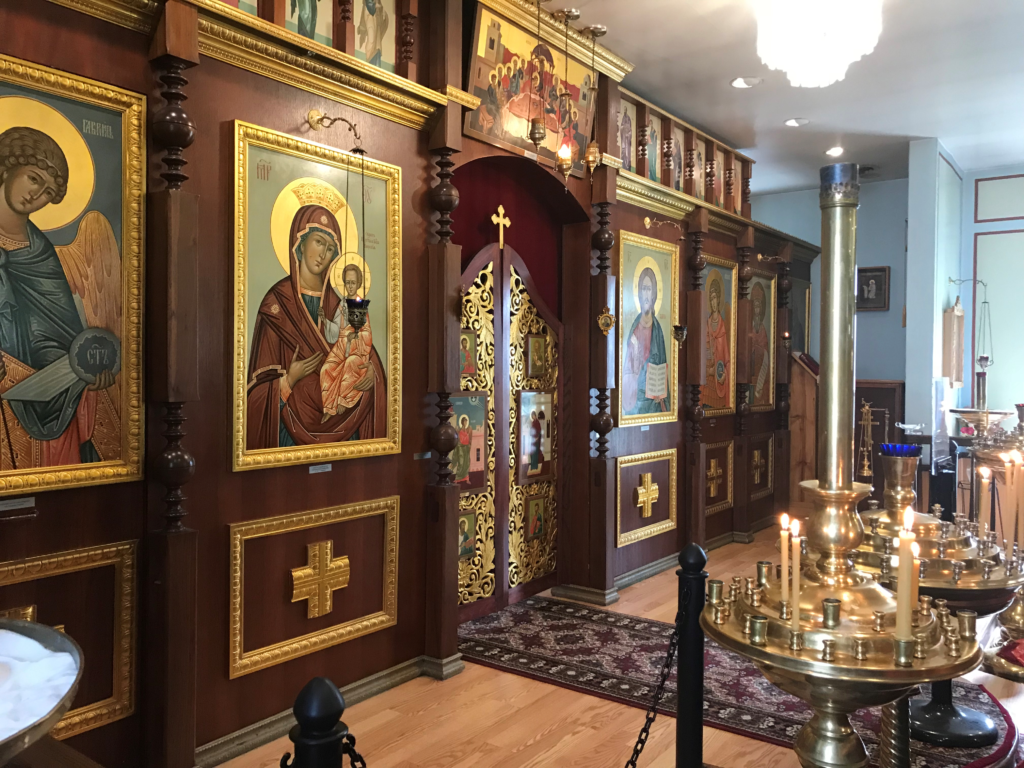
“Instead of buying a plane ticket home, I can just come here,” said greeter and parishioner Zena Ealovega.
The festival holds a special place in Ealovega’s heart as it is what led her to join the parish.
“I recognized the Orthodox cross from the freeway and attended the very first festival here. Since then, I have been a member of the church and an active member on the festival planning committee,” she said.
It’s stories like Ealovega’s that motivate the church to continue to pour $5,000-$6,000 every year into the festival without charging for parking or admission.
“It’s our biggest form of evangelization and exposure to our culture,” Reverend Father Gregory Joyce explained.

Other parishioners expressed the same sentiment, saying it is an opportunity to give people who are not exposed to Russian culture, religious and otherwise, the chance to understand a culture that may be misunderstood.
St. Vladimir’s is confident that their festival will continue to spread the tradition of the Orthodox Church and grow the community around Ann Arbor. St. Vladimir’s also hopes to start a classical academy based in the Russian Orthodox tradition, and they hope to draw in students of all nationalities.
The festival helps the church express and raise awareness of these goals and their mission. Just like the tale of the turnip, it takes every person in the small parish to accomplish the great feat of putting on a successful festival, but in the end, it is all worth it.

